






Scroll For More







Score (100)


Tiger Woods Just Returned To Play - With His Son By His Side
Tiger Woods returns to golf at the Father/Son Challenge with 12-year-old son Charlie. The pair are the featured attraction at the 36-hole event that pairs parents and children. Woods: "It was an awesome day. It was just awesome to be out there playing and being out there with my son"



Score (94)
Lunar Launch and New Cholesterol Guidelines Lead This Week in Science News
It was a busy week in science, from a Moon mission to cholesterol advice and a possible rewrite of gaming history. NASA's Artemis II mission successfully launched on Wednesday, carrying four astronauts around the Moon for the first time in more than 50 years. The mission is expected to carry humanity farther from Earth than anyone has ever been, breaking the record set by the crew of Apollo 13 in 1970. In medicine, cardiologists in the United States published new guidelines for patients and doctors on detecting and managing high cholesterol. Medical experts from the American College of Cardiology and the American Heart Association compiled the updated advice. The new guidelines replace the ones those organisations issued in 2018. Researchers also reported a possible new treatment strategy for Alzheimer's disease. A compound called FLAV-27 showed promise in reversing cognitive decline in mice with Alzheimer's by targeting a unique mechanism. The new compound appears to work in a broader way than previous treatments. It targets upstream changes in gene expression that help drive the disease's progression in multiple ways, not only through protein plaques. Archaeologists, meanwhile, may have identified what could be the world's oldest "dice". A study of Native American artifacts dated the possible game pieces to more than 12,000 years ago. Researchers said the artifacts were used by hunter-gatherers near the end of the last ice age. That would make them thousands of years older than previously known artifacts that could be considered dice. Another study pointed to three small daily habits that may lower the risk of heart attack and stroke. The research analysed 53,242 participants with an average age of 63. The data showed that adding 11 more minutes of sleep, an extra 4.5 minutes of moderate-to-vigorous physical activity, and an additional quarter cup of vegetables each day was associated with a 10 percent reduction over eight years in the risk of major cardiovascular events, including heart attacks, stroke and heart failure. Researchers also reported an unexpected result in a small study of older women's weight loss. Women taking the GLP-1 drug tirzepatide lost 35 percent more weight if they were also on hormone therapy. "If confirmed, this work could speed the development and adoption of new, evidence-based strategies to reduce this risk for millions of postmenopausal women navigating this life stage," says endocrinologist Maria Daniela Hurtado Andrade.

Score (96)
Kansas City Chiefs Launch Let Her Play Campaign to Help Sanction Girls Flag Football in Kansas
The Kansas City Chiefs are putting their weight behind a push to bring girls' flag football to Kansas high schools. The team revealed an advertising campaign called "Let Her Play" on Thursday as it tries to persuade the Kansas State High School Activities Association, or KSHSAA, to make girls' flag football a sanctioned sport in the state. In a 55-second video, the Chiefs showcased several girls who already play the sport. The team also highlighted girls in Kansas who can only dream of representing their school by playing organized flag football. The campaign comes ahead of an April 23 vote by the KSHSAA board on sanctioning the sport. The Chiefs said they believe support from KSHSAA would give more girls the chance to play and increase pathways to later play in college. "There's over 20 million people playing flag football worldwide right now," Chiefs president Mark Donovan said Thursday. "Over half of a million girls [ages] 6 to 17 play flag. Right now, a girl in Kansas can't play for a state championship and can't play organized high school flag football. What this vote does is give them that opportunity." Donovan said the Chiefs have spent six years working to grow the sport among girls in Kansas. Based on data from the campaign, the Chiefs said high school girls' flag football participation in Kansas grew 163 percent from 2024 to 2025. Chiefs club owner Clark Hunt also spoke about the growth of the sport earlier this week at the NFL owners meeting. "What we do know is flag, globally, is growing very fast," Hunt said Monday at the NFL owners meeting. "It's growing fast in the U.S., particularly the female demographic. There's lots of positive statistics about a translation of people who played flag football becoming fans of the NFL. Long term, it'll be very beneficial for the league." The KSHSAA vote will be decided by the board's 73 members. The board includes high school principals, school board representatives, athletic directors and superintendents. At least 51 percent of the board must vote yes for the petition to pass. If the petition passes, Kansas will become the 18th state to sanction girls' flag football. The Chiefs also have the petition on their website for fans to sign. The video ends with several prominent members of the Chiefs organization delivering the campaign's final message. Coach Andy Reid, Donovan and players including right guard Trey Smith, center Creed Humphrey and receiver Xavier Worthy shout, "Let Her Play," as a call to action for the KSHSAA board. Donovan said passage of the vote could become an early step for a future girls' flag football player from Kansas, including one who could go on to compete in the 2028 Summer Olympics and maybe in a professional league. "That would make it possible for a young girl in Kansas being able to play high school flag football for a state championship, get a full-ride scholarship to play college flag football, play on an Olympic flag football team and then after that play in a professional flag football league," Donovan said Monday at the owners meeting. "That's an exciting opportunity that we've been a real, real big supporter of. "There's probably some kids, boys and girls, who are potentially going to really focus on flag. Maybe they're smaller, faster, quicker or [other] reasons why they'd be better at that than tackle football. It's another opportunity for those kids." Photo by Willians Huerta on Pexels (https://www.pexels.com/photo/women-s-flag-football-game-in-action-outdoors-35018105/)

Get even more good news on the free app!

Score (97)
Experts Capture First-Ever Footage of Rare Beaked Whale Far Larger Than Previously Recorded
It is not every day a whale catches experienced conservationists off guard. Off Argentina’s southern coast, one did exactly that. Conservationists working in the waters of Chubut Province recorded rare evidence of a blue whale during a photo-identification expedition focused on humpback and sei whales, according to the Buenos Aires Times. The sighting marked the first time anyone had spotted the species within Patagonia Azul Provincial Park. Blue whales have been recorded in other parts of Argentina, but not often. In Patagonia Azul Provincial Park, officials said, this was a first. The team was out monitoring other whale species when the animal appeared. Tomás Tamagno, a biologist on board during the sighting, said the scale of it was immediately clear. "We came across this whale surfacing, but this one was different – it was gigantic, far larger than any we had ever seen," Tamagno said, according to the Buenos Aires Times. He said the group approached carefully to confirm what they were seeing. "We moved a little closer, carefully, to see what it was and found ourselves face to face with a blue whale," he said. "Fortunately, we were able to get reasonably close and take some good photographs." Those photographs became rare documentation of the species inside the protected area. Officials in Argentina said the sighting was a significant milestone for marine conservation and biodiversity in the area, and linked it to work by local organizations. The blue whale is the biggest animal on the planet and is classified as endangered. According to the source material, the species lives in every ocean except the Arctic Ocean and faces threats from whaling, boats and fishing gear. The sighting also drew attention because it happened during a routine conservation effort. The expedition was using photo identification, a tool used to monitor whales in the area, when the blue whale appeared among a day already filled with humpback activity. Tamagno later described the moment as one the crew would not forget. "It was an incredible day, surrounded by jumping humpbacks and the appearance of this specimen," he said, according to Noticias Ambientales. "We are very happy to have been able to confirm the presence of the blue whale within the Park." The report comes as conservation groups and scientists continue tracking whale populations and the pressures they face. According to the National Oceanic and Atmospheric Administration, whales need support to grow their populations, including protected corridors, steps to prevent boating accidents and action to reduce ocean noise. Preservationists use several tools to manage and protect the environment, and cameras are one of them. The source material said cameras stationed in remote locations, suction-cup camera tags placed on humpback whale calves and footage from boating expeditions can help scientists gauge the health of endangered species and document evidence of rehabilitation efforts. In this case, photographs taken from the boat helped confirm the species in a place where it had not previously been recorded. That made the sighting notable beyond the surprise of the moment. In an area where conservationists were already tracking humpback and sei whales, the appearance of a blue whale added a new record for Patagonia Azul Provincial Park. Officials said that the record is important for marine conservation and biodiversity in the area. "We are very happy to have been able to confirm the presence of the blue whale within the Park," Tamagno said. 📸 cedoc/perfil
Score (98)
Adaptive Skateboarding is Helping People With Disability Build Confidence and Independence
For Bobby Welch, a skateboard ride is a big deal. The 43-year-old from the Gold Coast stands on her board with help from a custom-built frame, an adaptive harness and a volunteer by her side. Bobby lives with cardiofaciocutaneous, or CFC, syndrome, a rare genetic condition that has progressively affected her mobility. She uses a wheelchair in daily life, but her mother, Marie Welch, said that has never stopped her from wanting to try new things. "We've tried all sorts of things, sailing, gymnastics, swimming," she said to ABC News Australia. "She even wanted to learn how to dive." As Bobby's condition worsened, those opportunities became increasingly limited. Marie said adaptive skateboarding changed that. The program uses a specially designed skate frame that lets participants stand safely on a skateboard while trained instructors guide and stabilise them. It has opened up a sport that has traditionally been out of reach for many people with disability. Marie said the impact on her daughter has gone well beyond time on a board. "It gives her a lovely social life," she said. "She can't stop smiling when she gets here, and she talks about it when she gets home," "Just to be able to get out and be in the community is so important." Professional skateboarder and coach Jesse Noonan brought adaptive skateboarding to the Gold Coast. He said it started with a simple attempt to include one child at a skate park. "I was coaching some young boys and their sister showed up to the park in a wheelchair and I wanted to include her," he said. "I rigged up a skateboard under her walking frame and got her skating straight away." That moment led to Skate Advantage. Mr Noonan said getting people onto the frame and onto the skateboard had a powerful effect. "Getting out there, getting on the frame, getting on the skateboard. It changes people's lives. "It gives them positivity and this sense of adrenaline they've never experienced." The program is supported by Gold Coast Recreation and Sport, a community-based organisation that provides sport and recreational opportunities for people with disabilities. Project manager Acacia Porter said the value of the program went beyond physical activity. "It's important for everybody to have opportunities to participate," she said. "This program is breaking down barriers, not just to participation but to community perceptions." She said bringing people of all abilities together was changing attitudes. "It shows they can do it," Ms Porter said. For Bobby's family, that change is obvious. Marie said without adaptive skateboarding, her daughter would be very housebound. Instead, the sessions give her a chance to get out, spend time with other people and take part in something that makes her happy. "It just makes my day," Marie said. On the concrete, Bobby glides to a gentle stop with a grin across her face. Around her, others take their turn, stepping into frames, adjusting helmets and pushing off. For the people in the program, adaptive skateboarding has become a way into a sport and a wider community. "It gives her a lovely social life," Marie said.

Score (96)
Dubai Bakery Sells Out Fresh Snacks After Cancelled Order Triggers Community Support
What started as a scramble over 1,000 hot cross buns turned into a sell-out morning for a family-run Dubai bakery after a church order was cancelled on Good Friday. Golden Chariot confectionery and catering company in Karama was left with large quantities of freshly baked food intended for a place of worship that closed as a precautionary measure because of the Iran war. Churches in Dubai will be closed to the public until further notice, with only limited mass services available to watch online during the Easter period. “The community has been absolutely wonderful. It was overwhelming, in three to four hours, we were all sold out and had to tell people there was no food left,” said Anna Rodrigues, who manages the 20-year-old firm with her parents. “People we didn’t know called and said they heard about our big order being cancelled and wanted to help. From 7 a.m. to 11 a.m., it was non-stop calls. What started as a worrying day ended up with us smiling, running around and making deliveries all over Dubai. In our time of need, people came forward and helped us.” The Golden Chariot confectionery and catering company supplies food to companies, schools and churches. It also stocks a kiosk at a Jebel Ali church. A large church order was cancelled when authorities shut down houses of worship on Friday in Dubai as a security measure. Staff had spent hours baking spiced cinnamon buns, mini cheese pizzas, mushroom pies, cheese canapés and fresh fruit tarts for parishioners after the Good Friday service. “We were due to leave at 5 a.m. to deliver at the church kiosk. Yes, we understood that the cancellation was for our safety. But what do we do with all the buns and food?” said Ms Rodrigues, 31, who sent a WhatsApp message to a group of friends. In the note, headed “Distress bake sale, urgent help,” and sent with photos of mini cheesy pizzas, triangular crusty puffs and fluffy buns, Ms Rodrigues explained the bakery’s predicament. The response was immediate. Companies, charity groups, families and labour accommodation centres called in to order. “We had orders for 10 pieces and also orders for 100 pizza slices. It started with one message and just blew up when people started forwarding it,” she said during a break from a delivery run. “People bought for their security guards, for their family. We have been behind the wheel all day on deliveries. We feel blessed and grateful.” The bakery was opened in 2006 by the Rodrigues family and has a steady stream of regular customers from nearby neighbourhoods. Ms Rodrigues said business has slowed since Iran began its attack on February 28, launching missiles and drones at the UAE. Because the bakery caters for special occasions, it has felt the impact of people staying indoors. “It’s been a terrible month for us as people are mainly working from home. Orders we get from corporates, for birthday parties celebrated in offices, bakery snacks for school canteens, all that has stopped,” Ms Rodrigues said. “We were hoping for some redemption at the Good Friday church service because that is our community. My family and I get behind the counter at church, we are known as the family that runs the church canteen. Today, everything changed for us, what started out as an unfortunate day turned into a successful day. A new community came forward and gave us strength.” Among those who placed an order was Meena Dhanani, a hypnotherapist in Jumeirah. She bought 350 pieces of cinnamon buns, cheese croissants and pizzas to distribute on Friday evening to taxi drivers, housemaids, gardeners and delivery riders in her neighbourhood. “When I saw the message, I thought about how we can help. I had never heard of the bakery but I trusted it would be freshly baked,” said Ms Dhanani, who regularly distributes food to people in need. “I didn’t want the food to go to waste. We can share this with so many people who will be so happy.”
%3Amax_bytes(150000)%3Astrip_icc()%3Afocal(749x0%3A751x2)%3Aformat(webp)%2FJanae-Martinez-family-18-02192026-d7a0ee8e9cc747d489041817836607b6.jpg&w=3840&q=75)
Score (96)
After Years of Infertility Struggles, This Firefighter and His Wife Adopted a Newborn Left in a Safe Haven Box
A joke at the fire station turned into something much bigger for Chris Martinez. The New Mexico firefighter says he once half-joked that he wanted the first baby surrendered at his station under a new safe haven program. On Feb. 6, 2024, that happened at the Belen Fire Department, where a newborn boy was left in a baby box about four months after it was installed. Now Martinez and his wife, Janae, have adopted that child, Mikel Gracen Martinez, after a year-long legal process that they say exposed problems in how New Mexico handles anonymous safe haven surrenders. “I knew from the moment I saw him I wanted to be his dad,” Chris says. Chris, 45, told PEOPLE the day began with a structure fire at about 1 a.m. He said his gear melted during the response, leaving him with burns to his ears and wrists, and he went to hospital for treatment. A woman died in the fire. After he returned to the station, another lieutenant told him a baby might have just been left in the station’s safe haven box, a temperature-controlled unit in a secluded spot on the side of the building. Even though it was the afternoon by then, Chris said, “No one saw anyone.” He said the box has a timer that gives someone leaving a newborn about a minute to leave “peacefully and remain anonymous.” When firefighters opened the box, they found a newborn boy turning blue, with his umbilical cord still attached and in obvious distress. Chris said firefighters gave the baby oxygen, warmed him and took him to a local hospital. The baby was treated in the neonatal intensive care unit for pneumonia, fluid in his lungs and a brain bleed, Chris said. “He had five different drugs in his system and just a number of things,” Chris says. “He had to stay in the hospital for almost two months.” Chris and Janae, 41, said they visited every day. The couple told PEOPLE they had spent about 15 years trying unsuccessfully to have a child. Around that time, they had just become certified as foster parents, which allowed them to care for the boy while they moved through the adoption process. That process took about a year and, they said, was emotionally grueling because of New Mexico law. According to the couple, state law requires a biological parent to identify themselves to authorities even if they use a safe haven baby box. The baby’s mother did not do that, they said. Chris and Janae said notices were placed in local newspapers asking the birth parents to come forward. They also attended multiple court appearances while waiting for possible relatives who never came. For the first year, Janae said, the boy had no legal name and was identified in documents as Baby Boy Doe. She said even at the pediatrician, he was called in as Baby Boy Doe instead of Mikel, the name she and Chris wanted for him. The name carries personal meaning for the couple. They said Mikel honors Chris’s brother, who died in 2012 at age 37. His middle name, Gracen, reflects what they describe as the grace of God in answering their prayers. “He didn’t have an identity, he didn’t have a birth certificate, he didn’t have a Social Security card. He didn’t have anything for a whole year,” Janae says. “It was hard, people not calling him by his name. He’s not a nobody, he's somebody. He’s a Martinez.” The couple said New Mexico also required a DNA test, partly to determine if the child was indigenous because, in that case, the baby would have been given to their tribe. “I don’t know what we would do at this time if the mother or relative showed up,” Janae remembers thinking. “I guess we’ll just cross that bridge if we ever come to it.” No one from the child’s biological family came forward, and the adoption was finalised on March 10, 2025. Janae said the day was marked with a party attended by family and mariachis. “It symbolized so much. We finally got to rest and finally, officially, be a family,” Janae says. The couple said they decided to speak publicly because they want attention on what they see as gaps in New Mexico law. They said baby boxes are still new in the state, but that older protocols are still being used to try to identify parents who surrender newborns, even though anonymity is part of the safe haven program. On Jan. 30, state Senator David Gallegos introduced a bill that would protect the privacy and anonymity of a mother who surrenders a child under the safe haven program, unless there are specific circumstances involving neglect or abuse. The proposal has stalled, but efforts are continuing, according to the report. Janae said she is grateful to the woman who placed Mikey in the box. “We thank the mother so much for making the bravest decision and I can’t even imagine. She wanted a better life for Mikey,” Janae says. “Just knowing that if he was not placed in that box, where would he be right now? That breaks my heart.” Chris and Janae met in 2003. He was a local musician working side jobs, and she worked at a local radio station. She still hosts an afternoon program on KOB-FM. Both grew up in Albuquerque, came from large families and married in 2010. Janae said learning she likely “would not be a mother” was “devastating.” She said the couple stopped fertility treatments and decided to become foster parents. Not long after, Mikey arrived at Chris’s station. They said their parents live nearby and help with their son. Janae works three jobs, while Chris said he cut back to “just one” after a promotion in the fire department. They also continue to do short-term foster care. Chris said he hopes to retire in about three years, while Janae expects to work about five more years. “We were always just work, work, work,” Chris says. “But life is not all about working. It's about relaxing and enjoying him [our son]. We are going to have so much fun.” Credit : Janae Martinez

Score (98)
Survivor Winner Opens Charity Pinball Arcade and Homeless Shelter for At-Risk Men With Prize Money
For a lot of people, Rupert Boneham is still the guy from “Survivor.” In Shelbyville, Indiana, he is also the man behind a nonprofit that helps people leaving jail or juvenile detention find housing, work and support. Boneham first appeared on season seven of “Survivor” in 2003. He later returned to compete three more times and spent more than 100 days in the game. He never won a season, but he did win $1 million on “Survivor: America’s Tribal Council,” a special episode of “Survivor: All Stars.” Boneham won after receiving 85 percent of a nationwide vote. “They had 38 million votes in 72 hours,” Boneham reminisced to WFYI Public Media. Boneham told WFYI he used the money quickly. “I spent [the prize money] in three weeks,” he told WFYI, “getting myself and my family out of debt.” He said whatever was left was split among charities chosen by members of his family. That giving became Rupert’s Kids, Boneham’s nonprofit in Shelbyville. The organization is a re-entry program that serves juveniles and adults who are trying to get back on their feet after incarceration or juvenile detention. Rupert’s Kids helps people through housing and mentoring. It also operates Rupert’s Kids Arcade, which Boneham describes as “a vocational training program cloaked in an arcade.” At the arcade, formerly incarcerated people help manage the business. The arcade provides entry-level jobs and support while participants work to rebuild their lives. Proceeds from the arcade go to the nonprofit to support more at-risk youth and adults. Boneham told Indianapolis Business Journal that he wanted the arcade to teach work habits while also serving the wider community. “We have young men and women in our mentoring program ready to go out into the workforce, but I wanted to teach them that there’s more than just showing up and expecting a paycheck,” Boneham told Indianapolis Business Journal. “At the same time, we’re bringing something to the community that is safe and secure and affordable.” Rupert’s Kids also runs The WhereHouse, a donated warehouse that was turned into a shelter. It can house up to 12 men and gives them a drug- and alcohol-free place to live, along with a path to recovery. People in the program can build life skills by working at the arcade. They can also take GED classes and get access to life coaching and financial literacy training. “We’ve created a space where you can get assistance paying your rent, having food … you can even pay for your services by work,” Boneham told WFYI, “so you can save your money.” Boneham said the nonprofit first focused on helping at-risk youth avoid trouble or homelessness. The work later expanded to include men leaving correctional facilities. He told WFYI those men are taught “how to have a legal living, how to have that sense of self-worth and work ethic, how to get out there … and enjoy life.” When the arcade got up and running in 2017, Boneham told WFYI he saw a 90 percent success rate among the people he worked with. In that first year, 29 of the 34 people he supported stayed out of jail. The nonprofit also holds “community days.” During those events, neighbors can shop a makeshift store of donated items for $5, with the money going back into Rupert’s Kids services. Boneham did not return to compete on the show’s 50th season, but he has said he wants to take the nonprofit model further. On the organization’s website, Boneham writes: “Every community has an overcrowded detention center. Every community has abandoned warehouses, abandoned properties. Every city is struggling with re-entry programs and vocational training, a path as you’re coming out of the detention center where you're actually going to succeed.” “I see in the future, Rupert's Kids being nationwide. Who wouldn't want to take the program? Who wouldn’t want to make their community great?” 📸 credit: Rupert's Arcade/Facebook
Score (98)
95-Year-Old Great-Grandmother Breaks Swimming World Records and Redefines Athletic Achievement
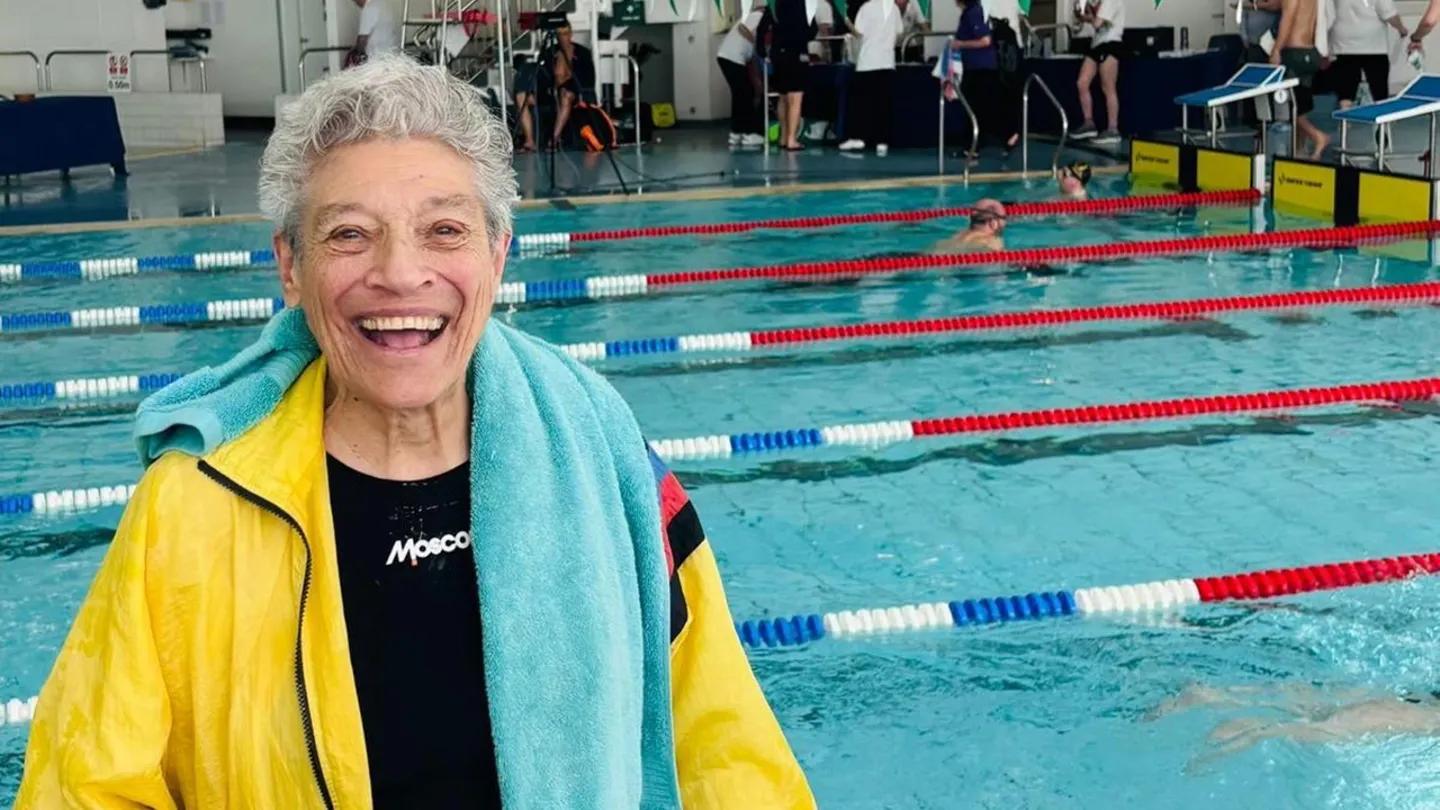
At 95, Jane Asher is still adding records to a career that already spans more than 100 of them. The swimmer from Merton Park in south London recently set five age group world records, adding to a collection that also includes 26 gold medals, a British Empire Medal for her dedication to the sport and a place in the International Swimming Hall of Fame. Looking back on her career, Asher said swimming has played a big part in her health and happiness. “It does keep you healthy. I have taught people who just had surgery and their doctors were amazed by how much they had improved because of the swimming,” she said. “I want to show people what a lot of fun you can have if you like competing and how good you feel when you work hard at something. Sport is very important and quite a lot of youngsters now have put on weight. Swimming doesn’t help you to lose weight but it finds the muscles." “It opened a whole new world for me. It made me happy and healthy.” Asher was born in Zambia, South Africa, and spent most of her childhood in Johannesburg, where her English mother taught her to swim. She said her mother “was addicted to water” and that much of their free time was spent “just jumping in and out of the water”. “My mom was taught to swim in the sea in Cornwall and she was addicted to water. We spent all of our free time just jumping in and out of the water. I took to it quite quickly,” Asher said. Her love of swimming grew at boarding school, where she was allowed to use the pool on her own in the mornings and mostly swam backstroke. “The war was on when I was at school so we didn’t have competitions, but I swam every morning to get rid of some energy,” she said. “In my first race a girl said that I kicked like hell. It was because my mother was watching. Now every time I have a backstroke race I think ‘mom is up there watching.’” Asher, who is a grandmother of 11 and great-grandmother of six, moved around often but always joined local swimming teams. At one point, she even joined a rowing club so she could stay in the water. Later, she married a vet named Robbie. After he had an accident at work, Asher took a job teaching swimming at the local school to help pay the bills. She later moved into teaching adults and started entering masters swimming competitions at 50. By the time she was 80, she had broken 100 records. Her first European record came in an 800 metre race at Crystal Palace, after a wedding where she had a few drinks. Asher competes in several events, but says her favourite is the individual medley, which includes backstroke, breaststroke, front crawl and butterfly. Swimming also helped fill a gap after her husband died, she said. “When my husband died I started filling the time but it was hard because there is this big hole in your life. But swimming has given me such good friends and they give back to me,” she said. “All of my kids are very sporty and I am very proud of them, and I didn’t realise that they are proud of me. Without friends life doesn’t happen. There is always somebody pushing you on. I think that is what keeps me going, somebody waiting for me. I couldn’t do half of what I have done without the friends who have helped me enter. You have to do everything online now. As you get to 95 everything goes so quickly and you get slower.” Asher said younger people should keep active and swim where they can to stay healthy. She also said learning to relax and having a good teacher are important parts of becoming a good swimmer. “It is a really good non-contact sport. You can’t hurt yourself. Running hurts your knees and your hips and even tennis causes shoulder problems,” she said. “I had a good kick with very strong legs and a strong buttocks. “It is good to have something to think about. It is a bit like meditation. That is the secret of course, you must not stiffen up because then you go down like a stone.” Asher is now working towards her next competition and another potential world record in Budapest.
Score (97)
A Teacher Honored This Deaf Student With an ASL Playground Sign That Helps Kids Communicate
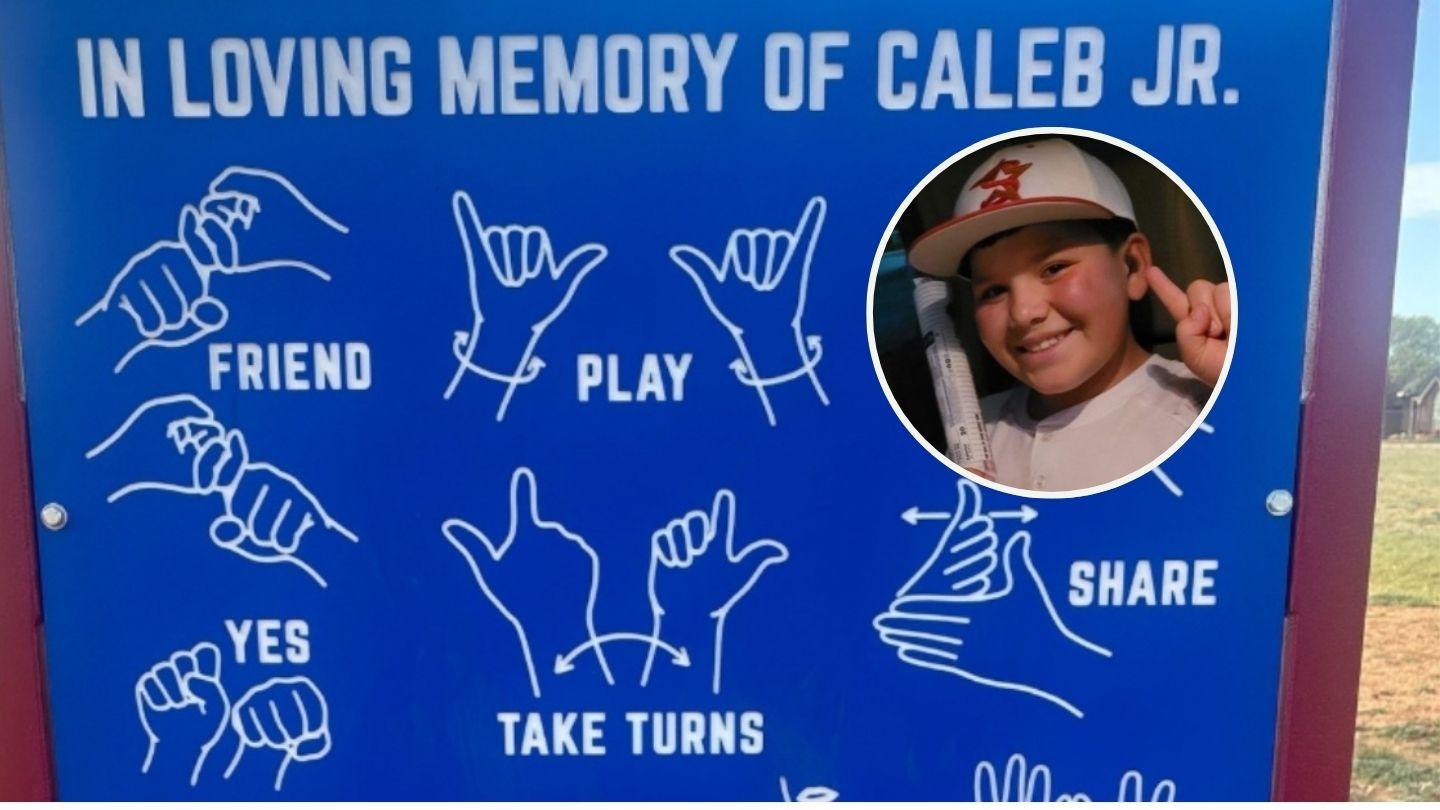
At Ward Elementary in Abilene, Texas, a playground sign is helping children talk to each other, and it carries the name of a boy they still miss. It has been almost two years since 11-year-old Caleb Devereaux Jr., known as “Junior,” died from leukemia. His family, friends and neighbors say his memory has not faded. “He taught me a lot about how to be friendly to everyone, to hearing people and deaf people, and build those friendships, and also to see students as the whole person,” Junior’s former teacher, Letabeth Machogu, told ABC affiliate KTXS12. “Yes, we're learning academics, but we can take time to be fun and be silly, too. Yeah, it's really important. He means a lot to me.” Machogu teaches deaf and hard of hearing students at Ward Elementary, where Junior was one of her students. According to his family, Junior was deaf from an early age, but he quickly learned American Sign Language. His family said that it opened “a world of communication and connection with those around him.” His obituary said, “Junior’s zest for life was evident in everything he did. Whether he was dancing, singing, or creating TikTok videos with his cherished sisters, Makayla and Miyah, his infectious energy and creativity were boundless.” It also said, “His radiant smile could light up any room, and he found immense joy in spending quality time with his family and friends.” A few months before he died, Junior had finished fifth grade. “When I came back after he passed, I was very angry because I just kept thinking that he should be here,” Machogu said. Last summer, Machogu installed a new playground sign at the school inspired by Junior’s playful and outgoing attitude. The sign shows the alphabet in ASL, along with hand signs for words and phrases including “friend,” “play,” “tag” and “share.” Since the sign was installed, hearing students have been able to play more freely with deaf classmates, Machogu told KTXS12. “They can communicate with each other directly with our students who use sign language, and then they can play together without having to have an interpreter there to facilitate all the communication," she said. “They can have a direct friendship without having a third party. You know, that is so important.” At the top of the sign are the words, “In loving memory of Caleb Jr.” “I think he'd be proud,” Machogu said. “I picture him looking at me like, 'Thank you, I love it.' That's what he would say.” The story of the sign lines up with a point made by MJ Grein, an executive assistant at Harvard Medical School’s Countway Library and a former sign language interpreter. According to the Harvard Gazette, Grein said everyone should learn sign language. Even a small number of basic signs can help connect deaf and hearing people, especially for deaf children. “Everyone can learn sign language,” Grein told the Harvard Gazette. “Deaf people can’t learn to hear, and that’s the difference.” At Ward Elementary, Machogu said the sign gives students a way to communicate directly on the playground, the kind of connection she said mattered deeply to Junior. “They can have a direct friendship without having a third party,” Machogu said. “You know, that is so important.” 📸 Credit: Vanessa Rodriguez

Score (97)
First US Pollinator District Opens With a Park Within Walking Distance of Every Home
A suburb built around bees might sound unusual, but that is exactly what is taking shape in Broomfield, Colorado. A mixed-use community called Baseline is being used as a model for a different kind of suburban development, one designed to support pollinators like bees, butterflies, moths and beetles. The idea began in 2019, when nonprofit Butterfly Pavilion set out to build what it calls “pollinator districts,” communities designed and maintained to grow pollinator habitat. These species help produce food and support broader ecosystems. Amy Yarger, director of horticulture at the Butterfly Pavilion, told the Colorado Sun pollinators do much more than move pollen from plant to plant. “They keep wetlands going. They keep our grasslands going. They make sure forests are diverse,” Yarger told the Colorado Sun. “And if they can keep those plant communities healthy and reproducing by assisting plants in their reproduction, that means our water is filtered, and we can hold on to our soil and not just have a big old dust bowl.” Butterfly Pavilion described the thinking behind the project in a blog post. “At Butterfly Pavilion, we believe conservation is strongest when people work together,” the organization writes. “When science, planning, and community commitment align, pollinators respond.” Baseline became the first community in the world to adopt the concept, according to the source text. Other Colorado cities, including Manitou Springs and Lafayette, are committed to the municipal pollinator district effort, but Baseline was the first to fully embrace it. The site itself has changed dramatically over time. It was once agricultural land used for growing wheat and later sat uncultivated. Now it includes 1,200 move-in-ready multifamily units, with prices starting in the low $500,000s. That is slightly below the median sale price for a standard home in Broomfield, which the source text says was between $600,000 and $625,000 in early 2026. The development also includes bike paths and trails, and a “pocket park” is no more than 1,600 feet, or about 0.3 miles, from any home. Every unit meets Home Energy Rating System requirements. The plants used throughout the area are drought-tolerant native species that attract pollinators. In total, 170 acres of the community are dedicated to natural spaces and gardens. Researchers say the habitat work is producing results. Before construction started, scientists documented pollinators from 11 families at the site. By late summer 2025, they had documented pollinators from 27 families. “This marked a significant increase in diversity compared to earlier years and reflected steady growth in both native pollinators and honey bees,” Butterfly Pavilion reported. “Researchers consistently observed pollinators visiting native plants selected for habitat value and recorded broadtail hummingbirds, one of the region’s few vertebrate pollinators, for the first time. Several insect families, including longhorn beetles, plasterer bees, and digger wasps, were also documented at Baseline for the first time.” The source text also says scientists recorded a 272 percent increase in Western honeybees in 2025 compared to the year before. Individual pollinator counts rose from 587 in 2023 to 3,805 in 2025. Yarger told the Colorado Sun that residents appear engaged with what is happening around them. When she is out surveying the community, she said, “homeowners will come outside and want to tell me what they’ve been seeing. They just feel like I’m somebody that has things they want to talk about. They know I’m there for the pollinator district and they have ownership in that.” Those surveys are part of the certification process for pollinator districts. Butterfly Pavilion experts are now applying the same approach to transportation corridors and other communities across Colorado’s Front Range. The process starts with documenting existing conditions and making recommendations on how to manage the area for pollinators. For Yarger, that work points to a practical path ahead. She told the Colorado Sun it makes her feel “like … we have a way forward.” Butterfly Pavilion said the model depends on tracking results over time and adjusting when needed. “This long-term, evidence-based approach mirrors the Pollinator District model developed at Baseline: assess first, design intentionally, monitor consistently, and adapt based on results,” Butterfly Pavilion concluded. “Infrastructure can support biodiversity when guided by science and long-term stewardship.” 📸 credit: Baseline Community