






Scroll For More






Score (100)


Martha Stewart Gives Hilarious Warning To Wife Of 'Sexiest Man Alive' John Krasinski
John Krasinski has been named the Sexiest Man Alive by People Magazine, and it's a title that many agree with. From his days on The Office to leading roles in Jack Ryan and A Quiet Place, John's charm and boy-next-door looks have won over fans, including Martha Stewart. The lifestyle guru praised John for both his attractiveness and career success during an event in New York City. Martha even jokingly warned John's wife Emily Blunt to "watch out."


Score (98)
A Little Help Connected Colorado Seniors With Student Volunteers to Fight Loneliness
For some older Coloradans, a little help starts with yard work or a vacuum. It turns into something else. Nearly one in four Coloradans age 65 and older struggles with loneliness, according to recent U.S. Census Bureau data. A local nonprofit, A Little Help, is working to change that statistic one week at a time. The group connects volunteers with older adults for yard work, home projects, technology assistance and companionship. Each week, seniors from Rock Canyon High School in Ken Caryl visit retired teacher Jacquie Cupich at her home. The meetings begin with conversation, then move on to chores like vacuuming, cleaning or raking leaves. “I love being with the kids and building a relationship with them,” Cupich said to Denver 7. “A lot of my friends are afraid of teenagers. This program shows the exact opposite; there’s so much hope for the future because of what I’ve experienced with these guys.” Cupich first contacted A Little Help because she needed help with yard work, house maintenance and technology. She said the physical support mattered, but the regular visits became something deeper. “It’s not about the help, really,” Cupich said. “It’s about someone else saying, you matter. I see you. I care about you. Just because you’re older and starting to lose physical capabilities, you still have purpose, and we still care about you.” Cupich said consistency is what makes the connection work. “If it was different every week, I think it’d be harder,” she said. “It’s consistency that brings a level of trust and the relationship.” Student volunteers Brodie Lyle and Caroline Watts said the program matters to them, too. “I really like listening to people who have a lot more experience than me,” Lyle said. Watts said spending time with an older generation brings lessons that go beyond school credit. “It’s just really the little things that make a huge difference,” Watts said. For A Little Help, that kind of trust is the goal. Weekly visits give older adults regular reminders that they are seen and valued, while giving students a different perspective on aging and community. The nonprofit is looking for more volunteers and school partners to help older adults across the Denver metro area. More information is available at A Little Help’s website.

Score (98)
She Went From Homeless Teen to an Attorney — Here's How
When Zarina Sementelli walked back into Booth Brown House, the memories came fast. At 15, Sementelli moved into the Salvation Army shelter for homeless youth in St Paul after her family was evicted. Eleven years later, she returned as a newly minted attorney, revisiting the room where she lived for two and a half years and the people who helped her get through it. “Sometimes things can be so far removed that when you come back, you're like, ‘Wow, this really happened?” Zarina says reflectively to Kare11. “I really did make it from here.” Sementelli, now 26, said her childhood was shaped by instability. Her father was mostly absent, and her mother struggled with mental illness. “She has severe mental health issues, so she didn't work,” Zarina says. She remembered moving “every year” and changing schools often. When she was 15, her family was evicted. “We got evicted from our house when I was 15,” she says. When her mother said the family would move to Seattle, Sementelli decided to stay behind. She said she knew her mother did not have a job or a place to live, and she believed the family would end up in a shelter there. School gave her one steady place, so she stayed in Minnesota and spent time couch surfing at the homes of her Como Park High School basketball coaches and teammates. Eventually, she arrived at Booth Brown House. “This was really the first place that I felt like home,” Zarina says. Returning to her old room for the first time since leaving, Sementelli described what that small space meant to her. The room held a bed, a small counter, a sink, a stove and a refrigerator. “When you go from living on someone else's couch,” Zarina says, “I cannot articulate how important this space was for me.” While living there, she took city buses or the light rail to school, work and the grocery store. At night, she studied in her room. One moment still stands out. “I remember being right here opening up my Spelman acceptance letter and just feeling so blessed,” Zarina says. After high school, Sementelli attended Spelman College in Georgia, a historically Black women’s college. She graduated debt-free after applying for hundreds of scholarships. “I applied for hundreds of scholarships,” Zarina says. The Dell Foundation awarded her a $20,000 scholarship. The Horatio Alger Association awarded her another $10,000. She was not finished after Spelman. Sementelli attended California Western School of Law, graduated last spring and passed the bar exam on her first try a few months later. Asked how she kept going, she pointed to faith. “When I didn't have parents to call, I got on my knees and prayed.” she says. “I didn't grow up in the church, and a lot of people doubt God. But when I needed God, God was always there for me.” During her visit back to Booth Brown House, Sementelli met Kaiden Waxlax, the 18-year-old now living in her old room. She became emotional speaking with him. “What makes me emotional,” Zarina tells Kaiden in a trembling voice, “is to see you as a young person just trying to make a way.” She then told him, “It's really important for you to believe in yourself.” Sementelli also stopped by the office once used by her former case manager, Natalie Bogden. In that office, Bogden helped her set goals and connect with tutors, health insurance and food assistance. In a recent letter, Sementelli thanked Booth Brown House and asked if her appreciation could be passed along to Bogden. Instead, the Salvation Army arranged a surprise reunion during an interview with KARE 11. “Ah!” Zarina exclaimed when Natalie walked into the room. “When I graduated and I passed the bar, I'm like, 'Wow, I wish I could just tell Natalie,'” Zarina tells her mentor. “Oh, my goodness,” Natalie responds with hands over her cheeks. “I was proud of you then, and I'm very proud of you now.” This summer, Sementelli will begin Air Force officer training at Maxwell Air Force Base in Montgomery, Alabama, as she works toward her goal of becoming a military judge advocate general, or JAG. No one gets there alone, she said. “The mentors in my community, they didn't just see a homeless youth that had no future, they saw a person who needed help.” 📸 Credit: Kare11

Get even more good news on the free app!
%3Amax_bytes(150000)%3Astrip_icc()%3Afocal(750x258%3A752x260)%3Aformat(webp)%2Fpitbull-storm-drain-rescue-033026-1e2362b3b08f47ed8656efe7c2b306fa.jpg&w=3840&q=75)
Score (97)
This 15-Year-Old Dog was Just Reunited With His Family After Being Rescued From a Storm Drain
A missing dog case in Virginia took an odd turn underground. Diesel, a 15-year-old pit bull, has been reunited with his family after rescuers found him stuck inside a storm drain in Norfolk, Virginia, a day after he went missing. Diesel slipped out of his family’s home on Friday, March 27, after a side gate was accidentally left open. His family then went to the Norfolk Animal Care Center and filed a lost report. In an Instagram post, the Norfolk Animal Care Center said, “When his family saw he was gone, they immediately headed over to the Norfolk Animal Care Center, where they filed a lost report with staff. The next day, a citizen heard a dog barking in distress, so they called the Animal Protection Unit dispatch for assistance.” That call led authorities to an unexpected spot. “APU searched high and low, and that's when this story takes a turn. Diesel had somehow found himself INSIDE a small stormwater drain and [was] unable to get himself out. After a quick call to Norfolk Fire-Rescue engine 13, they were able to lift him out, and he was on his way to the Norfolk Animal Care Center,” the post continued. The local fire department, Norfolk Fire-Rescue, pulled Diesel from the drain after he could not get out on his own. The animal care center said staff recognized Diesel when he arrived at the shelter because he had recently been reported missing by his family. The reunion followed soon after. “A phone call, another truck ride, and several tears later, Diesel is right back home in the loving arms of his family. Thanks to the teamwork between a citizen, dispatch, Animal Protection Unit, Norfolk Fire-Rescue, and the Norfolk Animal Care Center, a sweet (and maybe a little too curious) senior dog is back home and safe,” the Instagram post said. Social media photos shared by the shelter showed Diesel peeking his head out from the storm drain during the rescue. Another image showed him with his family after he returned home. It is unclear how Diesel ended up inside the storm drain. The Norfolk Animal Care Center said he is now “back home and safe.” 📸Credit : Norfolk Animal Care Center/Facebook

Score (97)
Céline Dion Set to Perform Her First Concert Series Since 2020 in Paris
After a string of teasing posts, Céline Dion has set the date for her return to the stage in Paris. The "My Heart Will Go On" singer, 58, announced on Monday that she will perform a limited run of concerts at Paris La Défense Arena in France. The five-week engagement starts on Sept. 12 and will include 10 shows through Oct. 14, more than five years after her last major solo concert. Dion shared the news in a video message released on her 58th birthday. "Over these last few years, every day that's gone by, I've felt your prayers and support, your kindness and love," she said. "Even in my most difficult times, you were there for me. You've helped me in ways that I can't even describe, and I'm truly so fortunate to have your support. I've missed you so much." She called the run of shows the "best gift of my life" and said she is "so happy" and "so ready to do this." The Paris announcement follows Dion's last performance in the city during the opening ceremony of the 2024 Summer Olympics, when she sang from the balcony of the Eiffel Tower. Her most recent extensive series of concerts, the Courage World Tour, was cut short in 2020 because of the COVID-19 pandemic. The tour was later canceled entirely because of her health complications. In 2022, Dion said she had been diagnosed with stiff-person syndrome, a neurological disorder that can cause muscle spasms. According to Johns Hopkins Medicine, the disorder is believed to affect only one to two people in a million. In the 2024 documentary "I Am: Celine Dion," she said her routine to manage the effects of the disorder included "athletic, physical and vocal therapy" five days a week. Dion also gave an update on her health in the March 30 video. "I wanted to let you know that I'm doing great, managing my health. I'm feeling good," she said. "I'm singing again, even doing a little bit of dancing. I love it so much." Since revealing the diagnosis, Dion has made only limited public appearances and has drawn strong support. In February 2024, she received a standing ovation at the Grammys after her performance of "The Power of Love." The concert announcement came after a series of cryptic posts from Dion ahead of the news. The new shows mark a return to large-scale live performances after years in which her touring plans were interrupted by the pandemic and then by illness. Dion's update focused on her health and her readiness to perform again. "I wanted to let you know that I'm doing great, managing my health. I'm feeling good," she said. "I'm singing again, even doing a little bit of dancing. I love it so much." "Celine Dion Paris, Bercy 2013-11-25 02" by RepliCarter is licensed under CC BY-SA 3.0 (https://creativecommons.org/licenses/by-sa/3.0/)
Score (97)
A Boston Marathon Runner With One Lung Is Defying Her Cancer Diagnosis
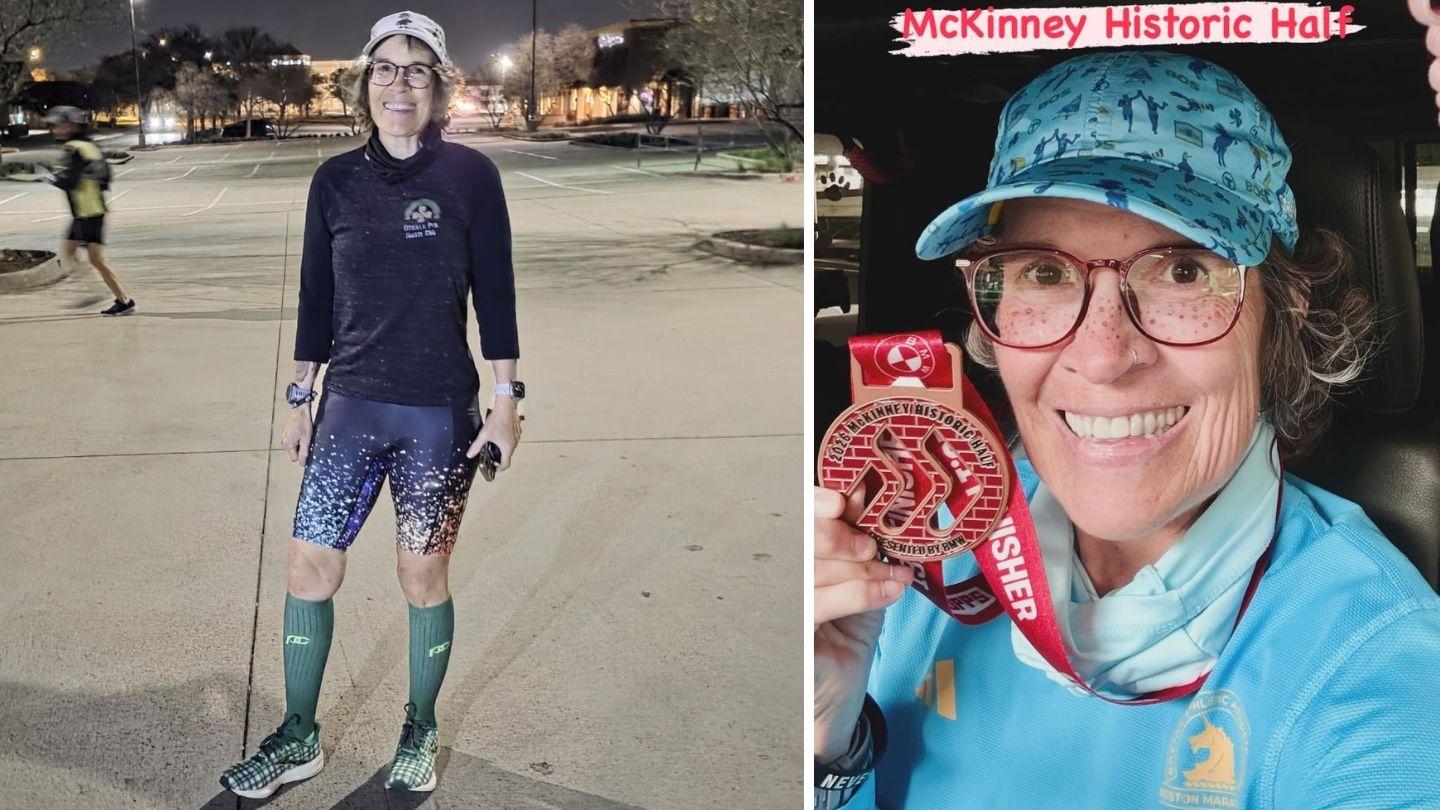
Rhonda Foulds has spent years chasing finish lines. These days, she is chasing time on her own terms. Foulds, 34, was diagnosed with Parkinson's disease after losing much of her mobility. She told WFAA there was a point when, “I literally could barely walk from the couch to the kitchen.” For years, she had run toward milestones, including a first marathon and then another finish line she once thought would be her last. “But I thought I never wanted to do it again,” she told WFAA with a laugh. After deep brain stimulation surgery restored her movement, running became part of her recovery. What started as therapy became something much bigger for her. “Fighting for what feels good is the best thing you can do for yourself,” Foulds said. By 2020, she had completed 100 marathons. The races carried weight after Parkinson's had changed her daily life, and running had helped her get back to something she thought she had lost. Then, in October 2024, a routine check of her implanted brain stimulator led to another diagnosis. “Ovarian cancer,” she says to WFAA. “And lung cancer.” The cancer had already spread. Foulds said doctors found tumors on her liver and sternum, and cancer in her bones. “I was depressed and anxious about it… and then I thought, you know, why not try to fight it?” she said. Foulds has spoken plainly about what the diagnosis means to her and what she wants from the time ahead. “I don’t want to die. I just want to be good up to the very end,” she said. She has also kept hold of the outlook that has carried her through Parkinson's and cancer. Speaking about how she approaches her illness, Foulds said, “You can always look for the bad. But it’s so much better if you look for the good, regardless of what life is like.” Chemotherapy disrupted her plans to train. Faced with that, she made a decision about what she wanted to do next. “I’m not saying I’ll give up chemo forever, just for now, because I want to run Boston,” she said. For Foulds, the Boston Marathon is not about a finishing time, a placing or even a medal. According to the source text, she is choosing how to spend her time, and running Boston is one of the things she wants to do. She also has other goals, including a jump off the cliffs in Wyoming. The physical challenge is also different now. Foulds plans to run the Boston Marathon with one lung after losing the other in her fight with cancer. “This has been the hardest thing I’ve ever been through,” she says. “But I’m gonna do it.” Her focus has shifted away from counting results. After years of measuring progress in miles and marathons, she has stopped counting in the same way. “We’re all gonna go one day,” she says. “I’m not afraid to die.” Foulds has learned that the hardest part is not always the end of a race. For her, it is the decision to begin, even when she knows the cost. “Keeping the faith,” she says softly, “that everything is gonna be good.” 📸Credit: @runrhodie on IG

Score (95)
Scientists Say They've Discovered a 'Sleep Switch' That Builds Muscle, Burns Fat and Boosts Brainpower
A good night’s sleep is doing a lot more work than most people realise. It helps rebuild the body, supports muscle and bone growth, burns fat, and for teenagers, it is tied to reaching full height potential. At the centre of that process is growth hormone, which surges during sleep. Scientists have long known that poor sleep, especially early deep non-REM sleep, is linked to lower levels of the hormone. Now researchers at the University of California, Berkeley, say they have identified the brain circuits behind that link. In a study published in Cell, the team mapped the circuits that control growth hormone release during sleep and identified what they describe as a new feedback system that keeps those levels in balance. The researchers said the finding gives a clearer view of how sleep and hormones work together. They also said it could help guide future treatments for sleep disorders linked to metabolic diseases such as diabetes, as well as neurological conditions including Parkinson’s and Alzheimer’s. “People know that growth hormone release is tightly related to sleep, but only through drawing blood and checking growth hormone levels during sleep,” said study first author Xinlu Ding, a postdoctoral fellow in UC Berkeley’s Department of Neuroscience and the Helen Wills Neuroscience Institute. “We're actually directly recording neural activity in mice to see what's going on. We are providing a basic circuit to work on in the future to develop different treatments.” The study points to a system deep in the hypothalamus, a part of the brain shared by all mammals. In that region, specialised neurons release signals that either trigger or suppress growth hormone. Two of those signals are growth hormone releasing hormone, or GHRH, which stimulates release, and somatostatin, which inhibits it. The researchers said the two work together to coordinate hormone activity across the sleep-wake cycle. Once growth hormone enters the system, it activates the locus coeruleus, a brainstem region involved in alertness, attention and cognitive function. Disruptions in that area are linked to a range of neurological and psychiatric disorders. “Understanding the neural circuit for growth hormone release could eventually point toward new hormonal therapies to improve sleep quality or restore normal growth hormone balance,” said Daniel Silverman, a UC Berkeley postdoctoral fellow and study co-author. “There are some experimental gene therapies where you target a specific cell type. This circuit could be a novel handle to try to dial back the excitability of the locus coeruleus, which hasn't been talked about before.” To study the system, the researchers recorded brain activity in mice using electrodes and stimulated neurons with light. Because mice sleep in short bursts during the day and night, the team said they were able to get a detailed view of how growth hormone shifts across sleep stages. They found that GHRH and somatostatin behave differently in REM and non-REM sleep. During REM sleep, both hormones increase, leading to a surge in growth hormone. During non-REM sleep, somatostatin drops while GHRH rises more modestly, which still boosts hormone levels but in a different pattern. The team also identified a feedback loop linking growth hormone to wakefulness. As sleep continues, growth hormone gradually builds up and stimulates the locus coeruleus, pushing the brain toward waking. The researchers said the system has another layer. When the locus coeruleus becomes too active, it can instead trigger sleepiness, creating what they described as a delicate balance between sleep and alertness. “This suggests that sleep and growth hormone form a tightly balanced system: Too little sleep reduces growth hormone release, and too much growth hormone can in turn push the brain toward wakefulness,” Silverman said. “Sleep drives growth hormone release, and growth hormone feeds back to regulate wakefulness, and this balance is essential for growth, repair and metabolic health.” Ding said the hormone’s effects may go beyond physical growth. “Growth hormone not only helps you build your muscle and bones and reduce your fat tissue, but may also have cognitive benefits, promoting your overall arousal level when you wake up,” Ding said. The research was supported by the Howard Hughes Medical Institute and the Pivotal Life Sciences Chancellor’s Chair fund. Yang Dan holds the Pivotal Life Sciences Chancellor’s Chair in Neuroscience. The study also included collaborators from UC Berkeley and Stanford University. Photo by Ron Lach on Pexels (https://www.pexels.com/photo/woman-lying-on-white-cotton-8263101/)
Score (98)
A Kindness Challenge Vending Machine is Dispensing Acts of Kindness
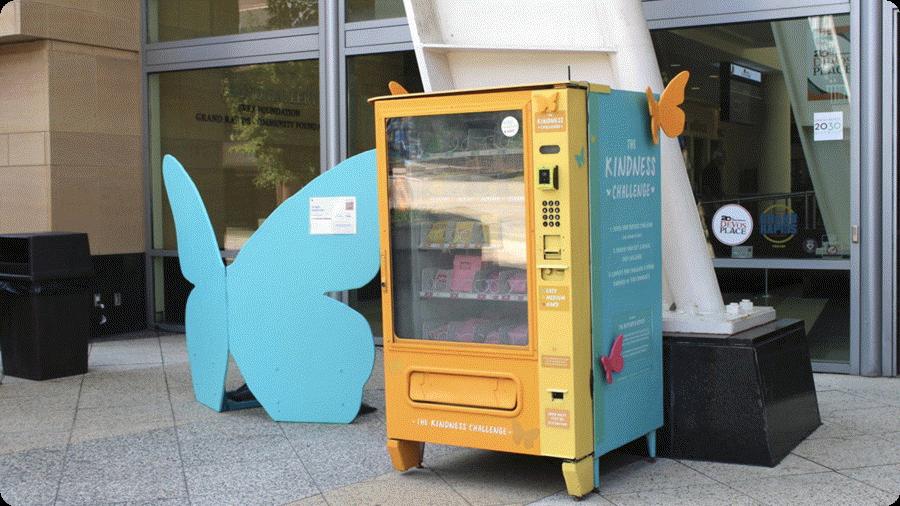
What used to sell bait and tackle in Michigan now hands out prompts for kindness. Nearly four years ago, Michigan artist Andrea Zelenak came up with the idea to turn an old bait and tackle vending machine into something she said could do more for the community. In 2022, the Detroit-area artist installed a refurbished, brightly colored vending machine on Monroe Avenue in Grand Rapids and called it The Kindness Challenge. Inside were three kinds of challenges aimed at getting people to do something kind for someone else. Green challenges are easy, yellow challenges are medium, and pink challenges are the most difficult to carry out. Zelenak first got a grant from an organization in Grand Rapids to create the project. As the owner of what she calls “an encouragement shop” called Inkcourage, she said she wanted to make doing good accessible to everyone. “The idea is that one act of kindness can create a wave of kindness in a community,” she told ABC 13 News, “so I’m really just challenging people to do one small act of kindness in order to create this bigger wave.” The project is still running in 2026. Over the years, the vending machine has traveled around Michigan to art festivals and different retail and arts districts. It is now in Detroit, outside Zelenak’s store. “You can come up , it’s open 24/7 , so you can come any time you want, and grab a mystery item from the machine,” Zelenak said in a recent social media video. “It’s inspired by the butterfly effect, so the idea is that when you do one random act of kindness for somebody, it creates a ripple of kindness in your community.” The machine works like a standard vending machine. It takes cash, coins and tap-to-pay options. FOX17 reported in 2022 that each item costs $3, and that the money goes back into creating more kindness challenges. Each purchase dispenses an envelope with what a person might need to carry out the act of kindness inside. The challenges can be simple. They might ask someone to give a warm hat to a person in need, share a stick of gum, write a thank you note or post encouraging words in public. Thousands of people have taken part since the machine started operating. During a recent installation at ArtPrize, Zelenak said more than 3,000 acts of kindness had been dispensed and that she ran out of challenges during the event. The machine gives out specific assignments, but Zelenak said she also wants people to think about the impact kind words can have. “If somebody says something kind to you, you will remember that for maybe a week, or five years, or the rest of your life,” she told ABC 13. “So I really feel like these words are really powerful no matter what you do with it.” She has also tied the project to the butterfly effect in describing how a small act can spread further than the person doing it may ever know. “The story goes, when a butterfly flaps its wings in Texas, it can set off a hurricane in Japan. One small action can create a ripple and lead to bigger, unpredictable things,” she writes on her website. “A simple act of kindness can make a huge difference and create a wave of kindness. Kindness is magic. Don’t underestimate it.” 📸credit: Andrea Zelenak/Facebook
Score (98)
Vancouver Woman is Restoring Cherished Stuffed Animals Through Her Own Teddy Bear Hospital
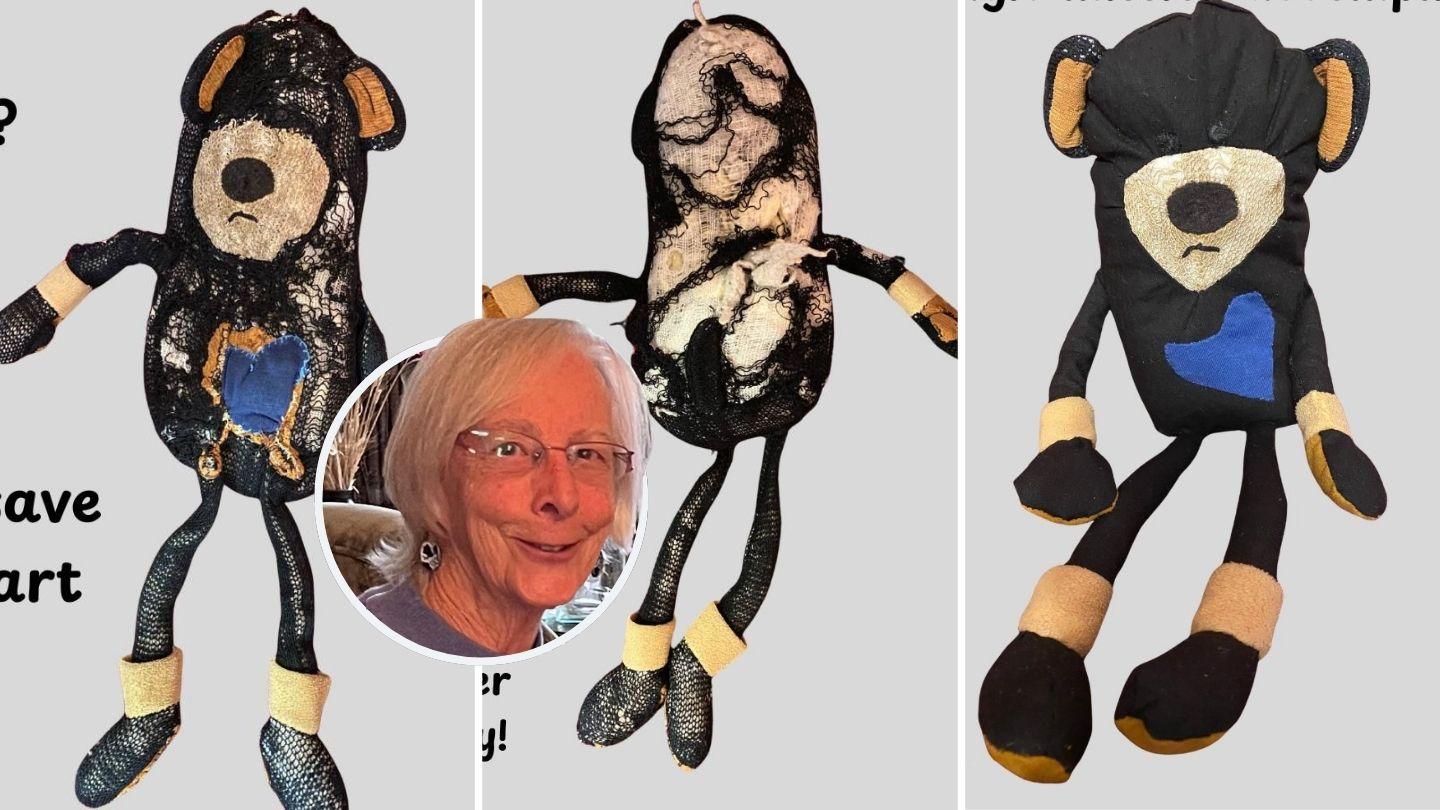
In a Vancouver home, a retired seamstress is giving battered teddy bears another shot. Ruth Hasman has turned retirement into repairing worn, torn and well-loved stuffed toys, working on them for nearly two decades, according to the CBC. She has repaired thousands of stuffed toys over that time. Some arrive missing eyes. Others have been damaged by pets. Many are simply, in her words, “loved” to the point of falling apart. Hasman told the CBC she treats every repair as its own problem to solve. “No bear is the same,” she said. “I learn something new almost every time I fix one.” She also said she does not cut corners. If a repair does not meet her standards, she starts over from scratch. Sometimes she visits dozens of thrift stores to find material that matches a bear’s original look. For Hasman, the work is also about the people attached to the toys. Many of the stuffed animals she repairs have been passed down through generations and carry deep emotional value for the families who send them in. One of the oldest toys she has worked on was 115 years old and had been cherished by five generations. “It’s a pleasure talking to the people, finding out the history of the bears,” she said. “There’s a lot of poignant stories.” She said the response after the repairs is often especially moving when it comes from children. “I get these little notes from the kids,” she said, gesturing to her heart. “It just pulls my heart.” 📸credit: @ruthhasman on IG
%3Amax_bytes(150000)%3Astrip_icc()%3Afocal(749x0%3A751x2)%3Aformat(webp)%2Fgreendale-fire-414-03232026-62fa801d73424c7ba5a159445d1d53b8.jpg&w=3840&q=75)
Score (98)
A Couple Just Saved a Mother And Baby From an Indiana House Fire
What started as a routine trip to Lowe’s turned into a rescue for an Indiana couple who spotted a house fire just as a mother and her baby were inside. Matt and Erin Wuestefeld of Greendale were driving home from an errand on March 15 when they noticed something was wrong, according to local outlet WKRC. "We both smelled smoke,” Matt said. “We looked over to the left and saw some flames coming out below the window.” Matt said he turned the car around, put it in park and ran toward the white, two-story home. "[I] ran up to the door, knocked on the door. There was a young lady inside … [She] had a baby less than a year old. Told her her house was on fire," Matt said. He helped the woman and her baby get out of the home. Then he went back inside to grab a few items. “I ran back in the house, grabbed her keys, her purse, her baby carrier and a bottle, and we got the car moved, looked for the two fire hydrants, [made] sure that they were available for the fire department and waited for them to show up," Matt explained. He told WKRC he and Erin were simply there when help was needed. "There's people who needed help and we were there ready to help," he added. According to WKRC, the mother, who has not been publicly named, later thanked Matt and Erin. She said she had woken up from a nap only seconds before Matt knocked on her door. Matt said the timing was narrow. "If we were probably 10 minutes earlier, we'd be not even smelling or [seeing] it, but there [was] just the right time to see the smoke and see the flames coming out underneath the window," he said. The mother and her baby were not hurt, according to WKRC, but the fire destroyed their home and belongings. The Greendale Police Department described it on Facebook as an "extremely dangerous situation." It is not currently known what caused the fire. 📸 Credit : greedale police department

Score (95)
Meet the Artemis II Astronauts Getting Set for a NASA Moon Mission Launch on Wednesday
The next crew bound for the Moon is almost ready to go, and this time there are four names on the list. NASA says Artemis II is set to lift off as early as April 1. The mission will send four astronauts from the United States and Canada on an approximately 10-day flight around the Moon to test the Orion spacecraft, which will land on the Moon in future missions. The crew will not land on the Moon on Artemis II, but the mission will take them thousands of kilometres deeper into space than the Apollo astronauts went for the original Moon landings of the 1960s and 1970s. “We are getting very, very close [to launch], and we are ready,” Lori Glaze, acting associate administrator for NASA's Exploration Systems Development Mission Directorate, said in a press conference over the weekend. “All of our operations have been going smoothly, it's been going very well.” Ahead of launch, the astronauts are reviewing emergency procedures and spending time with their families at the Kennedy Space Centre in Florida. They are also staying in quarantine to make sure they stay healthy before liftoff, which could be any day between April 1 and 6. Commander Reid Wiseman is a retired Navy captain who was serving as NASA's chief astronaut three years ago when he was asked to lead the crew. Wiseman previously spent more than five months at the International Space Station in 2014 as part of the 40th launch. He said his teenage daughters had “zero interest” in seeing him launch again. “We talked about it and I said, ‘Look, of all the people on planet Earth right now, there are four people that are in a position to go fly around the Moon,” he said. “I cannot say no to that opportunity.” Wiseman said the toughest part is not leaving his family, but “it's the stress that I’m putting on them.” He has been a single father since 2020, when his wife Carroll passed away from cancer. Wiseman was selected to join NASA as one of nine candidates in 2009 to start astronaut training after his military career. At the time, he was a lieutenant commander in the US Navy. He has often said he wanted to be an astronaut after going to a Space Shuttle launch in person as a child. Pilot Victor Glover has his own pre-launch routine. Before any launch, he listens to two songs, Gil Scott-Heron’s “Whitey on the Moon” and Marvin Gaye’s “Make Me Wanna Holler” from the white-dominated Apollo era. Glover said they "capture what we did well, what we did poorly." Glover, one of NASA's few Black astronauts, said he sees his place on the mission as a "force for good," and a chance to inspire others to get into space. In 2018, Glover was assigned to fly on the first operational flight of SpaceX's Crew Dragon capsule to the International Space Station, where he stayed for more than six months. Local media reported at the time that he was the first African-American crew member to stay on the ISS. In his previous career as a fighter pilot for the US Army, Glover logged over 3,000 flight hours in 40 different types of aircraft and flew in 24 combat missions. Before this launch, he said he has spent more time preparing his four daughters for his launch than he has preparing himself. Mission specialist Christina Koch, a 47-year-old electrical engineer from North Carolina, holds the record for the longest single spaceflight by a woman at 328 days. That mission began when she blasted off to the International Space Station on March 14, 2019. During that time, Koch was also part of the all-female spacewalk, when she and Jessica Meir left the ISS to carry out upgrades to the station's power systems and physics observatories. According to Reuters, Koch's 328-day mission is used to study the physical, biological and mental effects of long-term space travel on women. More than any one individual, Artemis II is “about celebrating the fact that we’ve arrived to this place in history” where women can fly to the Moon, she said. Koch spent a year at a South Pole research station before getting the call from NASA. Between that and her time in space, she said she feels she's “inoculated” most of her family and friends. “So far, I haven't gotten too many nerves from folks. Maybe my dog, but I've reassured her that it's only 10 days. It's not going to be as long as last time.” Canadian mission specialist Jeremy Hansen is making his space debut. He will be the first Canadian to ever go to the Moon. “Maybe I'm naive, but I don't feel a lot of personal pressure," Hanson told the Associated Press. Hansen, 50, grew up on a farm in rural Canada before joining the Royal Canadian Air Force as a captain. He piloted aircraft such as the CF-18 from his base in Alberta. He had been promoted to the rank of colonel before getting the call from the Canadian Space Agency in 2009. He also served as an "aquanaut" on a NASA mission to the Aquarius underwater laboratory in 2014, living underwater for seven days to simulate conditions in space and test NASA's remote guidance systems. “When I walk out, and I look at the moon now, it looks and feels a little bit farther than it used to be,” he said. “I just understand in the details how much harder it is than I thought it was, watching videos of it.”