






Scroll For More






Score (94)


Rare Sighting: Backyard Birder Spots Albino Hummingbird At Feeder
Around 96 million people in the United States enjoy birdwatching, and one woman recently had an incredible find. While visiting a relative's backyard with hummingbird feeders, Amanda says she spotted a rare albino hummingbird. The stunning white bird was captured on camera, sparking excitement across social media. This unique sighting is believed to be either albino or leucistic, making it a truly special moment for Amanda.



Score (97)
Massive Carrot Cake Feeds Entire Town and Draws Crowds With Record-Breaking Size
Ted Martindale had a simple thought when he looked up the Guinness World Records mark for carrot cake. At 80, the Canadian coffee shop owner decided he could beat it, and now he says he has. The nearly 6,000-pound carrot cake Martindale built in Quesnel, British Columbia, is under review by Guinness World Records. Martindale says the outcome is not much of a mystery. "I know we broke the record, and I'm pretty sure I can convince [Guinness World Records] of that," Martindale told Fox News Digital. "I've got all the documentation required," he said. For Martindale, the project started with a record book and a bit of confidence. "I looked up the [Guinness World Records book] carrot cake and I thought, 'Well, we can bake that. All we have to do is do the mathematics and the whole thing, and I can easily beat that record,'" he said. "So, we went for it." The giant cake was part of Martindale's 80th birthday celebration on March 25. The owner of Granville's Coffee unveiled it at the town's senior center and invited the community to join the festivities. What he expected to be a birthday event turned into something much bigger, he said. "Two weeks ago, my wife and I thought, 'Nobody's going to show up for this,'" he said. "And then the whole town just almost showed up. There was no parking in town. All the restaurants were busy. It was almost like a civic holiday. It was just amazing." The scale of the attempt meant the baking and building took time. "It was a month-long process because we had to make 432 sheet cakes, and we had to store them in a big freezer in a grocery store," Martindale said. Once the cakes were made, the job shifted from baking to construction. Assembly, he said, "was just like brickwork." "It was like a construction project. And we had to make all the icing on that day because you can't make icing and freeze it." In the end, the cake came together with a team and a long day of work. In all, it took "14 hours and about 12 people to put the whole thing together," he said. When it was finished, Martindale said even he was surprised by the result. "When the whole thing was finished, it was amazing," Martindale said. "I just never expected it to look like that. It was beautiful." Martindale has owned Granville's Coffee for 34 years. He told Fox News Digital he is used to thinking big. "I'm sort of a crazy old man," he said. Still, he said the cake is not the main thing he wants people to remember. He sees his coffee shop as the center of town. For all the attention around the record attempt, Martindale calls the business the "focal point of the whole town." "Everybody comes here, and it's a gathering place," he said. The Guinness decision is still pending, but Martindale has already made clear how he sees the effort. He believes the record is his, and he says he has the paperwork to prove it. He also says turning 80 has not changed his routine much. "I still go to work every day," he said. 📸 credit: Ted Martindale

Score (97)
Experimental ALS Treatments Bring New Hope to Patients Facing Progressive Disease
It’s not a cure. Not yet. But for a disease that has long offered little in the way of options, even a careful step forward can feel like a turning point. A new drug aimed at slowing the progression of ALS has officially entered a phase 3 clinical trial, the final stage before potential approval. And for patients and families watching the clock, that matters. The study, called PREVAiLS, is testing an investigational drug known as pridopidine. Developed by Prilenia Therapeutics and Ferrer, the trial has now enrolled its first participant at Mass General Brigham. Leading the research is Sabrina Paganoni, who says the drug targets a key pathway in neurodegenerative disease. "Pridopidine is a sigma-1 receptor (S1R) agonist," Paganoni said. "The S1R has been shown to play a role in stimulating multiple neuroprotective pathways impaired in neurodegenerative diseases, such as ALS and Huntington’s disease." ALS is a progressive condition where the brain gradually loses its ability to communicate with muscles. Over time, people lose the ability to walk, speak, eat, and eventually breathe. There is no cure, and most patients live just three to five years after diagnosis. That’s why this moment, even at an early stage, carries weight. The PREVAiLS trial plans to enroll 500 participants across up to 60 treatment centres in 13 countries. Its focus is narrow but intentional: patients in the early stages of ALS whose disease is progressing quickly. That focus comes from lessons learned the hard way. An earlier phase 2 trial in 2023 did not meet its main goal of slowing disease progression over 24 weeks. Still, researchers noticed something they couldn’t ignore. Certain subgroups, particularly patients early in the disease with rapid decline, showed promising signals. That was enough to keep going. The drug was also generally well tolerated, with side effects like falls and muscle weakness, symptoms that often overlap with ALS itself. For advocates, continuing the research is not optional. It’s urgent. "The earlier we can diagnose and treat ALS, the greater the potential to preserve function and maintain quality of life for longer," said Kuldip Dave of The ALS Association. "It was discouraging to see a lack of overall effect in the phase 2 study population," he added. "However, we were encouraged to see positive signals emerge from various subgroups, including potential impacts on speech and respiratory function." That last part matters more than it might sound. Respiratory decline is one of the leading causes of death in ALS. Even small improvements in breathing capacity can extend life and improve daily living in meaningful ways. Researchers are careful not to overpromise. Paganoni emphasized that real answers will only come once the phase 3 trial is complete and fully analyzed. "As with all clinical research, definitive conclusions won’t be available until the phase 3 trial is completed and fully analyzed," she said. Still, the start of this trial marks a shift from possibility to proof. For a disease where progression is relentless and options are limited, that shift, however incremental, offers something ALS patients rarely get. Time. Photo by Mikhail Nilov on Pexels (https://www.pexels.com/photo/a-romantic-couple-on-the-beach-7698987/)

Get even more good news on the free app!
Score (80)
Scientists Create Dinosaur DNA-Derived Leather Handbag in Breakthrough Biomaterials Reveal
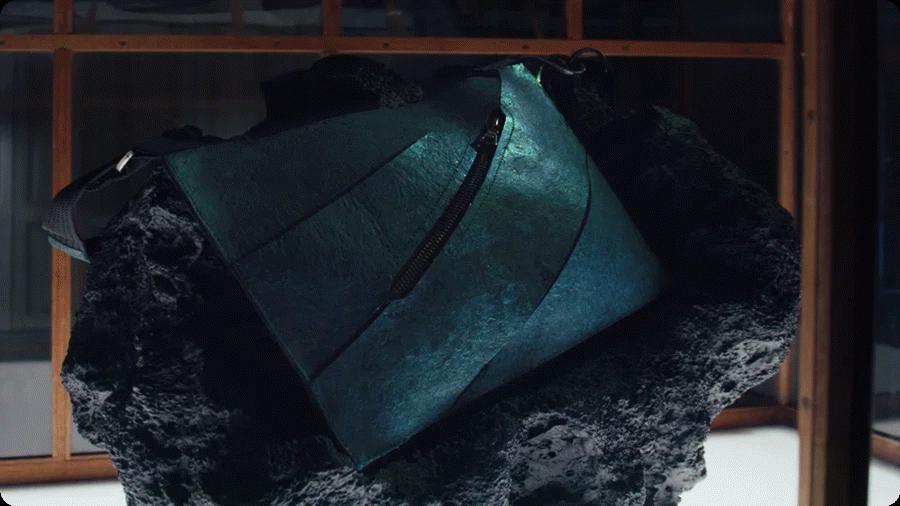
Call it the purse of the prehistoric. In what sounds like a luxury stunt cooked up after a late-night dinosaur movie, a team of scientists, designers and creatives says it has made the world’s first product from lab-grown T-Rex leather: a one-of-a-kind handbag that debuted in Amsterdam this month. The bag was unveiled on April 2 at the Art Zoo Museum, where it is being displayed beside a massive Tyrannosaurus rex structure acquired from Naturalis Biodiversity Center. The setting was no accident. The whole idea is to put an object made with reconstructed dinosaur collagen next to the ancient creature that inspired it. The project brings together creative agency VML, genomic engineering company The Organoid Company and Lab-Grown Leather Ltd. The handbag itself was designed by Enfin Levé, the avant-garde techwear label founded by Polish designer Michal Hadas. According to the source material, the companies began developing the material after announcing the ambition in 2025 to create the world’s first T-Rex leather. The material is expected to be offered to luxury brands later on. The science behind it sounds almost as wild as the sales pitch. The team said it started with fossilized T.rex collagen sequences, then used computational biology and AI modelling to predict and reconstruct the missing genetic information needed for a full collagen blueprint. That synthesized DNA was inserted into a carrier cell line. From there, billions of engineered cells were cultivated using Lab-Grown Leather’s tissue engineering platform. The companies say the result is leather that is structurally identical to traditional leather, but grown without animal slaughter, deforestation or chromium-heavy tanning. They also describe it as durable, repairable, biodegradable and fully traceable. The bag is being treated as a collector’s item. After a six-week exhibition at Art Zoo, it will be auctioned to the highest bidder. Even so, the material itself is not meant to stay a museum curiosity. The team says T-Rex leather will continue to be produced, with early uses focused on luxury accessories and longer-term plans reaching into fashion, automotive and other high-performance materials. Professor Che Connon of Lab-Grown Leather said, “Our proprietary advanced tissue engineering platform has once again proven its versatility. By collaborating with VML and The Organoid Company, we’re unlocking the potential to engineer leather from prehistoric species, starting with the formidable T-Rex. This venture showcases the power of cell-based technology to create materials that are both innovative and ethically sound.” Thomas Mitchell, CEO of The Organoid Company, called it “a bold example of synthetic biology extending beyond medicine into sustainable material innovation.” VML’s Bas Korsten put it more bluntly. “The stark reality is that lab-grown leather hasn’t yet convinced the luxury world. Why? Because it feels like an imitation. We knew we had to do something radically different. Not a substitute, but something entirely new. So we went back 66 million years in time.” And Hadas said the material itself shaped the design: “It has a distinct character and responds unlike any leather we’ve worked with. The final bag follows that logic, letting the material define the object rather than forcing it into familiar codes of luxury.” That may be the strangest part of this whole story. For all the futuristic biotech involved, the pitch is pretty simple. Go back about 68 million years, and you just might find a new way forward. 📸 Credit: VML

Score (98)
Community Rallies for Veteran Known for a Lifetime of Helping Others
Kenny Jary has spent years helping other people get around. Now, the man many know as Patriotic Kenny is the one asking for help. Jary, an 84-year-old United States Navy veteran, started the Patriotic Kenny Foundation to help people in need of mobility scooters. According to the source text, he has helped provide more than 150 scooters to veterans in need while also sharing a message of happiness and love on social media. Recently, Jary was diagnosed with stage IV metastatic lung cancer. “He has been diagnosed with stage IV metastatic lung cancer that has spread to his lymph nodes and lightly on his spine. His oxygen levels fluctuate, his strength is limited, and he now requires significant daily support,” Amanda Kline shared on a GoFundMe established to help Patriotic Kenny. Despite the diagnosis, Jary responded with gratitude. “I could say it’s not fair,” he said. “But what’s not fair is that so many people will never experience the amazing life I’ve had the last five years.” His only wish is to stay at home surrounded by the people he loves, rather than in a hospital, according to the source text. The cost of private healthcare is extremely high, but supporters have responded quickly. The GoFundMe has raised more than $300,000 so far. Donors have also shared messages of support for Jary. “In honor of my Father, a Vietnam Air Force Vet, who would have been 74 this year, he passed 13 years ago from lung cancer,” one person wrote. Another donor wrote, “I love your videos. You have made such an impact in my life. And I’m so grateful that I get to watch your videos every day. I know that 5 dollars is not a lot. But I really wanted to show my support and show you how much you mean to me. You have made me happy and I’m so grateful for it, and thank you for your service.” 📸 credit: Amanda Kline/GoFundMe

Score (94)
Lunar Launch and New Cholesterol Guidelines Lead This Week in Science News
It was a busy week in science, from a Moon mission to cholesterol advice and a possible rewrite of gaming history. NASA's Artemis II mission successfully launched on Wednesday, carrying four astronauts around the Moon for the first time in more than 50 years. The mission is expected to carry humanity farther from Earth than anyone has ever been, breaking the record set by the crew of Apollo 13 in 1970. In medicine, cardiologists in the United States published new guidelines for patients and doctors on detecting and managing high cholesterol. Medical experts from the American College of Cardiology and the American Heart Association compiled the updated advice. The new guidelines replace the ones those organisations issued in 2018. Researchers also reported a possible new treatment strategy for Alzheimer's disease. A compound called FLAV-27 showed promise in reversing cognitive decline in mice with Alzheimer's by targeting a unique mechanism. The new compound appears to work in a broader way than previous treatments. It targets upstream changes in gene expression that help drive the disease's progression in multiple ways, not only through protein plaques. Archaeologists, meanwhile, may have identified what could be the world's oldest "dice". A study of Native American artifacts dated the possible game pieces to more than 12,000 years ago. Researchers said the artifacts were used by hunter-gatherers near the end of the last ice age. That would make them thousands of years older than previously known artifacts that could be considered dice. Another study pointed to three small daily habits that may lower the risk of heart attack and stroke. The research analysed 53,242 participants with an average age of 63. The data showed that adding 11 more minutes of sleep, an extra 4.5 minutes of moderate-to-vigorous physical activity, and an additional quarter cup of vegetables each day was associated with a 10 percent reduction over eight years in the risk of major cardiovascular events, including heart attacks, stroke and heart failure. Researchers also reported an unexpected result in a small study of older women's weight loss. Women taking the GLP-1 drug tirzepatide lost 35 percent more weight if they were also on hormone therapy. "If confirmed, this work could speed the development and adoption of new, evidence-based strategies to reduce this risk for millions of postmenopausal women navigating this life stage," says endocrinologist Maria Daniela Hurtado Andrade.

Score (96)
Kansas City Chiefs Launch Let Her Play Campaign to Help Sanction Girls Flag Football in Kansas
The Kansas City Chiefs are putting their weight behind a push to bring girls' flag football to Kansas high schools. The team revealed an advertising campaign called "Let Her Play" on Thursday as it tries to persuade the Kansas State High School Activities Association, or KSHSAA, to make girls' flag football a sanctioned sport in the state. In a 55-second video, the Chiefs showcased several girls who already play the sport. The team also highlighted girls in Kansas who can only dream of representing their school by playing organized flag football. The campaign comes ahead of an April 23 vote by the KSHSAA board on sanctioning the sport. The Chiefs said they believe support from KSHSAA would give more girls the chance to play and increase pathways to later play in college. "There's over 20 million people playing flag football worldwide right now," Chiefs president Mark Donovan said Thursday. "Over half of a million girls [ages] 6 to 17 play flag. Right now, a girl in Kansas can't play for a state championship and can't play organized high school flag football. What this vote does is give them that opportunity." Donovan said the Chiefs have spent six years working to grow the sport among girls in Kansas. Based on data from the campaign, the Chiefs said high school girls' flag football participation in Kansas grew 163 percent from 2024 to 2025. Chiefs club owner Clark Hunt also spoke about the growth of the sport earlier this week at the NFL owners meeting. "What we do know is flag, globally, is growing very fast," Hunt said Monday at the NFL owners meeting. "It's growing fast in the U.S., particularly the female demographic. There's lots of positive statistics about a translation of people who played flag football becoming fans of the NFL. Long term, it'll be very beneficial for the league." The KSHSAA vote will be decided by the board's 73 members. The board includes high school principals, school board representatives, athletic directors and superintendents. At least 51 percent of the board must vote yes for the petition to pass. If the petition passes, Kansas will become the 18th state to sanction girls' flag football. The Chiefs also have the petition on their website for fans to sign. The video ends with several prominent members of the Chiefs organization delivering the campaign's final message. Coach Andy Reid, Donovan and players including right guard Trey Smith, center Creed Humphrey and receiver Xavier Worthy shout, "Let Her Play," as a call to action for the KSHSAA board. Donovan said passage of the vote could become an early step for a future girls' flag football player from Kansas, including one who could go on to compete in the 2028 Summer Olympics and maybe in a professional league. "That would make it possible for a young girl in Kansas being able to play high school flag football for a state championship, get a full-ride scholarship to play college flag football, play on an Olympic flag football team and then after that play in a professional flag football league," Donovan said Monday at the owners meeting. "That's an exciting opportunity that we've been a real, real big supporter of. "There's probably some kids, boys and girls, who are potentially going to really focus on flag. Maybe they're smaller, faster, quicker or [other] reasons why they'd be better at that than tackle football. It's another opportunity for those kids." Photo by Willians Huerta on Pexels (https://www.pexels.com/photo/women-s-flag-football-game-in-action-outdoors-35018105/)

Score (97)
Experts Capture First-Ever Footage of Rare Beaked Whale Far Larger Than Previously Recorded
It is not every day a whale catches experienced conservationists off guard. Off Argentina’s southern coast, one did exactly that. Conservationists working in the waters of Chubut Province recorded rare evidence of a blue whale during a photo-identification expedition focused on humpback and sei whales, according to the Buenos Aires Times. The sighting marked the first time anyone had spotted the species within Patagonia Azul Provincial Park. Blue whales have been recorded in other parts of Argentina, but not often. In Patagonia Azul Provincial Park, officials said, this was a first. The team was out monitoring other whale species when the animal appeared. Tomás Tamagno, a biologist on board during the sighting, said the scale of it was immediately clear. "We came across this whale surfacing, but this one was different – it was gigantic, far larger than any we had ever seen," Tamagno said, according to the Buenos Aires Times. He said the group approached carefully to confirm what they were seeing. "We moved a little closer, carefully, to see what it was and found ourselves face to face with a blue whale," he said. "Fortunately, we were able to get reasonably close and take some good photographs." Those photographs became rare documentation of the species inside the protected area. Officials in Argentina said the sighting was a significant milestone for marine conservation and biodiversity in the area, and linked it to work by local organizations. The blue whale is the biggest animal on the planet and is classified as endangered. According to the source material, the species lives in every ocean except the Arctic Ocean and faces threats from whaling, boats and fishing gear. The sighting also drew attention because it happened during a routine conservation effort. The expedition was using photo identification, a tool used to monitor whales in the area, when the blue whale appeared among a day already filled with humpback activity. Tamagno later described the moment as one the crew would not forget. "It was an incredible day, surrounded by jumping humpbacks and the appearance of this specimen," he said, according to Noticias Ambientales. "We are very happy to have been able to confirm the presence of the blue whale within the Park." The report comes as conservation groups and scientists continue tracking whale populations and the pressures they face. According to the National Oceanic and Atmospheric Administration, whales need support to grow their populations, including protected corridors, steps to prevent boating accidents and action to reduce ocean noise. Preservationists use several tools to manage and protect the environment, and cameras are one of them. The source material said cameras stationed in remote locations, suction-cup camera tags placed on humpback whale calves and footage from boating expeditions can help scientists gauge the health of endangered species and document evidence of rehabilitation efforts. In this case, photographs taken from the boat helped confirm the species in a place where it had not previously been recorded. That made the sighting notable beyond the surprise of the moment. In an area where conservationists were already tracking humpback and sei whales, the appearance of a blue whale added a new record for Patagonia Azul Provincial Park. Officials said that the record is important for marine conservation and biodiversity in the area. "We are very happy to have been able to confirm the presence of the blue whale within the Park," Tamagno said. 📸 cedoc/perfil
Score (98)
Adaptive Skateboarding is Helping People With Disability Build Confidence and Independence
For Bobby Welch, a skateboard ride is a big deal. The 43-year-old from the Gold Coast stands on her board with help from a custom-built frame, an adaptive harness and a volunteer by her side. Bobby lives with cardiofaciocutaneous, or CFC, syndrome, a rare genetic condition that has progressively affected her mobility. She uses a wheelchair in daily life, but her mother, Marie Welch, said that has never stopped her from wanting to try new things. "We've tried all sorts of things, sailing, gymnastics, swimming," she said to ABC News Australia. "She even wanted to learn how to dive." As Bobby's condition worsened, those opportunities became increasingly limited. Marie said adaptive skateboarding changed that. The program uses a specially designed skate frame that lets participants stand safely on a skateboard while trained instructors guide and stabilise them. It has opened up a sport that has traditionally been out of reach for many people with disability. Marie said the impact on her daughter has gone well beyond time on a board. "It gives her a lovely social life," she said. "She can't stop smiling when she gets here, and she talks about it when she gets home," "Just to be able to get out and be in the community is so important." Professional skateboarder and coach Jesse Noonan brought adaptive skateboarding to the Gold Coast. He said it started with a simple attempt to include one child at a skate park. "I was coaching some young boys and their sister showed up to the park in a wheelchair and I wanted to include her," he said. "I rigged up a skateboard under her walking frame and got her skating straight away." That moment led to Skate Advantage. Mr Noonan said getting people onto the frame and onto the skateboard had a powerful effect. "Getting out there, getting on the frame, getting on the skateboard. It changes people's lives. "It gives them positivity and this sense of adrenaline they've never experienced." The program is supported by Gold Coast Recreation and Sport, a community-based organisation that provides sport and recreational opportunities for people with disabilities. Project manager Acacia Porter said the value of the program went beyond physical activity. "It's important for everybody to have opportunities to participate," she said. "This program is breaking down barriers, not just to participation but to community perceptions." She said bringing people of all abilities together was changing attitudes. "It shows they can do it," Ms Porter said. For Bobby's family, that change is obvious. Marie said without adaptive skateboarding, her daughter would be very housebound. Instead, the sessions give her a chance to get out, spend time with other people and take part in something that makes her happy. "It just makes my day," Marie said. On the concrete, Bobby glides to a gentle stop with a grin across her face. Around her, others take their turn, stepping into frames, adjusting helmets and pushing off. For the people in the program, adaptive skateboarding has become a way into a sport and a wider community. "It gives her a lovely social life," Marie said.

Score (96)
Dubai Bakery Sells Out Fresh Snacks After Cancelled Order Triggers Community Support
What started as a scramble over 1,000 hot cross buns turned into a sell-out morning for a family-run Dubai bakery after a church order was cancelled on Good Friday. Golden Chariot confectionery and catering company in Karama was left with large quantities of freshly baked food intended for a place of worship that closed as a precautionary measure because of the Iran war. Churches in Dubai will be closed to the public until further notice, with only limited mass services available to watch online during the Easter period. “The community has been absolutely wonderful. It was overwhelming, in three to four hours, we were all sold out and had to tell people there was no food left,” said Anna Rodrigues, who manages the 20-year-old firm with her parents. “People we didn’t know called and said they heard about our big order being cancelled and wanted to help. From 7 a.m. to 11 a.m., it was non-stop calls. What started as a worrying day ended up with us smiling, running around and making deliveries all over Dubai. In our time of need, people came forward and helped us.” The Golden Chariot confectionery and catering company supplies food to companies, schools and churches. It also stocks a kiosk at a Jebel Ali church. A large church order was cancelled when authorities shut down houses of worship on Friday in Dubai as a security measure. Staff had spent hours baking spiced cinnamon buns, mini cheese pizzas, mushroom pies, cheese canapés and fresh fruit tarts for parishioners after the Good Friday service. “We were due to leave at 5 a.m. to deliver at the church kiosk. Yes, we understood that the cancellation was for our safety. But what do we do with all the buns and food?” said Ms Rodrigues, 31, who sent a WhatsApp message to a group of friends. In the note, headed “Distress bake sale, urgent help,” and sent with photos of mini cheesy pizzas, triangular crusty puffs and fluffy buns, Ms Rodrigues explained the bakery’s predicament. The response was immediate. Companies, charity groups, families and labour accommodation centres called in to order. “We had orders for 10 pieces and also orders for 100 pizza slices. It started with one message and just blew up when people started forwarding it,” she said during a break from a delivery run. “People bought for their security guards, for their family. We have been behind the wheel all day on deliveries. We feel blessed and grateful.” The bakery was opened in 2006 by the Rodrigues family and has a steady stream of regular customers from nearby neighbourhoods. Ms Rodrigues said business has slowed since Iran began its attack on February 28, launching missiles and drones at the UAE. Because the bakery caters for special occasions, it has felt the impact of people staying indoors. “It’s been a terrible month for us as people are mainly working from home. Orders we get from corporates, for birthday parties celebrated in offices, bakery snacks for school canteens, all that has stopped,” Ms Rodrigues said. “We were hoping for some redemption at the Good Friday church service because that is our community. My family and I get behind the counter at church, we are known as the family that runs the church canteen. Today, everything changed for us, what started out as an unfortunate day turned into a successful day. A new community came forward and gave us strength.” Among those who placed an order was Meena Dhanani, a hypnotherapist in Jumeirah. She bought 350 pieces of cinnamon buns, cheese croissants and pizzas to distribute on Friday evening to taxi drivers, housemaids, gardeners and delivery riders in her neighbourhood. “When I saw the message, I thought about how we can help. I had never heard of the bakery but I trusted it would be freshly baked,” said Ms Dhanani, who regularly distributes food to people in need. “I didn’t want the food to go to waste. We can share this with so many people who will be so happy.”
%3Amax_bytes(150000)%3Astrip_icc()%3Afocal(749x0%3A751x2)%3Aformat(webp)%2FJanae-Martinez-family-18-02192026-d7a0ee8e9cc747d489041817836607b6.jpg&w=3840&q=75)
Score (96)
After Years of Infertility Struggles, This Firefighter and His Wife Adopted a Newborn Left in a Safe Haven Box
A joke at the fire station turned into something much bigger for Chris Martinez. The New Mexico firefighter says he once half-joked that he wanted the first baby surrendered at his station under a new safe haven program. On Feb. 6, 2024, that happened at the Belen Fire Department, where a newborn boy was left in a baby box about four months after it was installed. Now Martinez and his wife, Janae, have adopted that child, Mikel Gracen Martinez, after a year-long legal process that they say exposed problems in how New Mexico handles anonymous safe haven surrenders. “I knew from the moment I saw him I wanted to be his dad,” Chris says. Chris, 45, told PEOPLE the day began with a structure fire at about 1 a.m. He said his gear melted during the response, leaving him with burns to his ears and wrists, and he went to hospital for treatment. A woman died in the fire. After he returned to the station, another lieutenant told him a baby might have just been left in the station’s safe haven box, a temperature-controlled unit in a secluded spot on the side of the building. Even though it was the afternoon by then, Chris said, “No one saw anyone.” He said the box has a timer that gives someone leaving a newborn about a minute to leave “peacefully and remain anonymous.” When firefighters opened the box, they found a newborn boy turning blue, with his umbilical cord still attached and in obvious distress. Chris said firefighters gave the baby oxygen, warmed him and took him to a local hospital. The baby was treated in the neonatal intensive care unit for pneumonia, fluid in his lungs and a brain bleed, Chris said. “He had five different drugs in his system and just a number of things,” Chris says. “He had to stay in the hospital for almost two months.” Chris and Janae, 41, said they visited every day. The couple told PEOPLE they had spent about 15 years trying unsuccessfully to have a child. Around that time, they had just become certified as foster parents, which allowed them to care for the boy while they moved through the adoption process. That process took about a year and, they said, was emotionally grueling because of New Mexico law. According to the couple, state law requires a biological parent to identify themselves to authorities even if they use a safe haven baby box. The baby’s mother did not do that, they said. Chris and Janae said notices were placed in local newspapers asking the birth parents to come forward. They also attended multiple court appearances while waiting for possible relatives who never came. For the first year, Janae said, the boy had no legal name and was identified in documents as Baby Boy Doe. She said even at the pediatrician, he was called in as Baby Boy Doe instead of Mikel, the name she and Chris wanted for him. The name carries personal meaning for the couple. They said Mikel honors Chris’s brother, who died in 2012 at age 37. His middle name, Gracen, reflects what they describe as the grace of God in answering their prayers. “He didn’t have an identity, he didn’t have a birth certificate, he didn’t have a Social Security card. He didn’t have anything for a whole year,” Janae says. “It was hard, people not calling him by his name. He’s not a nobody, he's somebody. He’s a Martinez.” The couple said New Mexico also required a DNA test, partly to determine if the child was indigenous because, in that case, the baby would have been given to their tribe. “I don’t know what we would do at this time if the mother or relative showed up,” Janae remembers thinking. “I guess we’ll just cross that bridge if we ever come to it.” No one from the child’s biological family came forward, and the adoption was finalised on March 10, 2025. Janae said the day was marked with a party attended by family and mariachis. “It symbolized so much. We finally got to rest and finally, officially, be a family,” Janae says. The couple said they decided to speak publicly because they want attention on what they see as gaps in New Mexico law. They said baby boxes are still new in the state, but that older protocols are still being used to try to identify parents who surrender newborns, even though anonymity is part of the safe haven program. On Jan. 30, state Senator David Gallegos introduced a bill that would protect the privacy and anonymity of a mother who surrenders a child under the safe haven program, unless there are specific circumstances involving neglect or abuse. The proposal has stalled, but efforts are continuing, according to the report. Janae said she is grateful to the woman who placed Mikey in the box. “We thank the mother so much for making the bravest decision and I can’t even imagine. She wanted a better life for Mikey,” Janae says. “Just knowing that if he was not placed in that box, where would he be right now? That breaks my heart.” Chris and Janae met in 2003. He was a local musician working side jobs, and she worked at a local radio station. She still hosts an afternoon program on KOB-FM. Both grew up in Albuquerque, came from large families and married in 2010. Janae said learning she likely “would not be a mother” was “devastating.” She said the couple stopped fertility treatments and decided to become foster parents. Not long after, Mikey arrived at Chris’s station. They said their parents live nearby and help with their son. Janae works three jobs, while Chris said he cut back to “just one” after a promotion in the fire department. They also continue to do short-term foster care. Chris said he hopes to retire in about three years, while Janae expects to work about five more years. “We were always just work, work, work,” Chris says. “But life is not all about working. It's about relaxing and enjoying him [our son]. We are going to have so much fun.” Credit : Janae Martinez