






Scroll For More






Score (97)


Stray Kitten Discovered in Christmas Tree Seeking Forever Family
A stray kitten discovered in a California Christmas tree is on the hunt for a loving home. The family who found her included a quick-thinking veterinarian who ensured her safety. Named Evergreen by the caring staff at Helen Woodward Animal Center in San Diego County, this adorable feline is ready to bring joy to her new family. Applications are now open for those interested in adopting this festive surprise and giving Evergreen the forever home she deserves.


Score (91)
Kevin Smith Pays Heartfelt Tribute To His Late Mother, Grace V. Smith
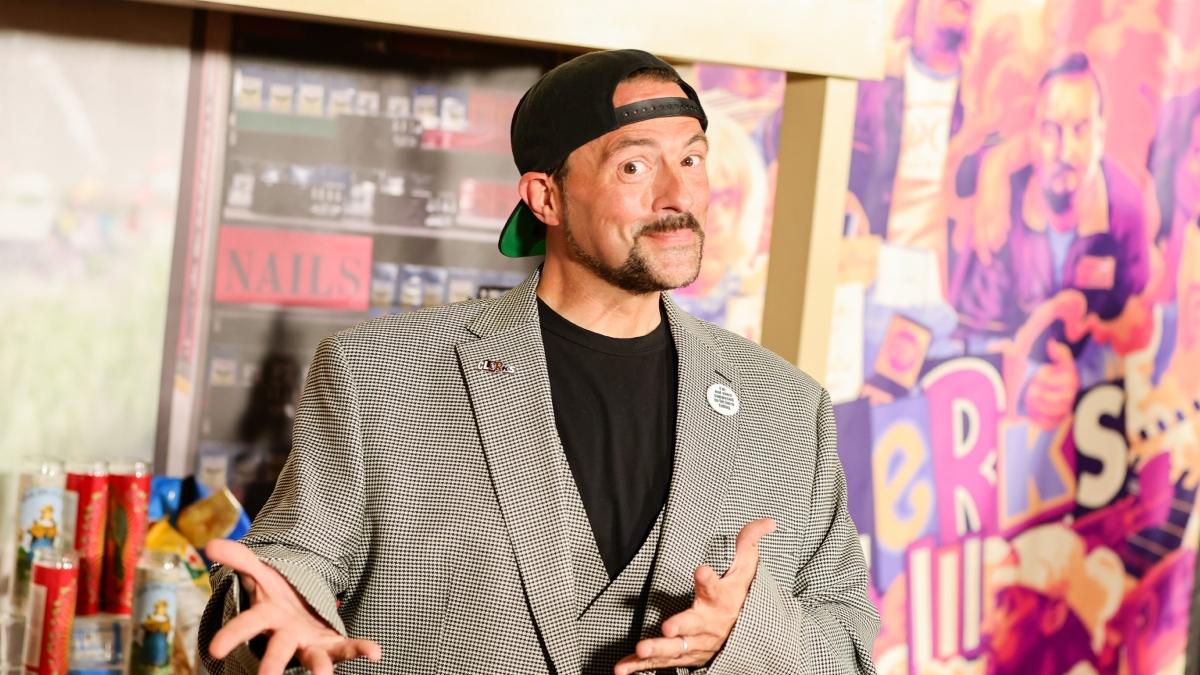
Filmmaker Kevin Smith is sharing an inspiring tribute after the loss of his mother, Grace V. Smith, who passed away on December 1. In a heartfelt message shared with fans, the Clerks and Chasing Amy director credited his mom as the single most influential person in his life — and the reason he became who he is. “The bill for 55 years of unconditional love came due on December 1st,” he wrote. “And the costly price was having to watch the strongest person I’ve ever known – my absolute favorite person in the world – exit the stage after a lifetime of setting it for her children. My Mom is gone.” For fans of Smith’s work — which includes cult classics like Mallrats, Dogma, and the Jay and Silent Bob series — his mother’s passing feels personal. Grace Smith wasn’t just a behind-the-scenes figure in his life; she helped shape the voice, humor, and heart that have defined his decades-long career in independent film. “She was a lioness, fiercely protective of her pride, who lived for her kids,” Smith said, reflecting on her unwavering support. “There’s never been a day in my life when I didn’t know in my bones that I was valued as human being, cherished as a child, and deeply loved beyond reason.” Grace raised her children with a strength and tenderness that Smith says gave him the confidence to speak his mind, create bold characters, and share his world with fans. “My Mom made me feel like I mattered – to our family, to the world, and especially to her.” Smith ended his tribute with a note of gratitude and love. “Thank you for making me and taking me on the journey of a lifetime. I love you so much, Mom. You’ve always been, and will forever be, my hero. Love, Tiger.” Fans flooded social media with condolences and thanks — not just for Grace’s impact on her son, but for the ripple effect it had on their lives through his work. “She made Kevin Smith, who he is today,” one wrote. “And we’re all grateful for that.”

Score (96)
Croatians are Diving Into Tradition With Winter Swims For Over Two Decades — Here's Why
In the Croatian coastal town of Opatija, where the Adriatic breeze turns crisp in winter, a decades-old tradition is bringing locals and tourists alike into the sea — even as the temperature drops into the single digits. For 22 years, a group called Opatija Kukali has been organizing winter swims along the northern Adriatic coast. Between November and January, the swimmers gather on the beach, peel off their layers, and wade into waters that can dip as low as 10°C. The ritual has grown beyond a local pastime. What started as a small community gathering is now drawing international visitors, with hotels in the area even offering guests the chance to join in. Among them was Paula Knauss from Austria, who recently took part and described it as “a great experience to swim in the sea,” comparing it to her usual cold dips in Wuster Lake. Cold-water swimming has been gaining popularity across Europe, boosted by growing interest in both mental and physical health benefits. In Opatija, many of the swimmers say they’ve felt those benefits firsthand. “From our many years of experience with winter swimming and from studying professional and scientific literature, we can say that the benefits are significant,” said Dr Mario Susanj, president of Opatija Kukali. According to Susanj, regular cold-water immersion can improve circulation, heart and lung function, and blood vessel elasticity — especially important for older adults. “And it strengthens immunity during the winter period,” he added. Beyond the physiological perks, the plunge triggers a surge of endorphins and norepinephrine, a hormone associated with alertness and the body’s fight-or-flight response. The group’s New Year’s Day swim has become one of the city’s most iconic winter events. Swimmers, bundled in hats and scarves one minute and barefoot in the surf the next, take the plunge as onlookers cheer. It’s a spectacle that symbolizes renewal and resilience, and the growing number of participants each year suggests it’s a message that resonates. Still, the icy practice isn’t without risks. Doctors caution that sudden exposure to cold water can cause a rapid spike in blood pressure, which could be dangerous for those with heart issues. Staying in the water too long can also lead to hypothermia, especially for inexperienced swimmers or those not dressed appropriately. While some studies suggest positive outcomes from cold exposure, much of the research has been short-term and based on small groups. That hasn't slowed the rise in popularity, but it has prompted health experts to stress moderation and proper preparation — especially for newcomers. In Opatija, the chill doesn’t seem to be stopping anyone. For many, it’s about more than health stats or adrenaline spikes. It’s about community, tradition, and the quiet satisfaction of walking back up the beach, skin tingling and spirit lifted, in the dead of winter.

Get even more good news on the free app!
Score (98)
Neurodiverse Fashion Revolutionizes Comfort And Style
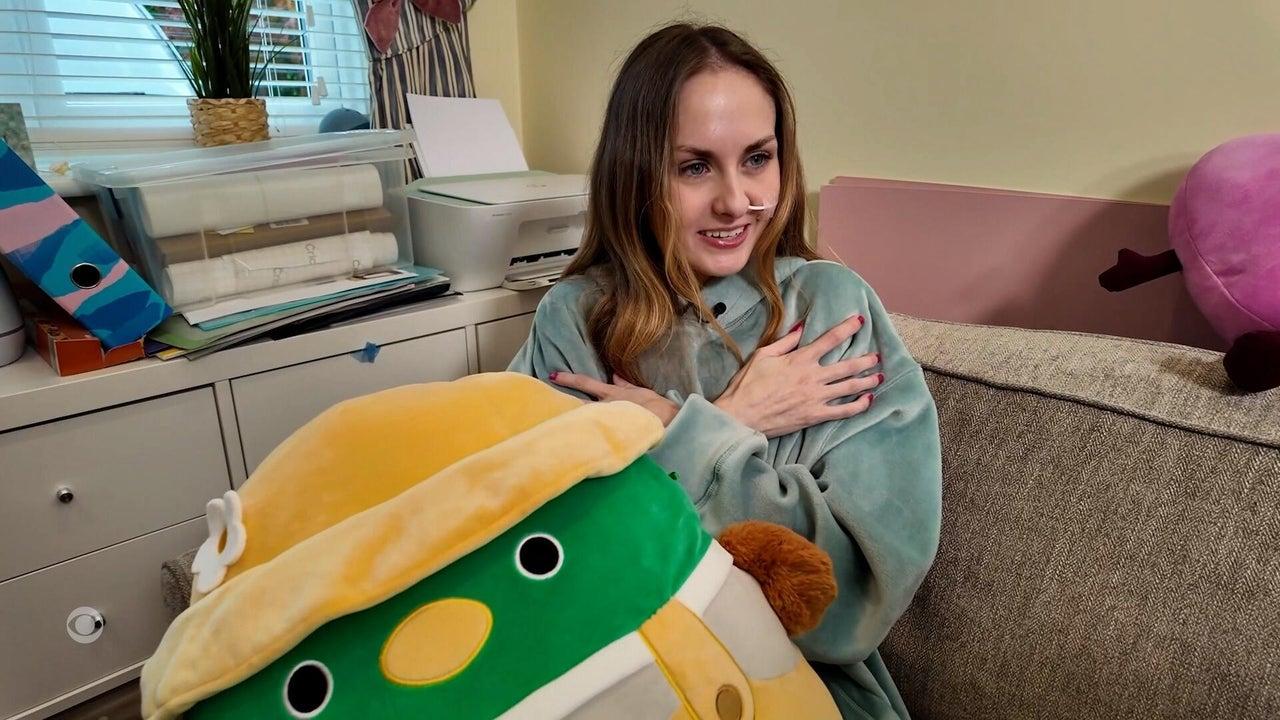
Millie Haywood spent most of her teenage years in hospital wards, fighting a debilitating eating disorder and struggling to find her place in the world. Now 22, she’s turning those painful experiences into something soft, comforting — and empowering. From her home in Chalford, a village in southern England, Haywood is the founder of Mentally Unstitched, an online embroidery business that creates sensory-friendly hoodies inspired by her own mental health and neurodivergent journey. “I used to absolutely love running, it was my passion. It was my purpose in life,” she told CBS News. But after being diagnosed with anorexia at 13 and enduring years of treatment, that part of her identity was stripped away. “I felt like I had no purpose, because I could no longer run and I just didn't have anything to live for, other than my family.” That sense of loss and disconnection stayed with her for years. The physical reminders — including a visible feeding tube — made job interviews especially difficult. “I went for quite a few interviews, and I was just immediately turned down,” she recalled. “It just really knocked my confidence... but at the same time, it lit this fire in me, to create something that I'm proud of.” The real turning point came at 21, when Haywood was diagnosed with autism. “It just changed my life,” she said. “I started to understand myself and accept myself, and it was like I’d finally found my voice.” With that new understanding came a creative spark — and a very specific idea. On one particularly tough day, Haywood remembered hugging a plush toy for comfort. “I was like, to my mum, ‘I wish this was in a hoodie. I wish this feeling, that hug that you get, could be in a hoodie, so I could just go out and feel that comfort.’ I just said to her, ‘I’m gonna create that. I’m gonna design that.’” And she did. Working from her home studio, Haywood designed her first hoodies to recreate that feeling of safety and calm. The result is a line of sweatshirts that feel like weighted hugs — two kilos each, with oversized hoods that fit over headphones, tag-free fabric, and soft textures designed to soothe sensory sensitivities. She also embroiders quirky, confident phrases across the items, many of which reflect neurodivergent pride: “Slay-DHD” and “Rizz Em with the Tism” are among the top sellers. “It just feels like a hug in a hoodie,” she said, showing off the sweatshirts to CBS News. “I really hope I can inspire people with my designs, and with my story that, you know, what’s different makes you stronger.” Haywood’s brand — equal parts comfort and empowerment — has resonated far beyond her home village. With each order, she’s not just shipping a hoodie. She’s sending a message: that softness can be strength, and that identity doesn’t have to be stitched to the mainstream. Eventually, she hopes to expand Mentally Unstitched into a full clothing line designed specifically for the neurodivergent community — gear that’s not only functional and sensory-friendly, but stylish, too. For Haywood, every hoodie sold is another step forward in her recovery. “Finding Mentally Unstitched has kind of lit that spark back inside of me,” she said. It’s a quiet triumph — built not with loud slogans or dramatic transformations, but with thread, softness, and a sense of self she’s finally claimed.

Score (97)
Former Nhl'er Turned Actor Finds New Fame With "Shoresy" Tour Across North America
Terry Ryan always dreamed of making it big in hockey. He just didn’t expect it to happen after his NHL career ended — and certainly not while playing a toothless British soldier, doing stunts with Jason Momoa, or wearing a hoodie that says “Shoresy.” But somehow, all of those things happened. And now, at 48, he’s living a second hockey dream on one of the most unlikely teams in North America — the cast of Shoresy. The foul-mouthed, fast-skating Letterkenny spinoff has become a cult hit, especially among Canadian hockey fans who see parts of themselves — or their beer league buddies — in the show’s chirping, chirping, endlessly chirping locker room. It’s also spawned a touring roadshow, the Shoresy Fall Classic, which hits Long Island’s UBS Arena on Dec. 10. The cast will lace up against New York Islanders alumni, including Ryan’s longtime friend and former teammate Aaron Asham. “Aaron Asham is one of my best friends in the world. I played junior and pro with him,” Ryan said. “So I’m looking forward to that.” The tour is a hybrid of hockey and fanfare — games that are competitive enough to get the blood going, but light enough that the crowd can cheer for both teams. “We’re not out there trying to hurt each other or anything, but it’s a step up from a regular shinny game,” Ryan said. “Even though we lose — we’ve been losing most of the games — we’re not getting blown out, and I think people walk away with an appreciation that... we’re all actors in the show, but we’re all hockey players. We hang in there.” Ryan knows better than most what it means to hang in there. He was drafted eighth overall by the Montreal Canadiens in 1995, a gifted forward out of Newfoundland with grit and scoring touch. He made it to the NHL, but only for eight games. An ankle injury derailed his pro career, and he spent six more seasons bouncing around the AHL. Then he left the game and started over — on film sets. “I got an arts degree in folklore and English, and within that there’s a film studies certificate,” he said. “I worked on a crew... location, production assistant, AD. I was like ‘jump how high’ for six years.” Acting wasn’t part of the plan. But the missing front tooth — the one so many hockey players wear as a badge of honour — helped him land background roles as rough-edged characters. “British soldiers, crackheads, pimps, drug dealers,” Ryan said. “My entrance into this world was a lot different than the other guys [on the Shoresy cast].” That path changed again when he worked behind the scenes on Frontier, a Netflix historical drama starring Jason Momoa. Ryan was still waiting to get into the union when Momoa took a liking to him — and his smile. “I had no tooth. Momoa said, ‘Keep the tooth out. I can get you some stunt gigs,’” Ryan recalled. It worked. Five seconds into Frontier, the first face on screen was Ryan’s — a desperate British soldier. “That’s how I got in,” he said. The two became friends. Ryan taught Momoa how to skate and fight — hockey-style. “It’s all about balance, man. You can be as big as you want,” he told him. The lessons paid off. By Season 2 of Frontier, Momoa was staging on-screen hockey fights in period costume, complete with a simulated jersey pull. Momoa also brought Ryan on as his assistant for a stretch, opening the door to more work — until Letterkenny called with an acting gig. Ryan was cast as Ted Hitchcock, a lovable, martini-drinking Newfoundlander in the show’s hockey team. That turned into a role on Shoresy, and suddenly, the guy who once played in packed arenas for the Canadiens was back in packed arenas — this time as a cult comedy star. The show’s fifth season hits Christmas Day in Canada, with a Hulu release expected in early 2026. Until then, Ryan and the cast are skating their way through a barnstorming tour that feels like a beer league fantasy. “It’s a very unique experience,” he said. “I don’t know if I’ve ever come across anything like it.” For a guy whose NHL dream ended early, it’s not the career Terry Ryan imagined. But it’s one hell of a second period.
Score (95)
Australian Teen Designs Her Own 3D-Printed Hand — and Inspires a School-Wide Project
When 13-year-old Lois Agnello approached her science teacher about using the school’s 3D printer to make her own prosthetic hand, she had no idea it would turn into a months-long project involving her entire class — and lead her all the way to Japan. Born with only part of her left hand, Lois was already familiar with prosthetics. She had been using one since she was eight. But she wanted to try making her own — not just for function, but to share the experience with her classmates at The Nature School in Port Macquarie, on the New South Wales Mid North Coast. “Being born without a hand doesn't really stop me,” she said. “I wanted to create my own hand with my friends so I could show them what it's like.” Her teacher, Lloyd Godson, said the idea immediately grabbed the students’ attention. When Lois showed them a video about the project, “it really struck a chord with a bunch of her peers.” Together, they began researching how to build a prosthetic hand using 3D printing. They found an open-source design through Free 3D Hands, an Australian charity that provides free mechanical hands to people who need them. For many of the students, it was their first time using a 3D printer. “It was a big learning curve,” Godson said. “We were all super excited about it.” Over the course of three months, the group held lunchtime meetings, tested different materials, and experimented with the design. The first prototype was simple — a mechanical hand activated by upper-arm movement via a plastic wrist — but it worked. “I was like, ‘Oh my god this is crazy,’” Lois said. “Like, I didn’t even know if it would work.” Since then, the students have printed three more hands, each an improvement on the last. They've focused on refining the comfort and functionality of the device, working closely with Free 3D Hands founder Mat Bowtell and his engineering team. “They were very enthusiastic in being a part of the brainstorming process in regard to what we might be able to improve in the next design,” Bowtell said. The collaboration became a full-blown class passion project. Student Wren McDowell said she enjoyed helping develop new styles of the hand. “It makes me feel pretty good, because we are designing loads of different styles,” she said. Another student, Joel Banwell, said the process motivated him to keep going. “I felt fairly good that Lois was able to get a hand that worked, and it made me want to make one that was even better.” Now, the group’s work is being recognised on a global level. The project was selected to represent Australia at the Be the Change Summit in Japan — a gathering of young innovators working to address global challenges such as inequality, mental health, and climate change. Lois will present her story to thousands of students from around the world. Mr Godson said watching her take the stage in Tokyo to talk about her experience and the impact of Bowtell’s work would be “incredible.” Lois is hoping her story doesn’t just impress, but also inspires. “Other kids will be like, ‘Woah, that's cool — like, can I try that?’” she said. For her, it's not just about building a hand — it’s about building something others can use, too.
Score (91)
Did Sea Turtles Stampede in Italy 80 Million Years Ago? Scientists Are Intrigued, But Not Convinced
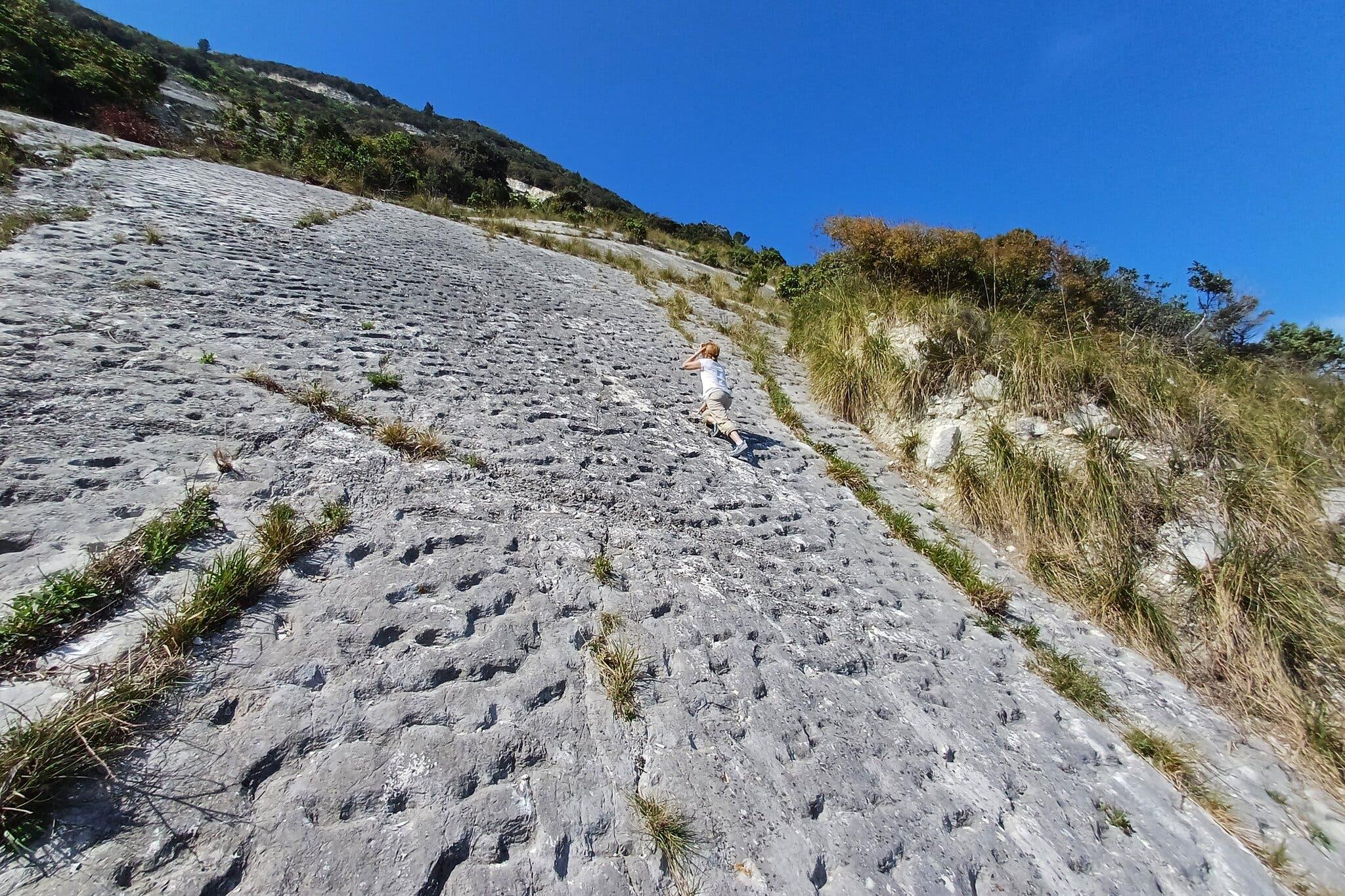
On the rocky cliffs near Ancona, Italy, above the Adriatic Sea, rock climbers venturing into a restricted area in 2019 stumbled onto something unexpected: thousands of crescent-shaped imprints carved into ancient limestone. The marks, some appearing in pairs, others as circular divots, looked like they had been made in a hurry. Now, a team of researchers say they might be the remnants of a massive sea turtle “stampede” from 80 million years ago. But while the theory is making waves, not all scientists are convinced. The limestone slabs where the markings were found once lay beneath the sea during the Late Cretaceous period. Geologist Alessandro Montanari, who directs the Geological Observatory of Coldigioco, was shown photos of the impressions by Paolo Sandroni, a geologist with the regional government. They both agreed: these looked like fossilized footprints. But of what? Fish were ruled out quickly, as the shape and positioning of the marks didn’t line up. That left three possibilities: mosasaurs, plesiosaurs, or sea turtles. Mosasaurs and plesiosaurs were large, solitary marine reptiles, unlikely to gather in groups. Sea turtles, on the other hand, are known to congregate in large numbers—especially when feeding or laying eggs. Montanari and his colleagues proposed that the crescent-shaped marks matched the flipper movements of buoyant turtles paddling near the ocean floor. In their study, published last month in Cretaceous Research, they suggest the tracks were preserved by an underwater avalanche of sediment—a turbidity current—likely triggered by an earthquake. That sudden rush of suspended particles would have buried the tracks quickly, sealing them into the limestone. If true, it could be a rare glimpse into how prehistoric sea turtles behaved under stress. “It’s a good bit of detective work and some deductive reasoning,” said Murray Gingras, a geologist at the University of Alberta. He praised the interpretation but noted that it’s unusual to find turtles in what would have been deep water at the time. Other experts were more skeptical. Spencer Lucas, curator at the New Mexico Museum of Natural History, said the evidence is too thin. He pointed out the absence of “expulsion rims”—mounds of sediment that would be pushed outward by turtles paddling through the seafloor. That’s a key feature in fossil tracks. Without it, he said, the marks may not be tracks at all. “They are more akin to mud cracks than animal tracks,” he said, suggesting the shapes could have been created by the earthquake itself. Ryan King, a paleontologist at Western Colorado University, called the turtle hypothesis “plausible,” but said more data is needed. Researchers could study the size, spacing, and pairing of the marks to determine if they match turtle flipper movements. But he questioned the idea that the tracks were made in a single panicked moment. The animals may have simply been moving in one direction, toward food or along a current. King also pointed out that the tracks might not have been buried immediately. Depending on the sediment, they could have lasted for a while before being preserved—meaning the idea of a sudden turtle stampede might be too tidy a narrative. As for how turtles would react to an earthquake? That remains uncertain. “There’s a lot of missing pieces that still need to be looked at,” King said. Still, Montanari sees a silver lining in the story, regardless of how the details shake out. If there was a seismic event, and if these turtles did flee toward the open sea, then at least one thing seems likely. “The sea turtles got away from whatever seismic threat they faced,” he said.

Score (100)
New Camera Traps Capture Surge In Sumatran Tiger Sightings
In a rare conservation success story, a population of critically endangered Sumatran tigers is not just surviving but thriving in one of the few remaining strongholds on the island of Sumatra — and it’s happening outside Indonesia’s national park system. Researchers working in the Leuser ecosystem, a vast and diverse forest region in Aceh province, have documented what appears to be one of the healthiest tiger populations on the island. Their findings, published in Frontiers in Conservation Science, highlight the power of long-term monitoring and local protection to safeguard the future of this elusive big cat. Using infrared-triggered camera traps set up over three survey periods between 2023 and 2024, the team captured 282 usable images of Sumatran tigers — nearly triple the number collected in earlier surveys. Stripe pattern analysis allowed researchers to identify 27 individual tigers, including 14 females, 12 males, and one unknown. “We documented a robust tiger population, apparently among the healthiest on the island,” said Dr. Joe Figel, a conservation biologist working with Indonesian wildlife and forestry agencies. “For those on the ground, the onus now falls on us to double down and adequately protect them.” The research focused on provincially protected forests in the northern stretches of Leuser, rather than the better-funded Gunung Leuser National Park. These areas receive fewer central government resources, yet they have proven crucial for tiger conservation. Key to the findings was a steady increase in monitoring effort: 34 cameras were deployed between March and May 2023, 59 between June and December 2023, and 74 between May and November 2024. This multi-year approach allowed researchers to gather data on survival rates, breeding activity, and tiger movements. “Multi-year camera trap monitoring is critically important for estimating key tiger demographic parameters such as survival, recruitment, tenure, and population growth rate,” said Figel. “With these data — and only with these data — can we even begin to evaluate conservation efforts.” The cameras not only confirmed the presence of adult tigers but also documented breeding success. Three different sets of cubs were photographed during one six-month session in 2023, and two tiger brothers captured together as cubs were later spotted separately as adults — a strong sign of survival and dispersal. The Leuser ecosystem itself is an ideal habitat. Spanning an area three times the size of Yellowstone National Park, it includes lowland, hill, and montane forests. About 44 percent of it remains classified as intact forest landscape. That, combined with relatively strong ranger patrols and community involvement, helps explain the area's ecological resilience. “Thanks to the work, activities, and support of government agencies, local Acehnese and Gayo communities, donors, and other researchers, Leuser has maintained important patches of lowland and hill forests where, in Sumatra, tiger prey densities reach their highest levels,” said Figel. Globally, tigers have lost between 90 and 95 percent of their historical range due to poaching, habitat loss, and depletion of prey. But the results from Leuser offer a rare glimmer of hope. Only three previous surveys in all of Sumatra — all in national parks — had ever identified more than 10 individual tigers in a single study. The current survey eclipsed that benchmark, despite being conducted outside a national park. It also sets a new baseline for future tiger monitoring and conservation strategies, including optimal camera spacing and survey timing. The team hopes their findings will help improve protocols and reinforce the case for supporting provincially managed conservation areas, not just those under national protection. For a species on the edge of extinction, that local focus may be its best shot.

Score (92)
This 101-Year-Old WWII Veteran was Just Honoured with a Surprise Medal Ceremony
Marie Warren didn’t expect a ceremony in her honour at 101 years old, but on Thursday, a room full of fellow veterans and community members made sure she knew her wartime service hadn’t been forgotten. Warren, a Second World War veteran who served in the Women’s Auxiliary Air Force (WAAF) from 1942 to 1945, was recognized at the Waterford Retirement Residence in Barrie, Ontario. The event came together after local veterans learned that two of her military medals had gone missing. It all started during a Service of Remembrance held at the residence on November 4. Warren attended the event wearing her WAAF forage cap and told the group she would have worn the rest of her original uniform — which still fits — if only she could find her medals. That was all the spark the community needed. “A plan was spawned at that time to obtain a replacement set of medals for her,” said Bill Sergeant, president of the RCAF Association 441 Huronia Wing. Warren originally enlisted in Toronto at the age of 18 and was stationed in Ottawa during the war. For her service, she had received the Canadian Volunteer Service Medal and the War Medal — both of which were replaced and presented during Thursday’s ceremony. Col. Wesley Cunningham of 16 Wing Borden did the honours, handing Warren her medals during what Sergeant described as a “very special” event. “The smile on our 101-year-old WAAF veteran, Marie Warren, says it all,” Sergeant said. “You made her day.” The WAAF played a vital role during the war, supporting the Royal Air Force in non-combat roles such as intelligence, communications, meteorology, and aircraft maintenance — positions that were essential to the military’s operations but often overlooked in postwar recognition. Warren’s story, and the community’s response, is a reminder that even decades later, acts of service deserve to be remembered — and celebrated.
Score (92)
These Teens Built a Lyme Disease Breakthrough Using CRISPR—and Took on the World
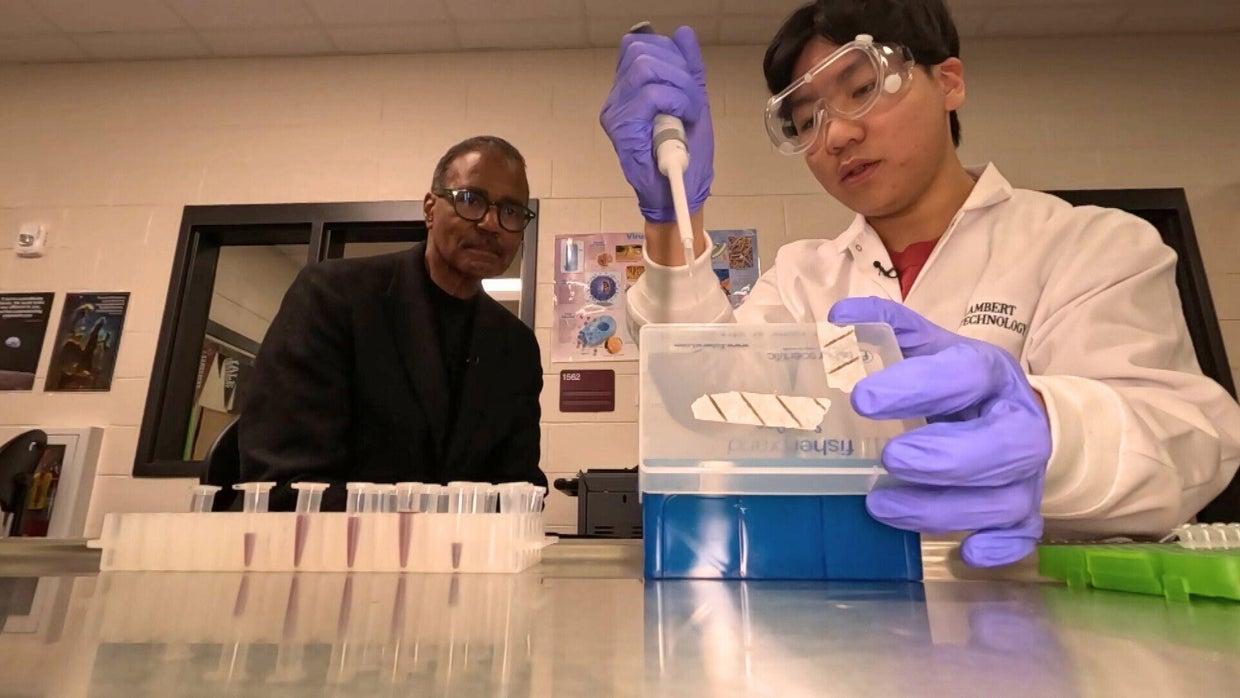
At a public high school outside Atlanta, a group of teenagers may have just edged closer to solving one of medicine’s most elusive problems: how to detect Lyme disease early, when it’s easiest to treat. Their primary tool? CRISPR, the revolutionary gene-editing technology that has reshaped biology labs across the world. And the team from Lambert High School wasn’t doing it for a grade—they were doing it to try and win iGEM, a global competition known as the Olympics of synthetic biology. To get there, they had to beat the odds. They weren’t just up against the limits of high school science—they were going up against some of the most well-funded and ambitious student teams in the world, including from China, where synthetic biology is now a national priority. In Lambert’s biotech lab, the work is nothing short of professional-grade. Senior Sean Lee guided 60 Minutes correspondent Bill Whitaker through a CRISPR test in progress, showing how the students amplify DNA samples to hunt down elusive signs of Lyme infection. His teammate, Avani Karthik, broke down the science behind their novel detection system. “When that guide RNA is recognized, the protein gets activated and it collaterally cleaves or cuts everything around it,” she said. Even Whitaker admitted it went right over his head. Their project tackled two major challenges in Lyme research: diagnosis and treatment. Lyme disease affects nearly half a million Americans each year, but testing during the first two weeks of infection often fails to detect it. Lambert’s solution zeroed in on a protein marker generated by the infection. With CRISPR, they isolated DNA strands where that protein hides and used a strip-based test—similar to a COVID or pregnancy test—to reveal its presence within days. That alone would be impressive. But the students didn’t stop there. They also developed software to model how CRISPR could be used to treat Lyme, replacing antibiotics with genetic targeting to destroy the bacteria that causes the disease. Their biotech teacher, Kate Sharer, called it “high risk, high reward” science—and admits she couldn’t keep up with the students. “They teach me. Are you kidding?” The students at Lambert have access to a college-level lab, thanks to funding from taxpayers and private donors. It’s one of Georgia’s top-performing public schools, with a competitive STEM culture to match its athletic one. About 100 students apply for 10 spots on the iGEM team each year, and selection is brutal. Applicants must write a research proposal, take an exam, go through an interview—and be willing to sacrifice evenings, weekends, and sleep. With just weeks before the competition, the team pulled all-nighters writing code, analyzing data, and building a website for the judges. They got results. Their test detected Lyme just two days after infection. And in simulations, their treatment approach showed early promise. “This thing could help save lives,” said senior Claire Lee. Then came the real test: presenting their work at the iGEM 2025 Grand Jamboree in Paris, where more than 400 student teams gathered from around the world, including 120 from Asia—and just 14 from U.S. high schools. For Avani, it was her third iGEM appearance. “Almost every single one” of the other projects blew her away, she said. High school students presented solutions to grow crops on Mars, develop eye-drop treatments for cataracts, and fight indoor mold with engineered enzymes. Lambert was competing against elite teams like Great Bay from Shenzhen, China, which eventually took the grand prize. But the American students still had reason to celebrate: they were nominated in five categories and took home the award for Best Software Tool—a huge accomplishment considering the scale and stakes. They also finished in the top 10 high school teams globally—the only American team to do so. The rest of the list was dominated by China, with one team each from South Korea and Taiwan. Drew Endy, a Stanford professor and one of iGEM’s original founders, said Lambert’s test for Lyme disease could be a legitimate breakthrough. “This year they appear to have developed a better diagnostic for Lyme disease than anything I’ve seen before,” he said. “It’s not only applicable to Lyme disease, but anything you could find in your blood.” That’s not just school science fair talk. With more development and real-world testing, their work could save lives. Back in Georgia, Janet Standeven—who founded Lambert’s iGEM program—has been trying to bring this kind of synthetic biology education to schools across the state. But after securing federal funding, the program was nearly derailed when the Trump administration cut it, citing diversity, equity, and inclusion concerns. A judge restored funding temporarily, but its future beyond 2026 remains uncertain. “I was devastated,” she said. “Anybody that's involved in this work at the high school level realizes this is necessary work.” If America wants to stay competitive in science and biotech, iGEM’s founders believe it starts with students like the ones at Lambert. “It’s urgent,” Endy said. “It’s profound.” For now, Lambert’s iGEM team is back home, exhausted but proud. “We thought our project was amazing,” said Avani. “But it’s what the judges think at the end of the day.” This time, the judges thought it was one of the best in the world.
Score (92)
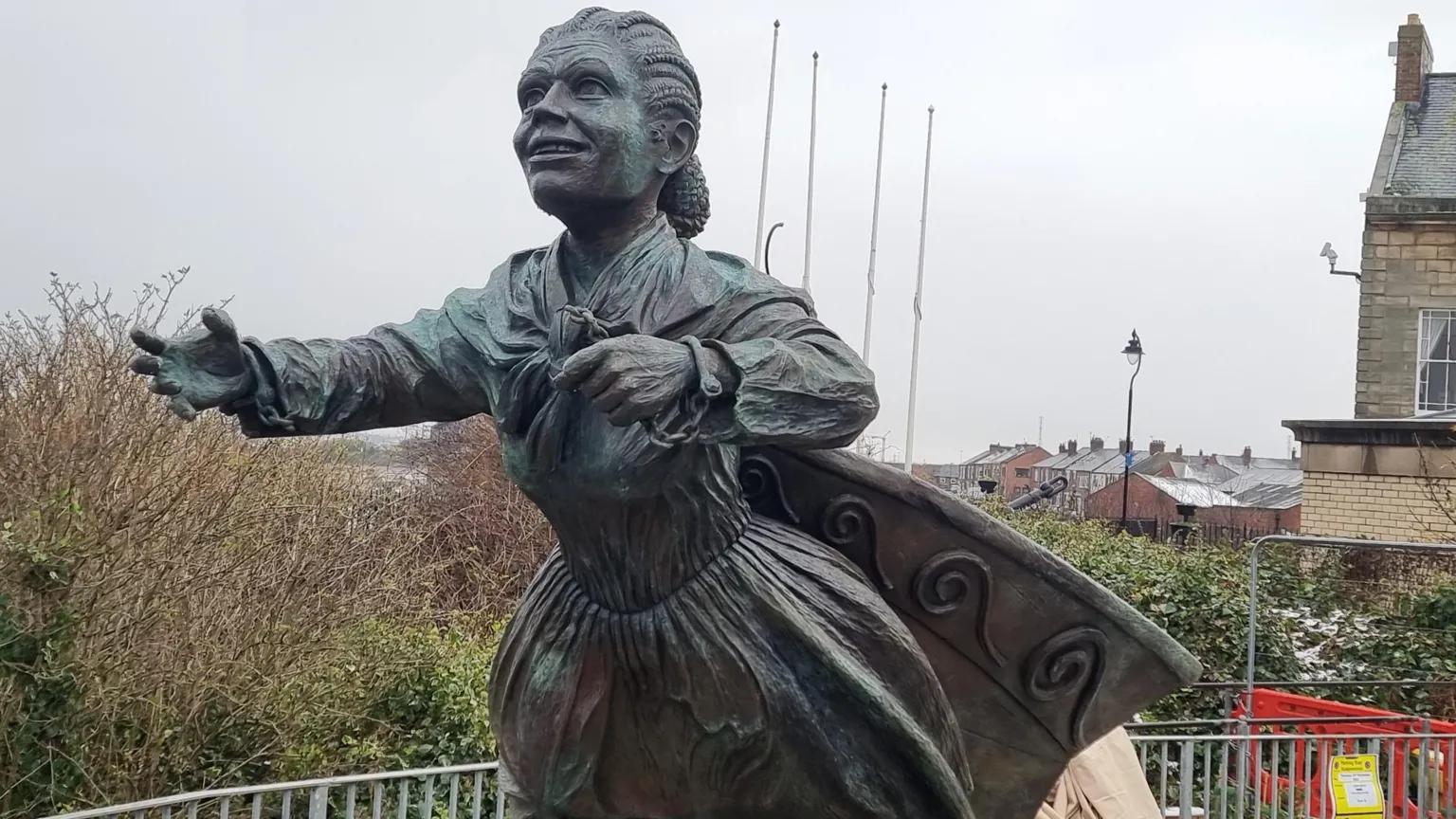
Statue Unveiled in England Honours Woman Who Escaped Slavery and Found Freedom
A new statue in the northern English town of North Shields is honouring the extraordinary life of Mary Ann Macham, a woman who escaped slavery in the United States and made a new life for herself in Britain nearly two centuries ago. The bronze figure, created by local artist Keith Barrett, now stands at the top of the Riverside Embankment Walkway overlooking the sea — not far from where Macham once lived after arriving in North Shields in the 1830s. She died there in 1893 at the age of 91. Macham’s story is one of remarkable survival. Born into slavery in Middlesex County, Virginia, in May 1802, she was the daughter of an enslaved woman and the grandson of a white estate owner. After the death of her aunt, who raised her, she was sold by a relative at age 12 and sent to a farm where she lived under brutal conditions alongside 200 other enslaved people. For 17 years she endured regular whippings and torture. One night, she pried her way out of a locked room and fled, hiding for weeks in the woods while slave hunters and dogs searched for her. She was eventually helped by a network that aided enslaved people in escaping — first smuggled aboard a ship to the Netherlands, and then on to Britain via Grimsby, Hull, and York, before arriving in North Shields. There, she was taken in by the Quaker Spence family, who wrote down her account of the escape. She went on to marry a local man and live out the rest of her life in the town. Her story had largely faded from public memory until it was rediscovered by chance. Teacher Steph Towns and her grandmother came across Mary Ann while researching Britain’s ties to slavery. “I saw a picture of Mary Ann and, well, that really led us down quite a bit of a trail,” said Towns. A social media post about their findings caught the attention of Nina Brown, a trustee at the Old Low Light Heritage Centre in North Shields. "The story was so amazing I just thought we've got to share this more widely," Brown said. "She was just such a remarkable and brave woman." That led to a broader public awareness campaign, including an exhibition at the centre focused on Macham’s life, and a headstone placed on her previously unmarked grave in Preston Cemetery. North Tyneside Council later commissioned the statue to commemorate her resilience and legacy. Sculptor Keith Barrett said he wanted the statue to reflect both “a place of great pain” and a message of “human liberation, of breaking the chains.” He added, “I feel that this is something universal that many people will understand.” The unveiling has drawn praise from local residents and advocates for inclusive history education. Among them is Deborah, a Newcastle student who two years ago petitioned the UK government to include more Black British history in the national curriculum. She had been surprised to learn there were Black individuals living in the UK centuries ago because, she said, “we never ever talk about it.” She called the new statue “a step in the right direction,” saying it can help people better understand why cities like Newcastle look the way they do today. “The fact that it is in a public place where anyone can come and see it… I think that’s important.” For a woman who once hid in the woods to escape bondage, the public tribute in the centre of the town she called home is a powerful full-circle moment.