






Scroll For More







Score (99)


This Teacher Got to Take on a Special Student: Her Father
Every day, Lucy Flores teaches kids how to read and write. In doing so, she’s given more thought about the fact that her dad never even had the opportunity to learn how to write his own name. For this reason, she decided she could be the perfect teacher for him! Lucy says her Spanish-speaking dad, Luciano, was a little hesitant at first. His desire to learn, however, was greater than anything… and so the lessons began! Luciano can now write his name, knows the vowels, and he is even starting to read books. His story has touched thousands of hearts and proves that it is never too late to learn.


%3Amax_bytes(150000)%3Astrip_icc()%3Afocal(749x0%3A751x2)%3Aformat(webp)%2Fteacher-fundraises-for-hershey-park-field-trip-2-040126-b8979ceae33b41e4a3283fc97e7f5116.jpg&w=3840&q=75)
Score (98)
8th Grade Teacher Uses Tiktok to Restore Students’ Canceled Hersheypark End-of-Year Trip
One canceled school trip could have ended there. Instead, a Pennsylvania teacher took the fight online, and people responded fast. Tania Turner, an English teacher at Wheatland Middle School in Lancaster, used social media to bring back an end-of-year trip for her students after it was cut because of district budget problems. Turner said the students' graduation trip to Hersheypark was called off amid budget cuts. In a TikTok video that spread widely, she made a direct appeal for help and told viewers what the loss meant for her students. “I've been teaching at Wheatland Middle School for three years now, and I love it,” Turner said at the start of the video. “Currently, our school district is facing a very serious budget crisis of nearly $10 million. I won't go into depth about it, but, you know, it's out there. You can read about it.” She then turned the focus to her class. “What I will say is that my kids are being affected, and I won't stand for it,” she said. Turner also said the same group of students had already missed their end-of-year field trip the year before. She said she could not accept seeing them lose out again. In the video, she described the students in personal terms and asked viewers to get behind them. “My kids this year are extremely genuine. They are brilliant. They are super smart, funny, caring … And they need your help,” she said in her viral TikTok video. Turner created a GoFundMe with a goal of $8,000 to pay for transportation, tickets and meals. She then shared the fundraiser on TikTok. She framed the effort as part of her role as a teacher and advocate for her students. “Yes, I became a teacher to teach English and reading and writing, but it's so much more than that. I vowed to be their advocate, their voice, and their mentor, and this is what I am trying to do and be for them. So let's make a difference together. We can,” she said. The response came quickly. Turner’s TikTok video was viewed thousands of times, and the GoFundMe reached its $8,000 goal in less than three days, according to local outlet WGAL 8. The students also got involved in the push to save the trip. Turner said they created their own TikTok account to help promote the fundraiser and posted daily content to spread the word. That effort left a mark on her. “When one of my girls showed me the video, I cried because it was just really amazing to see them come together and work toward something that is totally achievable," Turner said. With the fundraising target met, the trip to Hersheypark was officially rebooked. Turner said she hopes the experience shows that people can still rally around students and do something concrete for them. "We can do things that are positive for the community, and also that can make an impact on the kids because they're our future," she told WGAL 8. 📸 Credit : Miss Turnerrrr/TikTok; Gofundme

Score (98)
Japanese Workers Race on Office Chairs in F1-Style Contest
Workers took part in a quirky annual office chair race in Kyotanabe, Japan, on March 29, competing on wheeled office chairs along a closed circuit. The event, founded in 2010, was inspired by creator Tsuyoshi Tahara’s childhood memory of being scolded by a teacher for playing with an office chair, he told CNN. Footage from the ISU-1 Grand Prix shows teams of three racing to complete as many laps as possible around a circuit within two hours. The winning team, “The Team Shouting Office Chairs in the Heart of Kyotanabe,” was made up of students from Kyushu University in Fukuoka Prefecture, according to event organizers. Prizes vary by region, but the standard reward is 90 kilograms (nearly 200 pounds) of rice. 📸 ISU-1 Grand Prix via Storyful

Get even more good news on the free app!

Score (97)
California Biologists Rescue 3-Week-Old Mountain Lion Cub After Finding It Alone
For days, a mountain lion cub sat alone in the Santa Monica mountains, making a sound like a cross between a purr and a light squeal, seemingly calling for a mother who never returned. National Park Service biologists, who monitor the recreation area’s small mountain lion population, visited the cub’s location several times in Southern California. They concluded the mother had likely moved to another den and abandoned him. By then, the cub’s condition was slipping. He looked weaker and was losing weight. In consultation with the California Department of Fish and Wildlife, biologists rescued the kitten and sent him to the Oakland Zoo. The cub, a 3-week-old later named Crimson, arrived at the zoo in late March in bad shape, according to Oakland Zoo chief executive officer Nik Dehejia. He was emaciated and unable to stand, Dehejia said. He was also tiny. “He was ‘extremely tiny’,” Dehejia said. The newborn cub could fit into cupped hands. Crimson is now being treated in an intensive care unit at the zoo’s veterinary hospital, Dehejia said. Staff have been giving him bottle feedings every three hours to get nutrients back into his body. It is rare for mountain lions to abandon their offspring, and it is unclear why Crimson’s mother left him. “Often times we’ll never know,” Dehejia said. He said one hypothesis is that the cub’s abnormality, missing toes, may have signaled to his mother that he would struggle to survive. “It’s hard to know how many cubs were potentially there, how many cubs the mother was taking care of,” Dehejia said. Crimson is the 33rd mountain lion rescued by the Oakland Zoo. Another young mountain lion, a 3-month-old named Clover, is also at the zoo. Dehejia said the zoo does not want mountain lions removed from the wild unless there is no other option. “We never want to pull a mountain lion from the wild,” Dehejia said. He said that while the zoo is proud to be rehabilitating Crimson, its staff want cubs to stay with their families. “These cubs need their mother actively for nursing and socialization,” he said. Dehejia said Crimson was abandoned by his mother, but he also pointed to habitat fragmentation, urban development and human-wildlife conflict as factors behind the arrival of distressed animals at the zoo. “More often than not we are in their habitat versus they being in ours,” Dehejia said. “This is a broader scale issue over how we build, how we live, how we co-exist with wildlife around us.” For now, the zoo’s focus is on helping Crimson gain strength and eventually move off bottle feedings, Dehejia said. His age may also help shape the next stage of his care. Crimson and Clover are close in age, and Dehejia said that could make them a good match as companions. Still, any meeting will take time. Dehejia said it will be weeks before the zoo gradually introduces the two. 📸 Credit: Oakland Zoo

Score (98)
Lake Superior Photographer Captures Coyote in Mid-Leap on Camera
Sometimes the shot sits in your head for years before it ever shows up in front of the lens. That was the case for Thunder Bay wildlife photographer Jamie Ruggles, who said he had imagined making one image for years before finally capturing it on Monday evening. The photo shows a coyote in mid-air as it leaps across a patch of open water with the Sleeping Giant on the horizon. Ruggles said the image will likely become one of his all-time favourites. "I've been envisioning this photo for some years now and was finally blessed to actually have the opportunity to trip the shutter on my camera for real instead of just in my own daydreaming mind," Ruggles wrote in a social media post. "This photo was the result of what can happen when you are in the right place at the right time. I was so fortunate!" Ruggles has spent decades photographing animals, including a family of coyotes living on Thunder Bay's waterfront. He said an editor from National Geographic once advised him to "just spend the time in the field" to find success as a wildlife photographer, and he has learned the value of patience. The image has drawn strong praise online, with admirers describing it as amazing, beautiful, awesome and stellar. Ruggles told Newswatch that some people have also suggested the photo was created with A.I., because it looks so perfect. Speaking on Wednesday, he said he was not bothered by the skepticism. "The more comments you get in social media, the more attention it gets and the more of that kind of stuff you see show up, right?" Ruggles said he feels blessed to have had the chance to take the photograph after waiting years for the opportunity. "Whenever you can find an animal that will tolerate your presence or is not so scared that it's like a bullet taking off, as a wildlife photographer, you take full advantage of that. You can drive around this community for days on end, and the only thing you can see of wildlife in a lot of cases is their behind disappearing in the bush." 📸 Credit: Jamie Ruggles

Score (97)
Massive Carrot Cake Feeds Entire Town and Draws Crowds With Record-Breaking Size
Ted Martindale had a simple thought when he looked up the Guinness World Records mark for carrot cake. At 80, the Canadian coffee shop owner decided he could beat it, and now he says he has. The nearly 6,000-pound carrot cake Martindale built in Quesnel, British Columbia, is under review by Guinness World Records. Martindale says the outcome is not much of a mystery. "I know we broke the record, and I'm pretty sure I can convince [Guinness World Records] of that," Martindale told Fox News Digital. "I've got all the documentation required," he said. For Martindale, the project started with a record book and a bit of confidence. "I looked up the [Guinness World Records book] carrot cake and I thought, 'Well, we can bake that. All we have to do is do the mathematics and the whole thing, and I can easily beat that record,'" he said. "So, we went for it." The giant cake was part of Martindale's 80th birthday celebration on March 25. The owner of Granville's Coffee unveiled it at the town's senior center and invited the community to join the festivities. What he expected to be a birthday event turned into something much bigger, he said. "Two weeks ago, my wife and I thought, 'Nobody's going to show up for this,'" he said. "And then the whole town just almost showed up. There was no parking in town. All the restaurants were busy. It was almost like a civic holiday. It was just amazing." The scale of the attempt meant the baking and building took time. "It was a month-long process because we had to make 432 sheet cakes, and we had to store them in a big freezer in a grocery store," Martindale said. Once the cakes were made, the job shifted from baking to construction. Assembly, he said, "was just like brickwork." "It was like a construction project. And we had to make all the icing on that day because you can't make icing and freeze it." In the end, the cake came together with a team and a long day of work. In all, it took "14 hours and about 12 people to put the whole thing together," he said. When it was finished, Martindale said even he was surprised by the result. "When the whole thing was finished, it was amazing," Martindale said. "I just never expected it to look like that. It was beautiful." Martindale has owned Granville's Coffee for 34 years. He told Fox News Digital he is used to thinking big. "I'm sort of a crazy old man," he said. Still, he said the cake is not the main thing he wants people to remember. He sees his coffee shop as the center of town. For all the attention around the record attempt, Martindale calls the business the "focal point of the whole town." "Everybody comes here, and it's a gathering place," he said. The Guinness decision is still pending, but Martindale has already made clear how he sees the effort. He believes the record is his, and he says he has the paperwork to prove it. He also says turning 80 has not changed his routine much. "I still go to work every day," he said. 📸 credit: Ted Martindale

Score (97)
Experimental ALS Treatments Bring New Hope to Patients Facing Progressive Disease
It’s not a cure. Not yet. But for a disease that has long offered little in the way of options, even a careful step forward can feel like a turning point. A new drug aimed at slowing the progression of ALS has officially entered a phase 3 clinical trial, the final stage before potential approval. And for patients and families watching the clock, that matters. The study, called PREVAiLS, is testing an investigational drug known as pridopidine. Developed by Prilenia Therapeutics and Ferrer, the trial has now enrolled its first participant at Mass General Brigham. Leading the research is Sabrina Paganoni, who says the drug targets a key pathway in neurodegenerative disease. "Pridopidine is a sigma-1 receptor (S1R) agonist," Paganoni said. "The S1R has been shown to play a role in stimulating multiple neuroprotective pathways impaired in neurodegenerative diseases, such as ALS and Huntington’s disease." ALS is a progressive condition where the brain gradually loses its ability to communicate with muscles. Over time, people lose the ability to walk, speak, eat, and eventually breathe. There is no cure, and most patients live just three to five years after diagnosis. That’s why this moment, even at an early stage, carries weight. The PREVAiLS trial plans to enroll 500 participants across up to 60 treatment centres in 13 countries. Its focus is narrow but intentional: patients in the early stages of ALS whose disease is progressing quickly. That focus comes from lessons learned the hard way. An earlier phase 2 trial in 2023 did not meet its main goal of slowing disease progression over 24 weeks. Still, researchers noticed something they couldn’t ignore. Certain subgroups, particularly patients early in the disease with rapid decline, showed promising signals. That was enough to keep going. The drug was also generally well tolerated, with side effects like falls and muscle weakness, symptoms that often overlap with ALS itself. For advocates, continuing the research is not optional. It’s urgent. "The earlier we can diagnose and treat ALS, the greater the potential to preserve function and maintain quality of life for longer," said Kuldip Dave of The ALS Association. "It was discouraging to see a lack of overall effect in the phase 2 study population," he added. "However, we were encouraged to see positive signals emerge from various subgroups, including potential impacts on speech and respiratory function." That last part matters more than it might sound. Respiratory decline is one of the leading causes of death in ALS. Even small improvements in breathing capacity can extend life and improve daily living in meaningful ways. Researchers are careful not to overpromise. Paganoni emphasized that real answers will only come once the phase 3 trial is complete and fully analyzed. "As with all clinical research, definitive conclusions won’t be available until the phase 3 trial is completed and fully analyzed," she said. Still, the start of this trial marks a shift from possibility to proof. For a disease where progression is relentless and options are limited, that shift, however incremental, offers something ALS patients rarely get. Time. Photo by Mikhail Nilov on Pexels (https://www.pexels.com/photo/a-romantic-couple-on-the-beach-7698987/)
Score (80)
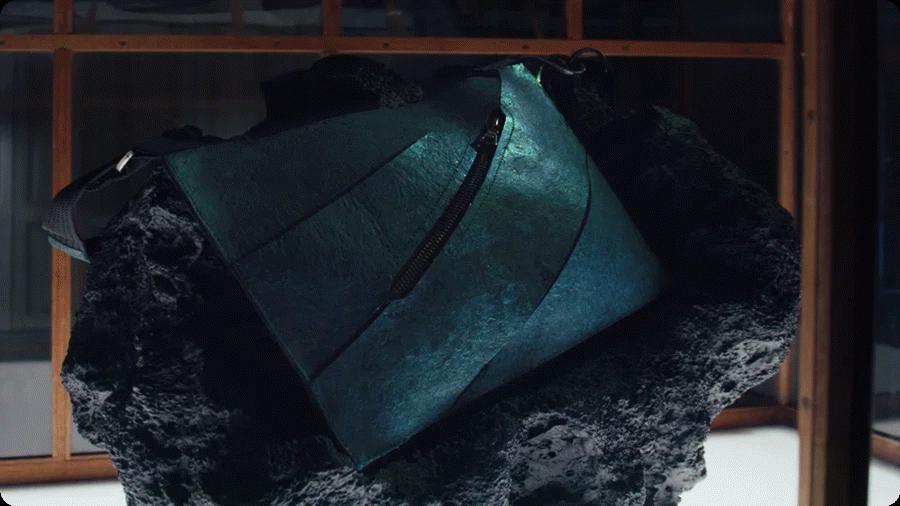
Scientists Create Dinosaur DNA-Derived Leather Handbag in Breakthrough Biomaterials Reveal
Call it the purse of the prehistoric. In what sounds like a luxury stunt cooked up after a late-night dinosaur movie, a team of scientists, designers and creatives says it has made the world’s first product from lab-grown T-Rex leather: a one-of-a-kind handbag that debuted in Amsterdam this month. The bag was unveiled on April 2 at the Art Zoo Museum, where it is being displayed beside a massive Tyrannosaurus rex structure acquired from Naturalis Biodiversity Center. The setting was no accident. The whole idea is to put an object made with reconstructed dinosaur collagen next to the ancient creature that inspired it. The project brings together creative agency VML, genomic engineering company The Organoid Company and Lab-Grown Leather Ltd. The handbag itself was designed by Enfin Levé, the avant-garde techwear label founded by Polish designer Michal Hadas. According to the source material, the companies began developing the material after announcing the ambition in 2025 to create the world’s first T-Rex leather. The material is expected to be offered to luxury brands later on. The science behind it sounds almost as wild as the sales pitch. The team said it started with fossilized T.rex collagen sequences, then used computational biology and AI modelling to predict and reconstruct the missing genetic information needed for a full collagen blueprint. That synthesized DNA was inserted into a carrier cell line. From there, billions of engineered cells were cultivated using Lab-Grown Leather’s tissue engineering platform. The companies say the result is leather that is structurally identical to traditional leather, but grown without animal slaughter, deforestation or chromium-heavy tanning. They also describe it as durable, repairable, biodegradable and fully traceable. The bag is being treated as a collector’s item. After a six-week exhibition at Art Zoo, it will be auctioned to the highest bidder. Even so, the material itself is not meant to stay a museum curiosity. The team says T-Rex leather will continue to be produced, with early uses focused on luxury accessories and longer-term plans reaching into fashion, automotive and other high-performance materials. Professor Che Connon of Lab-Grown Leather said, “Our proprietary advanced tissue engineering platform has once again proven its versatility. By collaborating with VML and The Organoid Company, we’re unlocking the potential to engineer leather from prehistoric species, starting with the formidable T-Rex. This venture showcases the power of cell-based technology to create materials that are both innovative and ethically sound.” Thomas Mitchell, CEO of The Organoid Company, called it “a bold example of synthetic biology extending beyond medicine into sustainable material innovation.” VML’s Bas Korsten put it more bluntly. “The stark reality is that lab-grown leather hasn’t yet convinced the luxury world. Why? Because it feels like an imitation. We knew we had to do something radically different. Not a substitute, but something entirely new. So we went back 66 million years in time.” And Hadas said the material itself shaped the design: “It has a distinct character and responds unlike any leather we’ve worked with. The final bag follows that logic, letting the material define the object rather than forcing it into familiar codes of luxury.” That may be the strangest part of this whole story. For all the futuristic biotech involved, the pitch is pretty simple. Go back about 68 million years, and you just might find a new way forward. 📸 Credit: VML

Score (98)
Community Rallies for Veteran Known for a Lifetime of Helping Others
Kenny Jary has spent years helping other people get around. Now, the man many know as Patriotic Kenny is the one asking for help. Jary, an 84-year-old United States Navy veteran, started the Patriotic Kenny Foundation to help people in need of mobility scooters. According to the source text, he has helped provide more than 150 scooters to veterans in need while also sharing a message of happiness and love on social media. Recently, Jary was diagnosed with stage IV metastatic lung cancer. “He has been diagnosed with stage IV metastatic lung cancer that has spread to his lymph nodes and lightly on his spine. His oxygen levels fluctuate, his strength is limited, and he now requires significant daily support,” Amanda Kline shared on a GoFundMe established to help Patriotic Kenny. Despite the diagnosis, Jary responded with gratitude. “I could say it’s not fair,” he said. “But what’s not fair is that so many people will never experience the amazing life I’ve had the last five years.” His only wish is to stay at home surrounded by the people he loves, rather than in a hospital, according to the source text. The cost of private healthcare is extremely high, but supporters have responded quickly. The GoFundMe has raised more than $300,000 so far. Donors have also shared messages of support for Jary. “In honor of my Father, a Vietnam Air Force Vet, who would have been 74 this year, he passed 13 years ago from lung cancer,” one person wrote. Another donor wrote, “I love your videos. You have made such an impact in my life. And I’m so grateful that I get to watch your videos every day. I know that 5 dollars is not a lot. But I really wanted to show my support and show you how much you mean to me. You have made me happy and I’m so grateful for it, and thank you for your service.” 📸 credit: Amanda Kline/GoFundMe

Score (94)
Lunar Launch and New Cholesterol Guidelines Lead This Week in Science News
It was a busy week in science, from a Moon mission to cholesterol advice and a possible rewrite of gaming history. NASA's Artemis II mission successfully launched on Wednesday, carrying four astronauts around the Moon for the first time in more than 50 years. The mission is expected to carry humanity farther from Earth than anyone has ever been, breaking the record set by the crew of Apollo 13 in 1970. In medicine, cardiologists in the United States published new guidelines for patients and doctors on detecting and managing high cholesterol. Medical experts from the American College of Cardiology and the American Heart Association compiled the updated advice. The new guidelines replace the ones those organisations issued in 2018. Researchers also reported a possible new treatment strategy for Alzheimer's disease. A compound called FLAV-27 showed promise in reversing cognitive decline in mice with Alzheimer's by targeting a unique mechanism. The new compound appears to work in a broader way than previous treatments. It targets upstream changes in gene expression that help drive the disease's progression in multiple ways, not only through protein plaques. Archaeologists, meanwhile, may have identified what could be the world's oldest "dice". A study of Native American artifacts dated the possible game pieces to more than 12,000 years ago. Researchers said the artifacts were used by hunter-gatherers near the end of the last ice age. That would make them thousands of years older than previously known artifacts that could be considered dice. Another study pointed to three small daily habits that may lower the risk of heart attack and stroke. The research analysed 53,242 participants with an average age of 63. The data showed that adding 11 more minutes of sleep, an extra 4.5 minutes of moderate-to-vigorous physical activity, and an additional quarter cup of vegetables each day was associated with a 10 percent reduction over eight years in the risk of major cardiovascular events, including heart attacks, stroke and heart failure. Researchers also reported an unexpected result in a small study of older women's weight loss. Women taking the GLP-1 drug tirzepatide lost 35 percent more weight if they were also on hormone therapy. "If confirmed, this work could speed the development and adoption of new, evidence-based strategies to reduce this risk for millions of postmenopausal women navigating this life stage," says endocrinologist Maria Daniela Hurtado Andrade.

Score (96)
Kansas City Chiefs Launch Let Her Play Campaign to Help Sanction Girls Flag Football in Kansas
The Kansas City Chiefs are putting their weight behind a push to bring girls' flag football to Kansas high schools. The team revealed an advertising campaign called "Let Her Play" on Thursday as it tries to persuade the Kansas State High School Activities Association, or KSHSAA, to make girls' flag football a sanctioned sport in the state. In a 55-second video, the Chiefs showcased several girls who already play the sport. The team also highlighted girls in Kansas who can only dream of representing their school by playing organized flag football. The campaign comes ahead of an April 23 vote by the KSHSAA board on sanctioning the sport. The Chiefs said they believe support from KSHSAA would give more girls the chance to play and increase pathways to later play in college. "There's over 20 million people playing flag football worldwide right now," Chiefs president Mark Donovan said Thursday. "Over half of a million girls [ages] 6 to 17 play flag. Right now, a girl in Kansas can't play for a state championship and can't play organized high school flag football. What this vote does is give them that opportunity." Donovan said the Chiefs have spent six years working to grow the sport among girls in Kansas. Based on data from the campaign, the Chiefs said high school girls' flag football participation in Kansas grew 163 percent from 2024 to 2025. Chiefs club owner Clark Hunt also spoke about the growth of the sport earlier this week at the NFL owners meeting. "What we do know is flag, globally, is growing very fast," Hunt said Monday at the NFL owners meeting. "It's growing fast in the U.S., particularly the female demographic. There's lots of positive statistics about a translation of people who played flag football becoming fans of the NFL. Long term, it'll be very beneficial for the league." The KSHSAA vote will be decided by the board's 73 members. The board includes high school principals, school board representatives, athletic directors and superintendents. At least 51 percent of the board must vote yes for the petition to pass. If the petition passes, Kansas will become the 18th state to sanction girls' flag football. The Chiefs also have the petition on their website for fans to sign. The video ends with several prominent members of the Chiefs organization delivering the campaign's final message. Coach Andy Reid, Donovan and players including right guard Trey Smith, center Creed Humphrey and receiver Xavier Worthy shout, "Let Her Play," as a call to action for the KSHSAA board. Donovan said passage of the vote could become an early step for a future girls' flag football player from Kansas, including one who could go on to compete in the 2028 Summer Olympics and maybe in a professional league. "That would make it possible for a young girl in Kansas being able to play high school flag football for a state championship, get a full-ride scholarship to play college flag football, play on an Olympic flag football team and then after that play in a professional flag football league," Donovan said Monday at the owners meeting. "That's an exciting opportunity that we've been a real, real big supporter of. "There's probably some kids, boys and girls, who are potentially going to really focus on flag. Maybe they're smaller, faster, quicker or [other] reasons why they'd be better at that than tackle football. It's another opportunity for those kids." Photo by Willians Huerta on Pexels (https://www.pexels.com/photo/women-s-flag-football-game-in-action-outdoors-35018105/)