






Scroll For More







Score (99)


The World’s biggest Mars rock could sell for $4 million at auction
A massive Martian meteorite, known as NWA 16788, is making headlines as it heads to auction at Sotheby’s in New York. Weighing in at a hefty 24.5 kilograms, this space rock is the largest known piece of Mars on Earth and could fetch up to $4 million. Unlike most Martian meteorites that are typically small, NWA 16788 stands out due to its size and distinct red hue. The meteorite was discovered in November 2023 in Niger's remote Agadez region. According to Sotheby’s statement released Tuesday, it's about 70 percent larger than any other Martian meteorite found on Earth so far. Only around 400 such meteorites have been discovered globally, making this find exceptionally rare. Cassandra Hatton from Sotheby’s describes NWA 16788 as a "discovery of extraordinary significance." She highlights its "immense size and unmistakable red color" as factors that make it a remarkable specimen from Mars that offers a tangible link to our neighboring planet. Scientists' analysis suggests the meteorite was likely blasted off Mars by an asteroid impact powerful enough to turn parts of it into glass. As it entered Earth's atmosphere, it developed a glassy crust—a testament to its tumultuous journey through space. However, the forthcoming auction has sparked concerns among some experts who believe the meteorite should be preserved for scientific study rather than private ownership. Steve Brusatte from Scotland’s University of Edinburgh expressed worry about the potential for the rock to end up hidden away from public view. “It belongs in a museum, where it can be studied and enjoyed by children and families,” he told CNN. On the other hand, Julia Cartwright from England's University of Leicester offers a different perspective. She argues that the market for collecting and selling meteorites actually benefits scientific research by providing more specimens for study. She points out that collectors often contribute significantly to the availability of samples for scientific examination. Cartwright also notes that while public display would be ideal for NWA 16788, a reference sample has been saved at China's Purple Mountain Observatory. This means researchers will still have access to study part of this extraordinary find, no matter who wins the auction. This isn't the first time Martian rocks have captured attention at auctions; back in February 2021, another Martian meteorite sold at Christie’s for $200,000—far surpassing initial estimates. The fate of NWA 16788 will likely continue to stir interest until its new owner is revealed after July 16th, when Sotheby’s holds its auction.



Score (77)
Why Thousands Around the World Start the New Year by Jumping Into Freezing Water
On Vancouver’s English Bay Beach, the first day of 2025 brought 13,000 people — many in costume, some spanning generations — to hurl themselves into 44°F (6.6°C) water. It was the 105th edition of the Vancouver Polar Bear Swim, one of the oldest and largest cold-water plunges in the world. And it’s not just for thrill-seekers. “It truly is a fresh start for the new year for a lot of people,” said Tanya Donaldson, who helps organize the event through Vancouver’s Board of Parks and Recreation. “As big as it is, it creates its own special community.” That mix of discomfort, joy, and collective ritual has helped polar plunges spread far beyond Vancouver. In the Netherlands, it’s followed by soup. In Scotland, it’s known as a “Loony Dook.” In Boston, the L Street Brownies have been diving into icy waters since 1904. But while the spectacle continues to grow — and cold plunging explodes on social media as a supposed health trend — experts say the science behind it is still catching up. The truth? It feels amazing for many, but it’s not risk-free. From Greek discipline to global tradition For Lisa Pantages, the Vancouver plunge is more than just tradition — it’s family. Her grandfather, Peter Pantages, started it in 1920 after moving from Greece to Canada. Swimming in the ocean kept him connected to home. He even convinced ocean liner companies to let him dive overboard daily during voyages, and when the water was too rough, they’d ice down a bathtub instead. Lisa has done the plunge every year of her life. “There’s an energy of excitement with a little dash of fear,” she said. “When you watch all these people running out of the water, you see how proud they are and connected to the rest of the crowd. In a way, it’s pretty amazing.” That sense of shared experience is part of what makes the event so magnetic — even for first-timers. But it’s also worth knowing what actually happens to your body when you jump in. What cold water does to you The first thing you’ll likely feel? A gasp. Cold water triggers a “cold shock” response, a sudden jolt to your nervous system. Your heart rate and blood pressure spike, your breathing speeds up, and your body kicks into fight-or-flight mode. “It’s so debilitating,” said Heather Massey, an extreme environments researcher at the University of Portsmouth. “When you accidentally fall into cold water, lots of people start to panic. That panic can mean that people inhale water, and that can cause a drowning process.” Cold shock peaks within 30 seconds and typically eases after about three to five minutes. But for people with heart or respiratory issues, even those few minutes can be dangerous. That’s why doctors and scientists recommend not jumping straight in, but instead entering slowly. It helps you control your breathing and avoid panic. “When I walk in, immediately I start exhaling,” said anesthesiologist and cold-water advocate Mark Harper. “Basically, I’m telling my body, ‘I got this.’” Going in gradually gives your body time to adapt — and for many regular plungers, that adaptation can stick around. People who dip repeatedly often find their initial reaction softens within just a few tries, and it can last for months. So should you do it? If you’re healthy, informed, and prepared? Probably. “With the proper precautions, a one-time polar plunge is really just having a bit of fun,” Harper said. “Fun is good for you.” But experts warn against pushing too hard, especially if you're copying influencers who preach longer, tougher plunges. “You don’t need to be in there more than the duration of the cold shock,” Haman said. “You do your 30 seconds, then maybe extend to a minute and a half. That’s enough.” And most importantly, listen to your body. “At the end of the day, this is all about self-awareness,” Haman said. “It’s about you listening to your body and optimizing your capacity to put yourself in discomfort — but doing it safely.” Even if the science isn’t settled, the smiles on the beach — and in chilly waters around the world — suggest something about it keeps people coming back. It might be the thrill. It might be the crowd. Or it might just be the chance to start a new year with a story worth telling.

Score (98)
Why “Auld Lang Syne” Still Brings the World Together at Midnight
As the clock strikes midnight each New Year’s Eve, voices around the world rise in unison to sing Auld Lang Syne. The words may be half-remembered, the melody slightly off, but the effect is universal — a moment of shared nostalgia, joy, and connection. Michael Pedersen, Edinburgh’s current Poet Laureate, believes the song’s enduring power lies not in tradition for tradition’s sake, but in how deeply it resonates across cultures, generations, and geographies. “For generations, it’s been sung at New Year because it’s perfect for it,” Pedersen told CNN. “There’s nothing in the song that dictates it should be sung then. People just had an emotional compass for it.” Written down by Scottish poet Robert Burns in 1788, the phrase auld lang syne loosely translates to “old, long since” — or more plainly, “for old times’ sake.” Pedersen calls it “a tale that looks back at childhood friendship, rekindled with a handshake and a goodwill drink.” “It’s a song of reunion, not parting,” he said. “It’s about celebrating happy days gone by and the glorious bonfire in the belly when you come back together.” From Scotland to the World For Pedersen, watching Auld Lang Syne travel the globe each year is something of a personal thrill. “It’s like sending out the Scottish bat signal,” he said. The song’s roots are proudly Scottish, but its reach is global — sung in dozens of countries every December 31. “Everyone has made it their own,” Pedersen said. “What a beautiful expression of art and humanity — to write something national and deeply personal, and have people project their own lives into it.” It’s not just the lyrics or melody that carry it forward. It’s the way it’s performed. “You join hands, you form a circle, you create a physical expression of friendship,” Pedersen said. “It’s a mellifluous, song-sized hug that’s survived the centuries.” He notes that the popular choreography — the moment where people cross their arms and clasp hands with neighbors — traditionally comes later than people think. “You hold hands for the first five verses,” he said. “Then on the fifth, everyone crosses their arms, still holding their neighbors’ hands, and runs in and out of the circle. Of course, culprits and rogues will run in at various points — that’s part of the beauty, the calamity of it.” A Song With a Mysterious Past The authorship of Auld Lang Syne is still debated. Burns claimed he heard a version sung at an inn and simply wrote it down, later adapting it. But how much of the final version is truly his? “We have no evidence of how much he adapted,” Pedersen said. “It could have been a word or two, or a massive Burns rewrite.” After Burns’ death, his publisher altered the music again — shaping the version most people know today. “Even now, critics argue over whether Burns was leading us astray, and it was his all along,” Pedersen said. “It remains a beautiful, mellifluous mystery.” A New Poem for a New Year In the spirit of Auld Lang Syne, Pedersen has written his own poem to honor friendship: Boys Holding Hands. Inspired by Burns and his own lifelong love of friendship, the poem is about shared memories, emotional openness, and the quiet act of holding hands to mark what’s been and what’s to come. “There’s a real bravado to masculinity that causes us to trap a lot of our emotions in our belly and dissolve them like a piece of gristle until they’re voiceless,” he said. “We have to let all that soppy, sumptuous sentimentality spill out to make ourselves better, more equipped, more loving human beings.” Just like Auld Lang Syne, it’s not about saying goodbye — it’s about staying connected, honoring what matters, and walking into the next year hand in hand.

Get even more good news on the free app!

Score (96)
This Actress Just Reunited With the Social Worker Who Saved Her Life at Her Own Comedy Show
Tiffany Haddish recently shared an emotional moment with her social worker during a stand-up comedy show, and it was all caught on camera. The comedian posted a video on Instagram of her reuniting with Coleta Lewis, the social worker who played a pivotal role in her life. During the show, Haddish spotted Lewis in the audience and immediately recognized her. "Coleta Lewis! My social worker!" she exclaimed before leaving the stage to give her a heartfelt hug. Back onstage, Haddish expressed her gratitude: "You saved my life. I'm where I'm at now because of you. Because you encouraged me, you were one of the first people to believe in me." Haddish has been candid about her struggles with substance abuse and how Lewis supported her through those challenging times. She told the audience that as a child, she had trouble staying focused at school and often got into trouble. It was Lewis who presented Haddish with two options for that summer—attend either therapy or a comedy camp at the Laugh Factory. Haddish humorously recalled asking Lewis which option involved drugs, to which Lewis replied that therapy was drug-free. Opting for comedy camp instead of psychiatric therapy proved transformative for Haddish's life. In her Instagram post, Haddish revealed she had been contemplating quitting stand-up comedy altogether but saw this reunion as a sign to continue. "I was over it," she wrote, explaining that she felt it might be time to walk away from stand-up until Lewis appeared at the show. "She placed me in the best possible home, the Laugh Factory comedy club," Haddish added about Lewis's influence on her career path. Haddish has been public about overcoming past addictions and confirmed she's been sober since a DUI arrest in 2023. Reflecting on that period, she noted that alcohol had played a significant role in many turbulent moments in her life but is now committed to staying sober. This unexpected reunion with Coleta Lewis reminded Tiffany Haddish of the importance of those who believed in her early on and helped shape her successful career today.

Score (96)
This Historic Water Tower Just Received a £200,000 Boost to Secure Its Future
England’s largest municipal water tower has just received a major financial boost to help bring it back to life. The 40-metre-tall Balkerne Water Tower in Colchester, known affectionately as “Jumbo,” has been empty since it was decommissioned in 1984. Now, a £200,000 donation from the Garfield Weston Foundation is helping secure its future as a community landmark. The funding will support the Jumbo Project, led by North Essex Heritage, which plans to transform the Grade II*-listed tower into a destination venue, complete with visitor experiences and accessible heritage exhibits. Simon Hall, chair of North Essex Heritage, said the donation was a vote of confidence in their vision. “They were clearly taken by Jumbo and our aspirations for it as a community asset and the contribution it will make to Colchester,” he said. Built in 1883, the tower played a key role in supplying clean water to the city for over a century. But since being taken out of service, it has fallen into disrepair. Work to redevelop the site is expected to begin early next year. The project already secured an £8 million grant from the National Lottery Heritage Fund earlier in 2024, and is also backed by the UK Government, Historic England, and Colchester City Council. The goal is to preserve Jumbo’s unique Victorian architecture while turning it into a modern, inclusive public space that reconnects residents and visitors with the city’s history.
Score (98)
Yorkshire Man Completes 51-Mile Christmas Run to Raise Mental Health Awareness
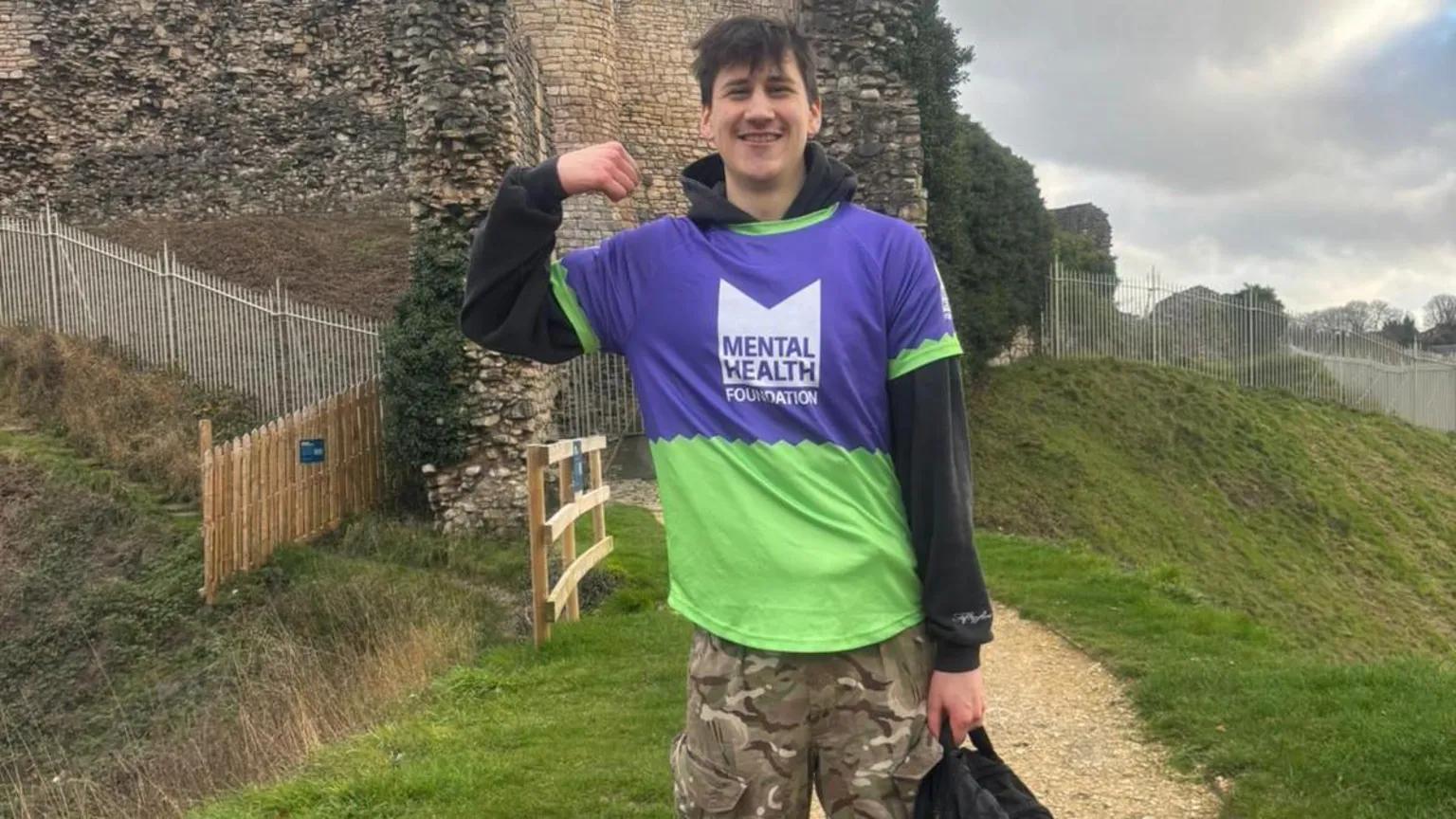
On Christmas Day, while most people were unwrapping gifts or preparing dinner, 21-year-old Kacper Bilengrek was running 51 miles through the cold and dark of Yorkshire — alone, and carrying a 25kg backpack. The ultramarathon effort wasn’t just a test of endurance. For Bilengrek, who set off from his hometown of Beverley at 2 a.m. and reached Conisbrough in South Yorkshire around 11 a.m., it was deeply personal. He called it “The Weight of Love,” with the heavy backpack representing the invisible burdens so many people silently carry, especially around the holidays. “It was just myself in the cold and dark, just really thinking about everything. There was a lot of reflection,” he told the BBC. “It felt like a rebirth.” The idea came to him after what he describes as a life-changing moment — undergoing major surgery last Christmas Eve following a serious workplace injury. One year later, he wanted to mark the anniversary by doing something meaningful, not just for himself but for others facing mental health struggles. He ran the first 20 miles without much difficulty, but the strain of the backpack began to set in. His shoulders and back ached, and his legs started to go numb. Still, he pressed on. “I was inspired to keep going knowing I was doing the run not just for myself but for everyone struggling with mental health,” he said. “The moment I finished, I just threw my bag on the ground and laid there for a bit.” Waiting for him at the finish line was his sister, Paulina, who had been anxiously tracking his journey from Hull. “I couldn’t be prouder of him — not just for the physical challenge, but for using it to raise awareness for such an important cause,” she said. As of December 30, Bilengrek had raised £600 for the Mental Health Foundation. But he says the real goal wasn’t the money — it was the message. “If someone sees what I’ve done and it makes them reach out to a family member, friend, or professional to talk about mental health, I believe that’s the biggest victory,” he said. Born in Poland and raised in East Yorkshire since the age of four, Bilengrek wants people to know they don’t have to face their battles alone. “Humans can relate to each other,” he said. “We have all dealt with difficult things, and we are not alone.” He hopes his story encourages others to get outside, take a walk or a run, and start conversations — especially when things feel heavy.

Score (97)
Spectacular Northern Lights Set to Illuminate New Year's Eve Skies
This New Year’s Eve might come with more than fireworks and champagne — it could also bring a rare natural light show. Thanks to a burst of solar activity, the northern lights may be visible across parts of the United States from late on December 31 into the early hours of January 1. Forecasters say aurora sightings could stretch across 10 states, offering a dazzling, if unpredictable, way to ring in 2026. The aurora borealis, also known as the northern lights, is triggered by geomagnetic storms. These happen when charged solar particles collide with gases in Earth’s atmosphere, creating waves of light that ripple across the sky — usually in shades of green, but sometimes pink or red. According to the National Oceanic and Atmospheric Administration (NOAA), increased solar wind activity could push those lights farther south than usual. States with a potential view include Alaska, Washington, Montana, Idaho, North Dakota, South Dakota, Minnesota, Wisconsin, Michigan, and Maine. Timing is everything. The best window to see the lights is between 10 p.m. and 2 a.m. local time, when skies are darkest and solar activity tends to peak. If conditions are right, stepping outside around midnight might deliver something more lasting than fireworks. There’s no guarantee, though. Cloud cover, light pollution, and solar intensity all factor in. Still, the ingredients are there — and for many in the U.S., this is one of the most widespread aurora forecasts in months. To boost your chances, head somewhere dark, away from city lights. Open landscapes and lakeshores are ideal. Face north, let your eyes adjust for about 20 minutes, and stay patient. What starts as a faint glow could suddenly bloom into streaks of dancing light. And yes, you can photograph it — even with a phone. Turn on Night Mode (on iPhones) or Pro Mode (on Android), turn off the flash, and hold steady. A tripod helps, but isn’t required. If you're using a DSLR, go for longer exposures with a wide-angle lens to capture the full sweep of color. So before you call it a night on New Year’s Eve, take a moment to look up. If the skies are clear and you’re lucky, the first moments of 2026 could be lit by something far more magical than fireworks.
Score (96)
Scottish Couple Celebrates 50th Anniversary by Raising Over £1,000 for Alzheimer's Charity
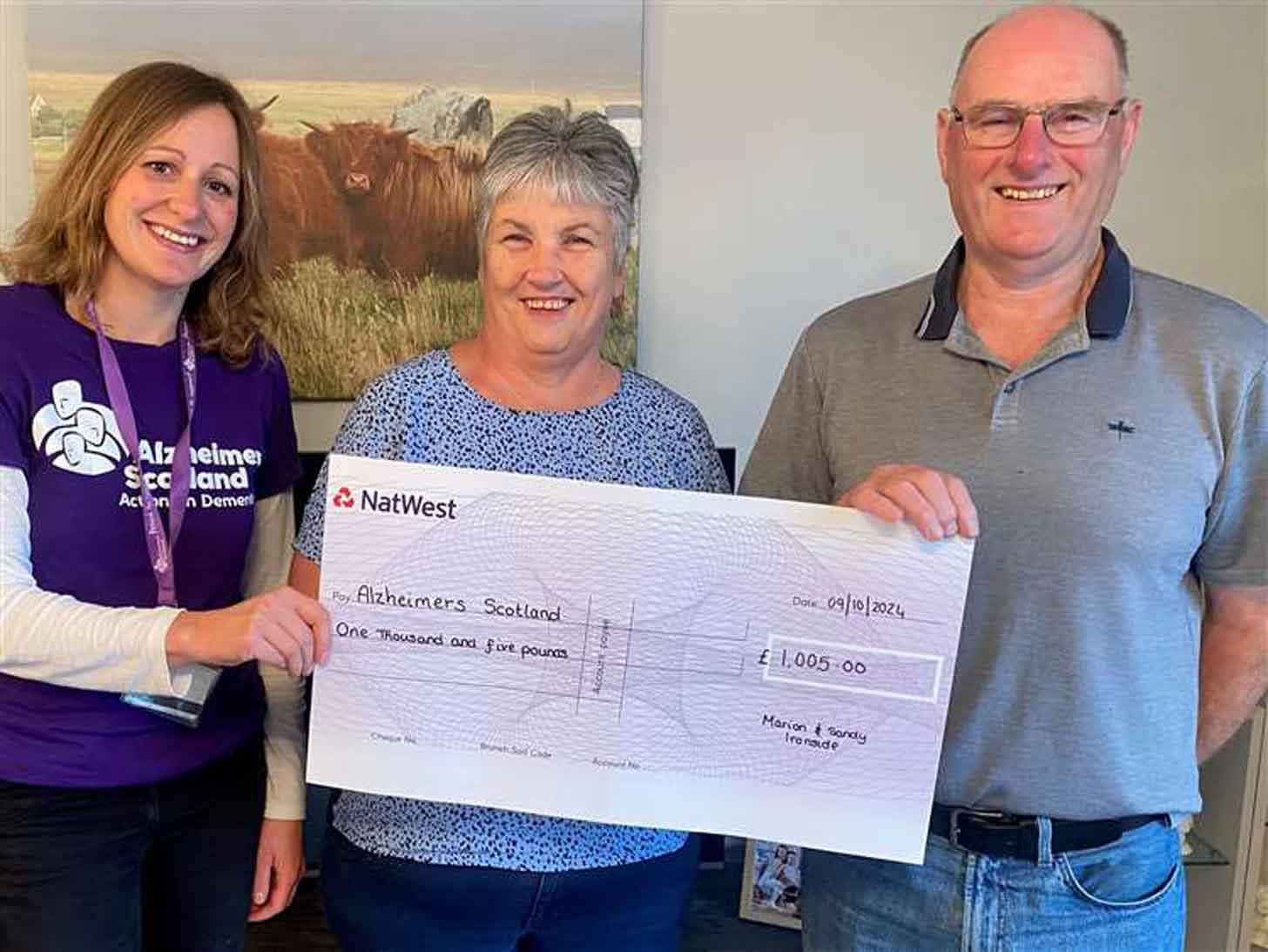
For their 50th wedding anniversary, Marion and Sandy Ironside didn’t just throw a party—they gave back. The couple from Gamrie, Scotland marked their golden milestone in October 2024 by dancing the night away with friends and family in the very same venue where they tied the knot half a century earlier. But instead of receiving gifts, they asked guests to donate to Alzheimer Scotland, a nonprofit that supports people affected by dementia across the country. With about 75 people attending, the Ironsides raised £1,005 for the organization. They revealed the donation on the night with a giant ceremonial cheque, presented to Alzheimer Scotland’s local dementia advisor for north Aberdeenshire, Laura Crockatt. “It was an amazing night, and it was made even better when we realized how much we had raised,” the couple told Grampian Online. “We are grateful to everyone who came and donated on the night and for helping us celebrate our 50 years together.” Crockatt, who collected the donation in person, said the funds will go a long way. “What a massive amount to have raised, so generous and very much needed,” she said. “Thank you Marion, Sandy, and to all who donated.” Alzheimer Scotland operates 25 Dementia Resource Centres across the country and offers vital support services to those living with dementia and their families. For the Ironsides, the night was a way to reflect not just on their marriage, but on the importance of community, memory, and giving back.

Score (97)
How You Can Embrace New Year's Resolutions With Hope (And Realistic Goals)
On January 1st, millions of people around the world will wake up with fresh determination and a list of new goals—everything from saving more money to eating better, moving more, or simply trying to be a better person. Not all of those goals will stick. And that’s okay. Registered psychologist Lisa Rowbottom says people are naturally hopeful, especially when a new year begins. “Human beings are hopeful by nature, and we tend to pursue wanting to better ourselves somehow,” she said in an interview this week. “For some reason, when the clock turns over from one year to the next, it feels like, ‘Well, I should be a new me,’ or ‘This should be a sign something’s changed.’” That pressure to start fresh and succeed immediately can backfire. Research shows many resolutions are dropped within a month or two, but Rowbottom says slipping up doesn’t mean you’ve failed. “I think we assume that we have a lot more intent and a lot more planning around how our world goes around us than we actually do,” she said. “And we tend to assume a lot of things are just willpower.” But change, she says, is rarely about willpower alone. Often, the desire for change comes from being overwhelmed by a combination of life events. “You adapted the best you could, using the tools you had,” she said. “But they’ve gotten you to a place where there’s something now you’d like to change. And if you suddenly say, ‘OK, I’m just going to use my willpower and I’m going to make this different,’ but you don’t look at the ‘why’ underneath it all, it’s exhausting.” That’s why she encourages people to think of resolutions as long-term efforts—not instant makeovers. “Our world is so demanding now, people don’t have a lot of extra resources, so if you’re trying to make a life change, that is going to take time,” she said. “Every little step that you make is a success.” Instead of aiming for huge, sweeping changes, Rowbottom suggests breaking big goals into small, manageable steps that fit into your everyday life. That makes it easier to stay consistent—and to restart if you fall off track. She compares it to slipping on the edge of a cliff. “If you’re walking along the edge of a cliff and you slip and you manage to grab the top of the cliff, and you’re hanging there, and you have to decide: Are you going to let go and slide all the way back down to the bottom? Or are you going to pull yourself back up and keep going?” Either choice eventually gets you back on the path, she says. One just takes a little longer. “Every day is a new day,” she adds. “It doesn’t matter what happened the day before, because your goal is not perfection.”

Score (97)
Airman Leads Daring Christmas Day Rescue After SUV Hangs Off California Cliff
A potentially deadly Christmas Day crash on a snowy Northern California highway turned into a remarkable act of bravery when an Air Force staff sergeant and a group of strangers rushed to save a couple and their dogs from an SUV teetering on the edge of a steep embankment. The dramatic rescue happened on Dec. 25 along U.S. Route 50, a winding mountain pass east of Sacramento known for dangerous winter conditions. As a powerful storm swept through the region, an SUV lost control on the slick road, spun out, and skidded off the highway — coming to a stop against a fallen tree, its front end hanging over a steep slope hundreds of feet high. Among the drivers who witnessed the crash was Staff Sgt. Ruben Tala, stationed at Travis Air Force Base. He had been traveling with his family toward Lake Tahoe when the vehicle spun out just ahead of them. “When I saw the car spin out, I thought about my wife and my daughter,” Tala told KCRA. “What if there’s a family in that car? Somebody has to help.” Dashcam and bystander footage captured the tense moments as Tala ran toward the dangling SUV, shouting for help and assessing the situation. With no time to waste and no emergency services yet on the scene, Tala quickly called on others who had stopped to assist. “I yelled, ‘Do you have any rope? I need some rope,’” he told reporters. One driver sprinted back to his vehicle to retrieve one, while others helped Tala stabilize the SUV by forming a human chain. “The only thing I had in mind was to rescue those passengers,” Tala said. “I saw, ‘I’ve got to get the car stabilized first before extracting the passengers.’” Together, the small group managed to keep the vehicle from shifting further, using their combined strength and the rope to brace the SUV against further movement. Tala clung to the driver’s side door, anchored by others holding onto him from behind. “One wrong move, he can be with that car tumbling all the way down the slope,” said Tala’s wife, Yvette Bañares-Tala, who watched the rescue unfold. After securing the vehicle, the group was able to pull the driver and his wife to safety. The couple was reportedly unharmed, though shaken, and held onto their two small dogs throughout the ordeal. “The driver is really thankful,” Tala said. “His wife was still in a state of shock. She was holding her two dogs.” In a moment of quiet coincidence, Tala later discovered that one of the dogs was named Luna — the same name as his own daughter. Tala, hailed as a hero by bystanders and media alike, was quick to downplay his role. “I’m just doing my part to help somebody else,” he said. “That’s how we’re trained in the Air Force. We help somebody when they need help, no matter the situation.” The rescued couple declined to speak publicly, but according to NBC News, they expressed deep gratitude for the actions that saved their lives. While the winter storm caused widespread travel disruption across Northern California that day, the human chain of strangers who came together on a snow-slick mountain road offered a reminder of something else — the instinct to help, even when the stakes are high.

Score (98)
World Traveler Shares Top Lesson On Happiness After 27 Years Of Walking
In 1998, Karl Bushby left Hull, England with $500, some survival gear, and a bold idea: walk around the entire planet and return home on foot, without using any form of transportation. Twenty-seven years later, he's nearly there. The former British paratrooper has crossed 36,000 miles, six continents, and countless borders in what's become the longest continuous walk in human history — the Goliath Expedition. From the southern tip of South America to the icy stretches of Siberia, through jungles, deserts, and war zones, Bushby has kept to two self-imposed rules: no transport of any kind, and no returning home until he arrives entirely on foot. What began as a dream drawn in pen on a world map has become a decades-long test of grit, resolve, and survival. “You’re further than a manned mission to Jupiter” “The objective was simply to get home unassisted by any form of transport,” Bushby told CNBC Make It. But simple rules don’t stay simple when they meet real-world complications: border politics, visa restrictions, and dangerous terrain. On his first day in Punta Arenas, Chile — the official start of his journey — Bushby felt the weight of what he had committed to. “That first day you step onto the road is a memorable one,” he said. “You're on a road that is about 36,000 miles long, with very little idea of what's coming… you're further than a manned mission to Jupiter at that point.” Since then, he’s crossed the Darién Gap, been jailed in Panama, detained in Russia, and nearly died in Alaska. At one point, he swam across the Caspian Sea over the course of 31 days. He's gone hungry, hallucinated from starvation, and relied on strangers to patch him up or offer shelter. His stories are full of survival — and generosity. “This world is a hell of a lot friendlier and nicer than it might appear,” he said. “Pain is easy. Suffering is different.” Bushby grew up in a military family and joined the British army at 16. But despite years of service, he found himself restless. “We happened to be living through one of the most peaceful times in history… So we got bored and tired and became wondrous and mischievous.” That wanderlust eventually turned into a single, ambitious idea: draw a line around the globe — and walk it. But the physical journey, while grueling, wasn’t the hardest part. “If you ask me, what was the hardest thing you’ve done over the last 27 years – that is losing the women that you fall in love with, hands down,” he said. “Pain is easy. Suffering is different.” For all the miles he’s walked, Bushby says his happiest moments weren’t in remote mountain ranges or jungle crossings — they were the times he was in love, in relationships that couldn’t survive the road. A world full of strangers and kindness Bushby credits much of his survival to the generosity of strangers. “Many times throughout the journey, I’ve been taken in, fed and cared for by people who asked for nothing in return,” he said. Most of these encounters happened without a shared language — just smiles, gestures, and food. His story also reflects how the world has changed during his walk. Visas and geopolitics have complicated some parts of his path, especially through Russia. Still, he’s kept moving, even when the journey stalled for months or years. Now in Europe, Bushby is within striking distance of home — though he still refuses to set foot in Hull until the final step is walked. He expects to finish in 2026. What 27 years on foot teaches you Bushby’s story isn’t just about endurance. It’s about patience, loss, connection, and finding meaning across a lifetime spent moving forward. “You got like 500 U.S. dollars in your pocket, no support, no idea how it is going to work out, just absolute faith that you can somehow make it work,” he said. “And you keep walking.” From the southern tip of Chile to the edge of England, Karl Bushby has walked for nearly three decades — not just around the world, but toward home.