





Scroll For More






Score (96)


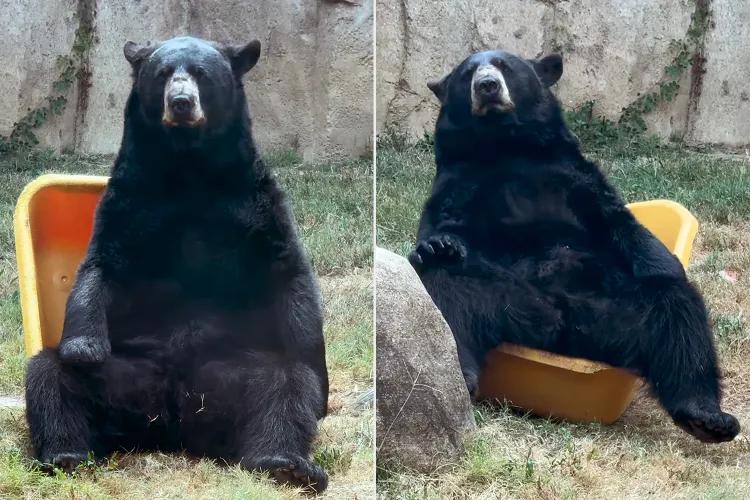
Bear Necessities: Zoo Bear Masters the Art of Wheelbarrow Sunbathing
River, the resident black bear of the Memphis Zoo, has taken the internet by storm with his creative use of a wheelbarrow. The zoo recently posted a video on Instagram showing River flipping over and then settling into a yellow wheelbarrow as if it were a makeshift chair. This adorable clip was shared on August 5 and quickly gained affection from viewers. In the video, River can be seen trying to fit his 235-kilogram frame into the wheelbarrow before finding the perfect position to lean back and enjoy some sunbathing. The footage sparked playful comments from social media users who identified with River's quest for comfort in the summer heat. One commenter wrote, "Funnily enough, that is also how I look when I sit in this heat! Stay cool 🐻." Amanda Moses, marketing and communications manager at Memphis Zoo, explained that River is no stranger to enjoying cozy environments. Born on January 26, this 20-year-old bear has a particular fondness for fall-inspired scents like pumpkin and cinnamon. According to Moses, "He's got a nose for the cozy things in life," adding that River's love for these scents brings warmth akin to an October morning with a Pumpkin Spice Latte. While River enjoys his relaxing days at the Memphis Zoo, another bear faced a different kind of adventure in Wisconsin. A young female bear had her head stuck in a plastic jar for 12 days before being rescued by wildlife officials. The Wisconsin Department of Natural Resources (DNR) reported that local residents first spotted the distressed two-year-old bear. Despite several attempts using live traps, it took specialists from the USDA Wildlife Services to safely sedate and free her. The DNR confirmed that once sedated, experts managed to cut off the jar without further harm to the bear. A local who helped locate the animal reflected on its survival: "Twelve days for a bear to be without food and not much water, it's impressive." This incident highlighted both human intervention and wildlife resilience.


Score (98)
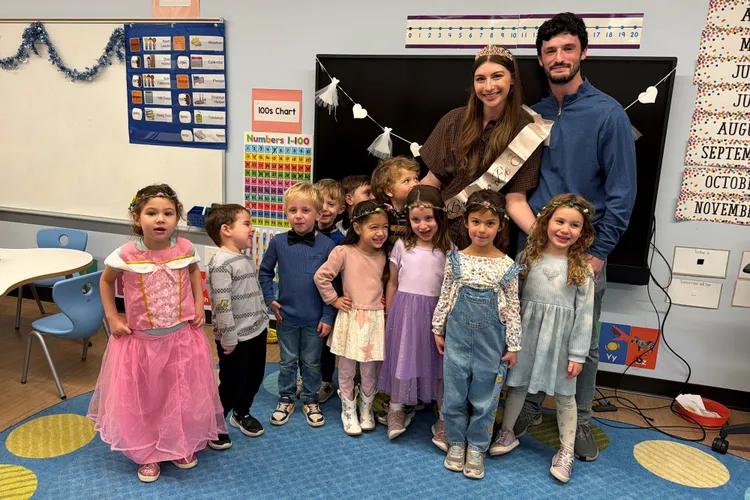
Texas Preschool Class Throws Sweet Surprise Bridal Shower for Beloved Teacher
Zoe Kampf thought she was walking into a normal school day. Instead, she was met with cookies, decorations, and a room full of preschoolers in floral tiaras and bow ties, ready to throw her a surprise bridal shower. The Texas preschool teacher was caught completely off guard — and that was exactly the plan. Her fiancé, Sean Folloder, had teamed up with her students at Shlenker School to organize the December 12 celebration ahead of their January 2026 wedding. “When I walked in, I was really surprised,” Kampf told the Jewish Herald-Voice. “They had cookies and decorated the classroom. They gave me a sash and a veil and crown. It was really cute.” The surprise meant even more given the couple’s long history with the school. Both Kampf and Folloder attended Shlenker together as toddlers. Kampf’s grandfather, Rabbi Samuel Karff, actually founded the school back in 1967. Folloder’s family has ties to the school, too. His grandmother, Barbie Freedman, is Shlenker’s longest-tenured teacher — now in her 41st year — and played a key role in bringing the couple together. “I’ve been here a while and I taught Zoe when she was a toddler,” Freedman said. “Then in the summer of 2021, Zoe was working on one side of the building and Sean was volunteering with me on the other.” As summer camp director, Freedman said she started sending Sean on errands to the other side of the building. “Zoe would need something, and I’d send him,” she recalled. “Then they just started hanging out together.” It didn’t take long for her to play matchmaker. “I remember Barbie said, ‘You guys should really date,’” Kampf said. “We were like, ‘Okay.’ I guess we took her advice!” Soon after, Folloder asked Kampf out for sushi. Three years later, the couple got engaged on December 23, 2024. Now, with their wedding on the horizon, Folloder — a high school geometry teacher and football coach — wanted to do something special. So he turned to the people who see Zoe’s kindness and joy every day: her preschool students. “It was great to surprise her at school,” Folloder said. “She is such a great teacher and everyone, from her kids to her kids’ parents to the staff, loves her.” Freedman, who watched them grow up and fall in love, said the entire moment felt full circle. “They are a wonderful couple and really devoted to one another. It has been really fun to watch them grow up and grow together.” As for whether she’ll still be teaching when the next generation of the family arrives at Shlenker? “I don’t know about that,” she said with a laugh. “I’m going to be 82 soon. I’ll try and see how things go. Shlenker is such a wonderful school and that would be such an amazing thing.”

Score (90)
Matt Damon and Ben Affleck Reflect on 40 Years of Friendship: “We Rooted Hard For Each Other”
Some friendships are just built to last — even in Hollywood. Ben Affleck and Matt Damon first met as kids in the early 1980s, thanks to their moms introducing them. Four decades later, they’re still inseparable, still working together, and still laughing about their shared past — including the time they opened a joint bank account to fund their acting dreams. In a recent Netflix interview ahead of their new film The Rip, the longtime friends sat down to interview each other and reflect on a bond that has outlasted awards, fame, and personal setbacks. Ben joked that their friendship has endured in part because there’s no rivalry. “The weird thing about us is that I don’t remember either of us really contemplating other careers,” he said. “Not because of some like arrogance thinking, ‘Oh, it’s gonna be successful.’ It just was like I felt like we kind of approached it like this is what we’re gonna do.” Matt added that in the early days, their careers were full of rejection — and that just made them pull for each other even more. “We really rooted hard for each other,” he said. That shared support would eventually lead to a massive breakthrough. In 1998, they won the Academy Award for Best Original Screenplay for Good Will Hunting, a film they wrote and starred in together. It launched their careers and cemented their place in film history — but their friendship remained the real constant. Fans loved seeing the pair reminisce so openly. One viewer wrote, “Ben hasn’t had marriages work but his ‘marriage’ to Matt has ALWAYS been steady and secure. A good friendship goes a long way.” Both actors have had high-profile ups and downs over the years, but their bond has remained a steady force in both of their lives — and by the looks of it, still full of laughter. As Damon put it, as long as they could pay their bills, they were happy. Now, decades later, they’ve built a friendship — and a career — that feels almost scripted. Except it’s real.

Get even more good news on the free app!
Score (100)
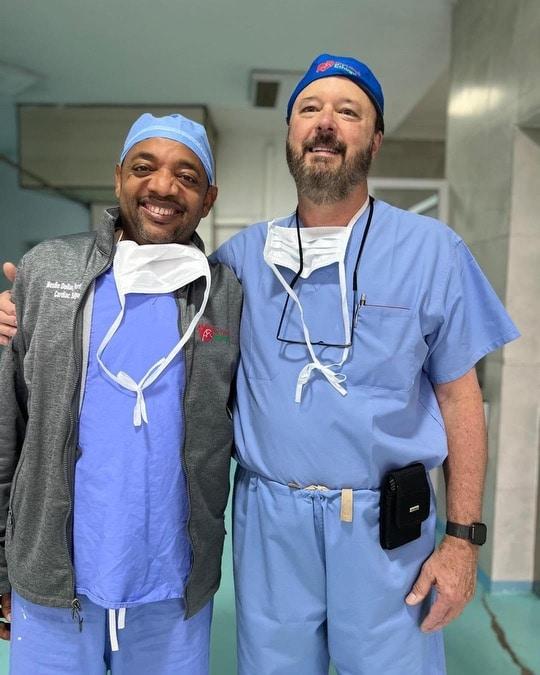
He Nearly Died From Heart Disease as a Teen — Now, He’s Saving Others in the Same Way He Was Saved
The first time Mesfin Yana Dollar helped with open-heart surgery, he looked down at the patient — a teenage girl from Ethiopia — and saw himself. She was scared and crying. So he leaned in, spoke to her in Amharic, and told her the truth: “I had the same surgery, and things are going to be just fine.” Years earlier, he had been in her position. Born in a rural Ethiopian village in 1985 with no electricity or running water, Mesfin was a healthy, happy child — until, at age 10 or 11, his health began to fail. He struggled to breathe, couldn’t run, couldn’t sleep, and eventually couldn’t walk to school. His parents tried traditional medicine and local doctors, but nothing worked. Eventually, Mesfin made the journey to Addis Ababa on his own, where he found his way to Mother Teresa’s Missionaries of Charity. There, he met an American doctor, Rick Hodes — a man who had made it his life’s mission to help sick children in Ethiopia get treatment abroad. Hodes diagnosed Mesfin with rheumatic heart disease, a life-threatening condition that had been quietly worsening for years. With no option for surgery in Ethiopia, Hodes began searching for a way to send him to the United States. At age 15, Mesfin flew to Atlanta, Georgia, where cardiothoracic surgeon Dr. Jim Kauten repaired his mitral valve at Piedmont Heart Institute. The operation was a success. Mesfin recovered with a host family — a local dentist — and was preparing to return to Ethiopia when an infection in his jaw from wisdom tooth removal triggered endocarditis, a potentially fatal complication. Once again, Mesfin was rushed to Atlanta. This time, doctors replaced his valve with a mechanical one, meaning he would need lifelong medication and follow-up care. Returning to rural Ethiopia was no longer an option. That’s when his cardiologist, Dr. Allen Dollar, stepped in. He invited Mesfin to live with his family in Atlanta — and eventually adopted him. “It kind of reminded me of home because I have 11 brothers and two sisters,” Mesfin said. “This is as large a family as I had back in Ethiopia.” He quickly caught up in school, mastered English, and graduated from Georgia State University as a respiratory therapist. He met his wife, Iyerusalem, in college, and they now have two sons. Later, he trained to become a cardiac perfusionist — a highly specialized role operating the heart-lung machine during surgery — and now works at the Mayo Clinic in Minnesota. His wife works there too, as a cardiac sonographer. Now 40, Mesfin spends his days in the same kind of operating rooms that once saved his life. He runs the heart-lung machine for some of the most complex open-heart procedures in the world. But he hasn’t forgotten where he came from. With the same surgeon who operated on him decades ago, he returns to Ethiopia through the nonprofit Heart Attack Ethiopia, helping deliver life-saving surgeries to others who need them. “He has retained this spirit of gratitude,” said Dr. Allen Dollar. “He has never lost sight of what his life could have been and all the people along the way.” On one of their first mission trips, Dr. Kauten was surprised to see Mesfin show up, ready to join the team. “For him to be able to pay back to his community services that he received in the United States, and he was able to pay it back in Ethiopia — that was especially nice in my mind,” Kauten said. In addition to assisting in surgeries, Mesfin acts as a translator, mentor, and guide for young Ethiopian students training to become perfusionists like him. After years apart, he has now helped bring several members of his biological family, including his parents and siblings, to the United States. “I’m always grateful,” Mesfin said. “It’s a resurrection for me. You know, I was once lost, dead, and I was resurrected and I’m living a new life.”
Score (91)
Keanu Reeves Surprises Restaurant Owner, Recreates Iconic Photo 25 Years Later
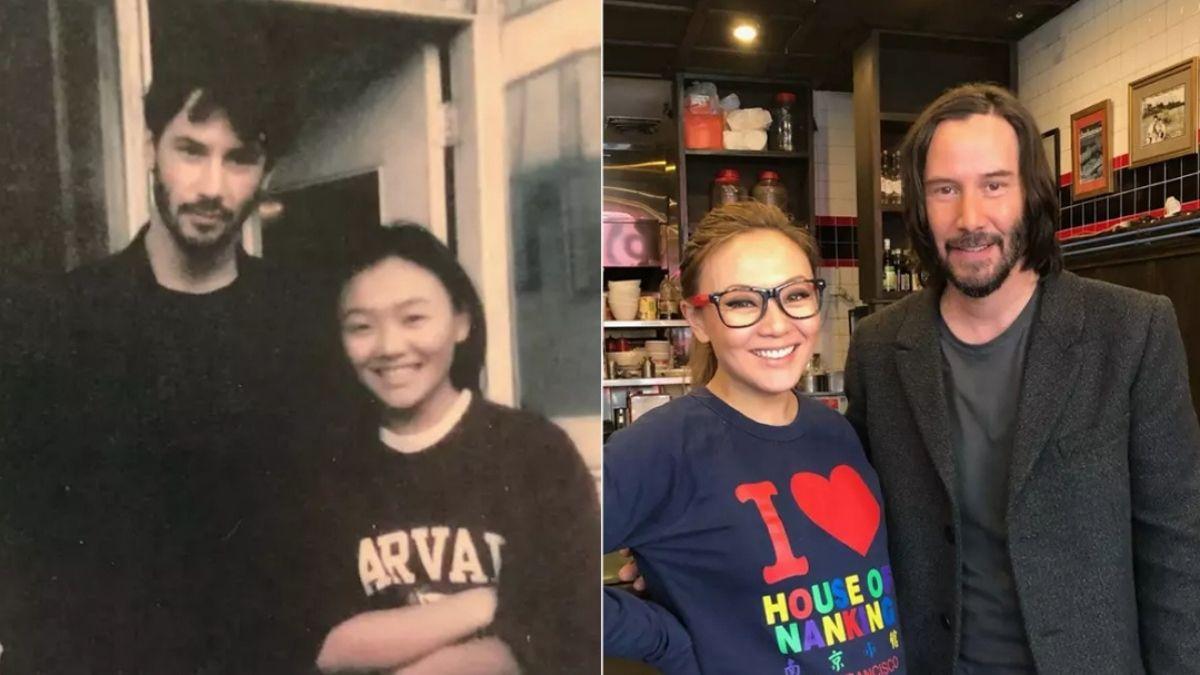
Keanu Reeves just added another reason to the long list of why fans adore him — and once again, it involved no fanfare, no entourage, and no PR team. While filming The Matrix Resurrections in San Francisco, the actor quietly stopped by House of Nanking, a beloved local restaurant where he’d once taken a photo with a young fan back in 1997. That fan, Kathy Fang, is now the restaurant’s co-owner — and was stunned to see Reeves walk through the door unannounced. “He dropped in unannounced, surprising owner Kathy Fang, and the two recreated a photo they’d taken years earlier,” Pubity shared on Instagram. “No press, no promo; just Keanu stopping by for the noodles and the memories.” Back in the late ’90s, Reeves was already a major star when he visited the restaurant and posed for a photo with Fang, who was still a child. Neither of them expected a follow-up moment decades later. But this time, the moment felt even more meaningful. There were no cameras rolling, no social media stunt. Just a humble return to a favorite spot — and a warm reunion over food and nostalgia. Fans online couldn’t get enough. “I love that 20 years later they still look the same,” one person commented. Another added, “Best human in Hollywood (I wish the others would take note).” “Keanu one of those guys you just can’t hate on at all,” someone else wrote. Even those who hadn’t been there in person felt the connection. One customer recalled visiting the restaurant during a layover in San Francisco and spotting the original photo on the wall. “We saw the original photo and were buzzing. To see he visited again is amazing. Also your food was top tier,” they wrote. Reeves’ visit was brief and low-key, just like everything else fans have come to love about him. No spotlight. No show. Just kindness — and maybe some great noodles.
Score (91)
Doctors Said He Might Not Make His Second Birthday — Now I’m 25, Living With SMA and Thriving
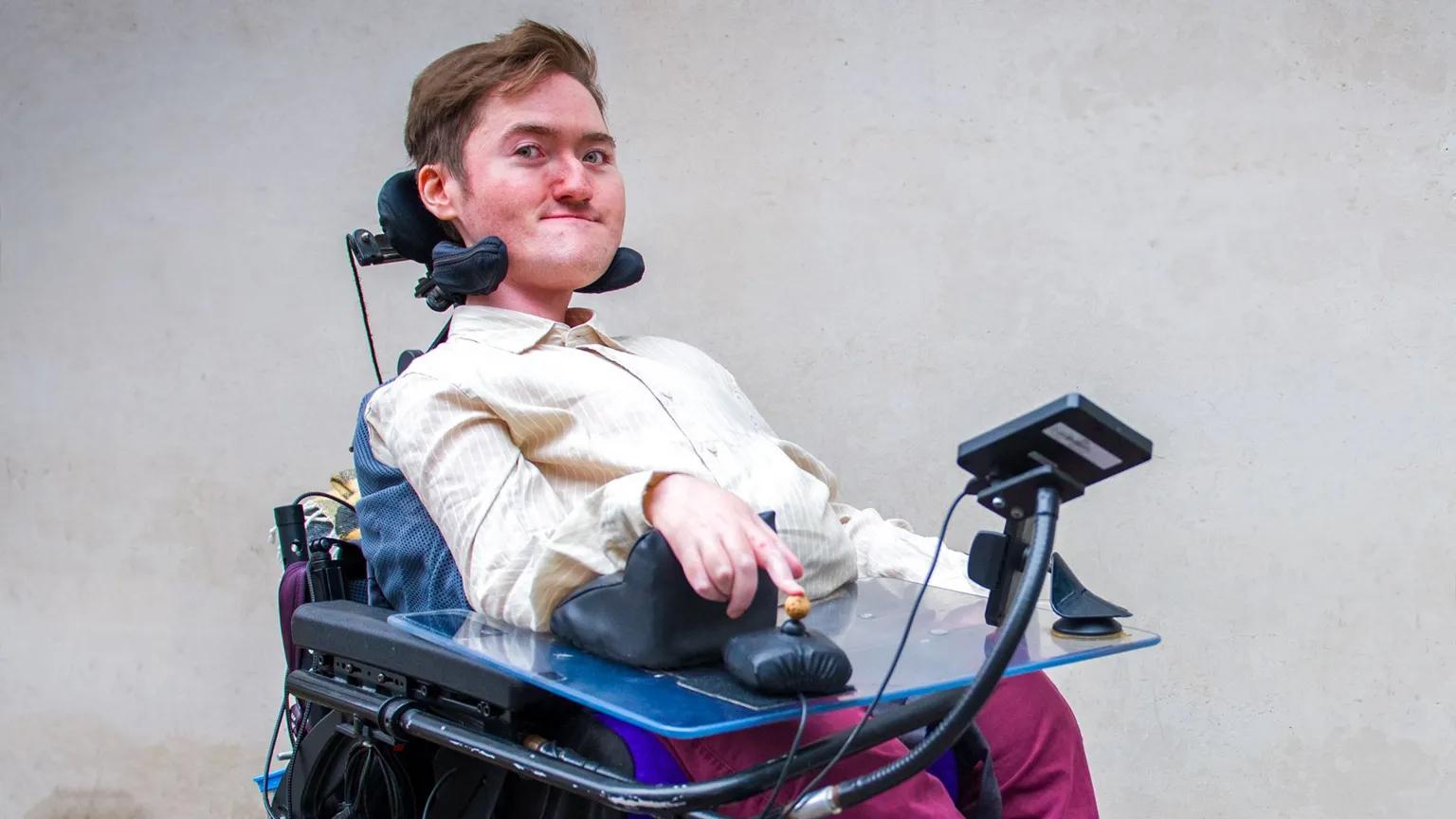
When Ben Morris was six months old, his parents noticed something wasn’t quite right. Other babies were kicking, crawling, exploring the world — but he was content sitting still, watching it go by. Concerned, they took him to the GP. At first, the doctor wasn’t alarmed. Then came the test. The doctor sat Ben on the edge of the medical bed and let go. He toppled over without trying to catch himself. That moment changed everything. On 15 October 2001, Ben was diagnosed with Spinal Muscular Atrophy type two (SMA2), a rare genetic condition that weakens the muscles, particularly those used for movement and breathing. His parents were told he might not live past his second birthday. That was 23 years ago. Today, Ben is 25, a BBC journalist, a university graduate, and living independently in London with the support of personal care assistants. He uses a powered wheelchair and a ventilator at night to help with breathing, but he’s thriving. “My parents were told I may not live beyond two years old,” he said. “But when we returned for a check-up in early 2002, the neurologist remarked: ‘He’s a survivor.’” The story resurfaced in the public spotlight this week after singer Jesy Nelson revealed that her twin daughters have been diagnosed with SMA type one — a more severe form of the disease. Ben decided to share his own experience to show what life with SMA can look like. For Ben, that life has included racing on the track at London Stadium during a test event for the 2012 Olympics, meeting Samantha Cameron and Eddie Redmayne at 10 Downing Street, and earning a journalism degree from the University of Winchester. He also credits SMA UK — the charity that supported his family — and a network of friends with the condition who help him feel less alone. “We share our common experiences and help each other know we’re not alone,” he said. Advances in treatment are also changing the outlook for new patients. Ben takes a daily medication called Risdiplam, which helps stabilise his condition. Babies now also have access to a gene therapy called Zolgensma — a one-time infusion that delivers a healthy copy of the missing gene. It's only effective in early infancy, before irreversible damage occurs. Newborn screening is also improving. Scotland is set to introduce routine SMA testing for babies this spring, and the UK’s National Screening Committee is reviewing whether to roll out the same heel-prick test nationwide. SMA affects roughly one in 14,000 births worldwide. Around 47 babies were born with the condition in the UK last year — about 60% with type one. The National Institute for Health and Care Excellence (NICE) estimates that between 683 and 1,366 people currently live with SMA in the UK. Ben’s own journey hasn’t been easy. SMA has affected his spine — surgery for scoliosis prevented him from growing taller — and he faces the everyday challenges of navigating life with a complex condition. But support, planning, and a determination to live fully have carried him through. His parents played a huge role. His dad, a project manager by trade, approached Ben’s care the same way he would a job — pulling together physios, neurologists, and wheelchair services to work as a team. At school, Ben had a full-time teaching assistant and followed the same curriculum as everyone else. “My sister Emily doesn’t have SMA, but may be a carrier,” he said. “She’s never treated me any differently — though she does like pointing out she’ll always be taller than me.” Now, Ben hopes that by speaking up, he can offer a more hopeful narrative — especially for parents like Jesy Nelson, now navigating her twins’ diagnosis. “There have been many success stories,” he said, naming Paralympian Sally Kidson, Balamory actress Kim Tserkezie, and US YouTuber Shane Burcaw among others. “Hopefully, as I am showing, it’s possible to live a fulfilled and happy life if you have SMA.”
Score (92)
High School Offers Varsity Letter For Skilled Trades — a State First
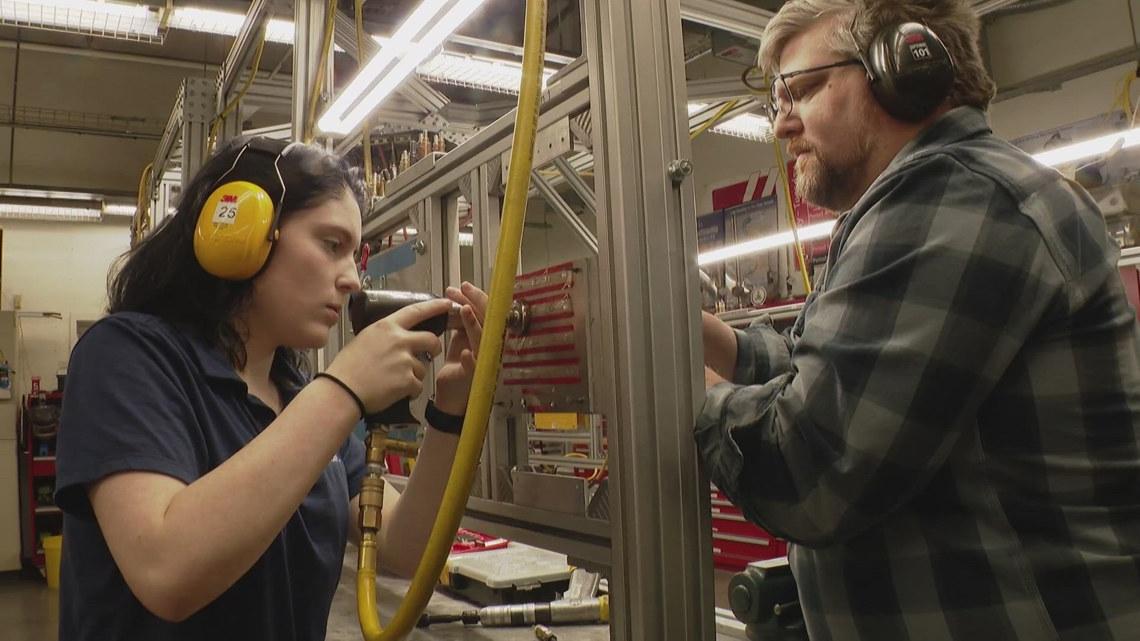
For decades, varsity letters were only awarded to student-athletes. More recently, schools began offering them for theater, robotics, and academic achievements. But one major area was still missing — until two students in Snohomish, Washington, decided to change that. Elizabeth Bogen and her classmate Remus Fox-Bailey, both students at Snohomish High School, successfully advocated for something never done before in Washington state: the chance to earn a varsity letter in skilled trades. “I've always really liked working with my hands since I was really little,” said Bogen, who now spends part of her school day welding metal in class. She knew her work was just as demanding and valuable as what happens on the football field — but there was no way to be recognized in the same way. “I thought it was interesting and something we should be able to do,” she said. So the two students made their case to education officials. Now, thanks to their effort, Snohomish High has become the first school in the state to award varsity letters in skilled trades — and others are expected to follow. “It feels really cool to be the person to bring it in and start this for our state and give other people the opportunity to letter,” Bogen said. The timing couldn’t be better. The U.S. is facing a critical shortage of skilled trade workers. Over the next seven years, the country will need an additional 2 million workers in fields like welding, electrical work, and mechanical maintenance. The ongoing gap is projected to cost American businesses $1 trillion by 2030. “There is a massive vacuum for anybody going out into skilled trades,” said Matt Johnson, a manufacturing instructor at Snohomish High. Washington state is already feeling the impact. Nearly 80% of construction firms report trouble finding qualified workers, according to industry data. Even major employers like Boeing, which saw layoffs last year, are still actively hiring mechanics and technicians. That’s where programs like this can help — not just to build skills, but to recognize the students putting in the work. “This student should already have a leg up when it comes to work ethic, when it comes to drive, their ability to complete something and complete it on time,” Johnson said. “It’s about trade skills, but it’s also about life skills.” In Bogen’s case, the benefits are already clear. She’s set to graduate this spring — and she already has a job lined up at Boeing. “If you do put in the effort, and you put in the work, you can be rewarded for it,” she said. Now, with a varsity letter in welding stitched to her jacket, Bogen is helping rewrite what success in high school looks like — and lighting the path for others to follow.

Score (91)
Astronauts Capture Stunning Aurora Display From Space Station
A dazzling aurora was captured by an astronaut from the International Space Station on January 11. Astronaut Kimiya Yui, who is currently on a mission aboard the ISS, posted the footage on X describing the sight as “beautiful.” “I was happy to have captured it, but above all, imagining everyone smiling with joy upon seeing the footage, I laughed to myself,” he wrote.
Score (97)
'I Can See My Child Grow Up': Breakthrough Treatment Reverses Vision Loss in Rare Eye Disorder
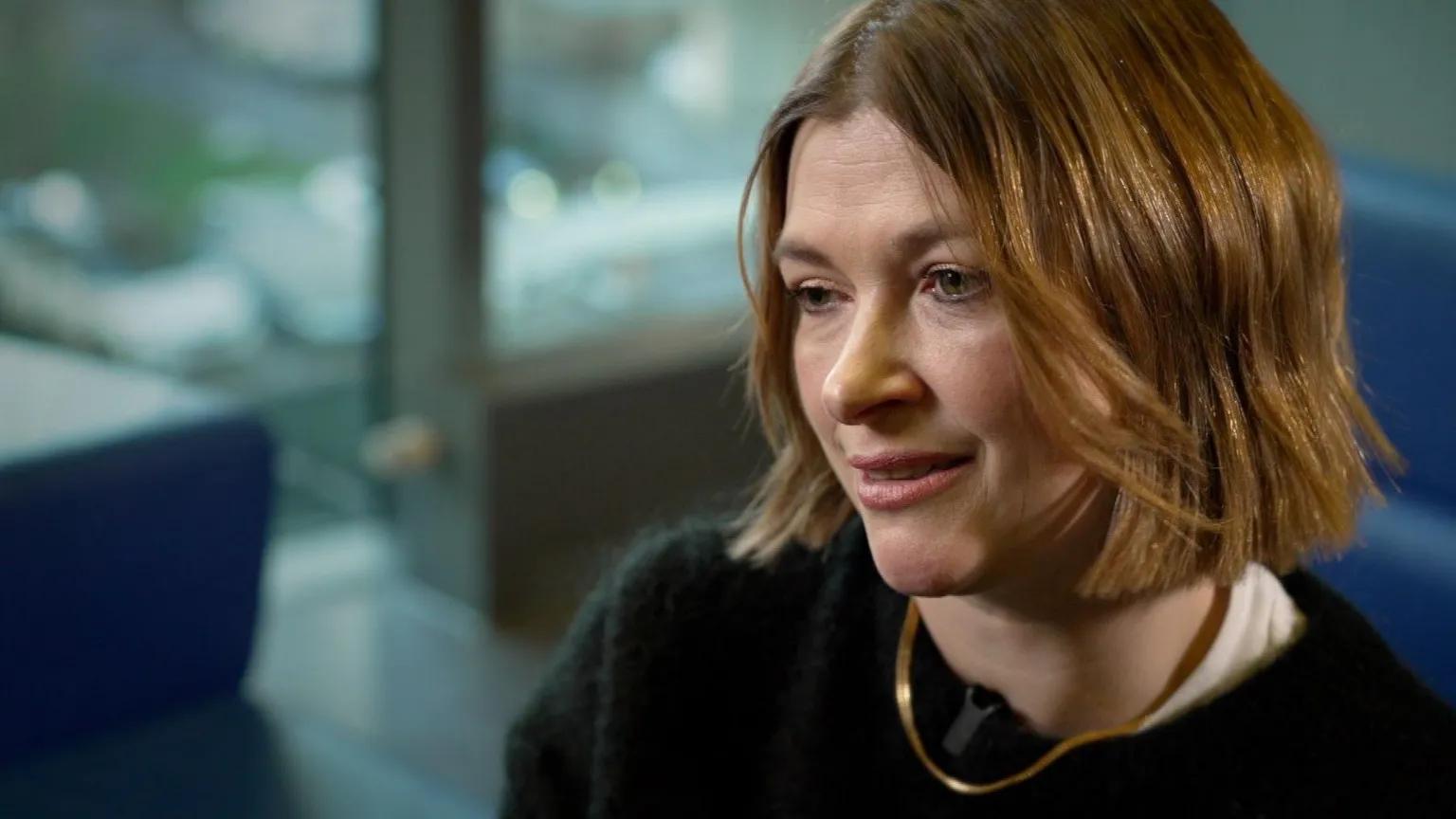
Doctors at a London hospital have restored sight in patients once thought destined for blindness — and it all started with a cheap, off-the-shelf gel. A pilot study at Moorfields Eye Hospital, the first clinic in the world dedicated to treating hypotony, shows that a new approach using hydroxypropyl methylcellulose (HPMC) — a clear, water-based gel — has helped seven out of eight patients regain vision. One of them is 47-year-old Nicki Guy, the first person in the world to receive the treatment. Years after a rare condition called hypotony left both of her eyes failing, Guy says she can now read, see across a room, and watch her child grow up. “It’s life-changing. It’s given me everything back,” she told the BBC. “I’ve gone from counting fingers and everything being really blurry to being able to see.” Today, she’s just one line shy of meeting the legal threshold for driving — a stunning change from the days she had to use a magnifying glass to read anything up close and rely on memory to navigate her own home. “If my vision stays like this for the rest of my life, it would be absolutely brilliant,” she said. “I may not ever be able to drive again but I’ll take that.” Hypotony occurs when the pressure inside the eye drops so low that the eyeball starts to collapse in on itself. It can happen after trauma, inflammation, surgery, or certain medications, and if untreated, it can lead to blindness. Until now, treatment options were limited. Doctors tried injecting silicone oil to keep the eye inflated, but while it can help restore the shape of the eye, it’s not ideal for long-term use and leaves vision cloudy. Steroids have also been used, but with limited success. The team at Moorfields decided to try something different. HPMC is already used in some eye surgeries, but never like this — injected regularly into the eye over time as an actual therapy. Dr. Harry Petrushkin, the consultant ophthalmologist leading the project, said the decision to try it came after he and Guy reached a turning point. Her right eye had already been treated with silicone oil, and her left eye was beginning to fail. “The idea that we might be causing harm to somebody who has only really one eye with a treatment that may or may not work was nerve-wracking,” Petrushkin said. “We came up with this as a solution and amazingly it worked.” The gel is injected once every three to four weeks for around 10 months. It inflates the eye, helps maintain its shape, and — crucially — is completely transparent, allowing for vision that silicone oil couldn’t provide. Guy described her eye before treatment as having “crumpled like a paper bag.” After years of decline, she pushed for alternatives. “Sheer determination. I was just like, ‘I’m not giving up,’” she said. So far, 35 patients have received the treatment, funded by the Moorfields Eye Charity. Results from the first eight have been published in the British Journal of Ophthalmology — and the early data is promising. “For someone who by all rights should have lost her vision in both eyes... is now living normally. That’s completely remarkable,” said Petrushkin. “We couldn’t have hoped for better.” He believes the therapy could help hundreds or even thousands of people a year in the UK, depending on whether they still have functioning cells at the back of the eye. “We knew with Nicki there was vision to gain,” he said. “She would get better if we could make her eye round and hard again.” While the treatment is still in its early stages, doctors are hopeful. With more data, they believe they can identify who’s most likely to benefit and refine the process. “It’s been a fantastic story,” said Petrushkin. “The results are really promising — but it’s early days.”

Score (96)
A Burned Bear Cub Rescued in Northern B.C. is Making a Remarkable Recovery
A young black bear cub found severely burned near Dawson Creek, British Columbia, is now recovering at a wildlife sanctuary and could return to the wild this summer. The bear, named Valkyrie, was discovered on December 20 curled up on a roadside and initially believed to be hypothermic. But once in care, rescuers realized she had suffered serious burns to her paws, face, and back — injuries likely sustained while hibernating in a slash pile that was unknowingly set on fire. “She was really lucky to be found, because she wouldn’t have survived,” said Angelika Langen, co-founder and manager of the Northern Lights Wildlife Society in Smithers, B.C., where Valkyrie is now being treated. Langen suspects Valkyrie had built her den inside a human-made pile of plant debris — common behavior for hibernating bears — that was later ignited. Temperatures the night after her rescue dropped as low as –34 C. The cub was born in early 2025 and is now undergoing weeks of treatment at the sanctuary. While her facial wounds are healing well, her paws remain a concern and are kept wrapped with medicated bandages to prevent infection and promote healing. “We finally found a way, with the help of some duct tape, to keep the bandages on her, and that really helps in the healing process,” Langen told CBC’s Radio West. “We’re really happy with her progress.” The plan is to gradually introduce Valkyrie to other bears in care and, if all goes well, release her back into the wild in June. Valkyrie’s rescue involved a nine-hour journey through sub-zero weather, first to Prince George and then on to Smithers. Volunteers kept her warm in a box along the way. The incident has also drawn attention to the risks slash burning poses to wildlife. “It’s not uncommon for bears to den in these piles,” Langen said. “People just don’t realize they might be burning a living animal.” Now on the mend, Valkyrie’s story is one of survival, resilience — and human intervention that came just in time.
Score (97)
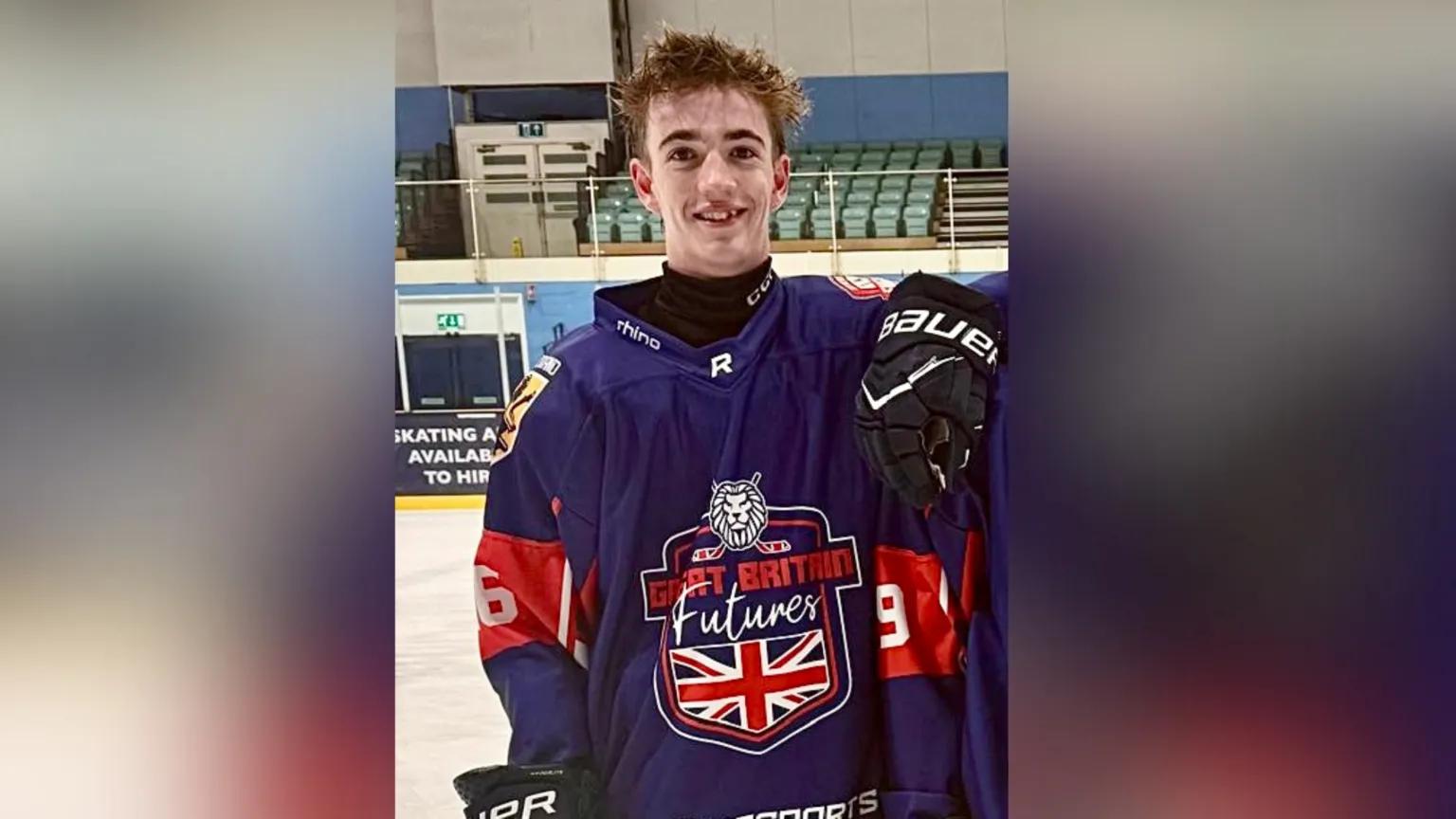
'I Was Like Bambi on Ice – Now I Play For Britain'
When Rufus Dawson first stepped onto the ice at Somerset House as a seven-year-old, he had no idea he was taking the first stride toward representing his country. “I was a bit like Bambi, slipping all over the place,” he told BBC Radio Surrey. “But I enjoyed it.” That post-Christmas family outing in 2017 sparked something big. Dawson, now 15, plays for Great Britain’s Under-16 ice hockey team and has moved from Surrey to Quebec to pursue the sport full-time. “I caught the bug,” he said. “From there, every single weekend I’d ask my Dad to take me skating. Then one of my first coaches got me into hockey… it was kind of a trailblazing moment.” He started out at the Guildford Spectrum, where he was fortunate to have access to an ice rink—something he acknowledges many other kids don’t. By the autumn of 2018, he had joined Guildford’s Under-9 team and steadily progressed up the ranks. Recognition came in February 2023 when he was selected to represent England. That honour opened the door to even bigger changes. In September 2024, Dawson made the leap to Canada, moving to Quebec to train and study. The decision to leave home at 15 was huge, but he never second-guessed it. “I never really thought of it as a big ‘I’m leaving home’ kind of thing,” he said. “Because it was something I always wanted to do and I felt I was ready for.” His typical week now involves five days of school, four to five on-ice practice sessions, weekend games, and tournaments during the season. It’s a full schedule, but one he thrives under. “I think, being in that environment, you learn how to manage it well,” he said. Dawson’s international debut with the Great Britain Under-16s didn’t go as planned. At a tournament in Estonia last summer, he broke his collarbone in the first game. The injury cut his time short, but the recovery process taught him something else. “It was heart breaking,” he said. “But I learned patience.” Still, he’s not one to shy away from the tough parts of the sport. “As much as it’s a very physical sport, I’ve never been someone who gets on the ice scared.” Looking back, Dawson doesn’t think anyone saw this coming—including his parents. “I think, if they look back, they definitely would not have thought that [trip] would’ve led to what has happened now,” he said. “But I think they’re glad.”