






Scroll For More







Score (97)


Here are the Best Good News Stories You Might Have Missed From This Week
🌲 A science museum in Vermont is turning its forest into a sanctuary for mental health. This summer, the Montshire Museum of Science installed a “wind phone” — inspired by a Japanese idea — to help people cope with grief by “talking” to loved ones who’ve passed away. The museum is also expanding wheelchair-accessible trails, building yoga platforms, and encouraging more mindful time outdoors. 📉 New federal data shows teen suicide rates are declining. Between 2021 and 2024, the prevalence of suicidal thoughts among U.S. teens fell from nearly 13% to 10%, and suicide attempts also dropped. Experts believe that more teens are opening up and talking about their struggles — challenging the old belief that asking about suicide makes it worse. ☀️ Small, plug-in solar panels for decks and balconies are growing in popularity across the U.S. Affordable and easy to install, these systems cost about $2,000 and can save homeowners $35 a month on energy bills. They’ve long been popular in Europe, but policy changes and rising demand are bringing them into the mainstream in America. 🧵 Hank Green just launched an ADHD-friendly app where a little bean on your phone only knits if you stay focused. 🛏️ In Nepal, 16-year-old Priyanshi Poddar is upcycling rubber factory waste into emergency sleeping mats for people experiencing homelessness. Her project, Saathi, not only reduces pollution but also gives families and disaster survivors a clean, insulated place to sleep, study, and play. 🐆 In Tulum, Mexico, a new 2,400-acre Jaguar National Park is restoring beaches, Maya ruins, and forests. The reserve limits cars, bans plastic, and restricts visitor numbers — aiming to protect fragile ecosystems while giving travelers a quieter, more sustainable way to experience the Yucatán Peninsula. 🧱 In Germany, 75-year-old Rita Ebel has been building wheelchair ramps out of Lego bricks. After her car accident decades ago left her with partial paralysis, she started constructing colorful ramps to make shops accessible. Donations poured in, and her work is now brightening up her hometown of Hanau. 🏕️ In Vermont, a summer camp is giving kids with incarcerated parents a chance to just be kids. They roast marshmallows, sing campfire songs, and feel free in a space where everyone understands what they’re going through. As one camper said: “When you’re here, you can just be yourself.” 🔋 Global EV sales are surging — up 27% in the first seven months of 2025. China led with 6.5 million sales, Europe sold 2.3 million, and Ford just announced a $5 billion investment in affordable U.S. EVs, calling it its next “Model T Moment.” 👓 In the U.K., a blind man named Andy Evans was able to return to work thanks to RayBan and Meta’s AI glasses. The voice-activated glasses use a tiny camera to describe obstacles, read menus, and identify surroundings, giving Evans new independence and a better quality of life. 🐶 In Chicago, a 72-day search for a beloved service dog named Bam Bam ended with a joyful reunion between pup and owner. 🌍 A major new study found that global suicide rates have fallen nearly 30% since 1990. Researchers say progress is linked to better access to care, reduced stigma, and stronger prevention programs worldwide. ✨ More good news this week: A 12-year-old invented solar-powered sleeping bags for homeless neighbors. A Colorado alumna donated a 476-acre wildlife reserve valued at $10.4 million. Scientists solved the mystery behind the mass sea star die-off. Kenya officially eliminated sleeping sickness as a public health threat. Nike co-founder Phil Knight donated $2 billion to fight cancer. An Argentinian expedition uncovered 40 potential new sea creatures. Missouri passed a groundbreaking law to expand access to forensic exams for sexual assault survivors.


%3Amax_bytes(150000)%3Astrip_icc()%3Afocal(753x376%3A755x378)%2Fdaughter-saves-dad-11926-d88d521b2da345c9a8753b6efd5e7cd3.jpg&w=3840&q=75)
Score (98)
Brave 7-Year-Old Saves Dad's Life, Earns Town Honor for Heroic 911 Call
Seven-year-old Mia Bates didn’t panic when her father collapsed on the stairs. She grabbed the phone, called 911, and calmly gave the dispatcher the information they needed. A month later, her hometown is celebrating her for it. On Tuesday, Feb. 24, Mia will receive the key to the village from Mayor Jade Curry, joined by the first responders who say her quick thinking made all the difference. The Village of Lynwood has already credited her “bravery and quick thinking” for helping “save her father’s life.” The emergency happened in January, when Mia’s father, Xavier — a railroad conductor — fell while walking downstairs and slammed his head, losing consciousness immediately. Mia was home alone with him. With her mom at work, she ran to the phone and dialed 911. “When her dad, Xavier, suffered a serious fall at home, Mia stayed calm under pressure, called 911, provided critical information to the dispatcher, and let paramedics into the house when they arrived,” the village wrote in a social media statement. “Her actions made all the difference.” Mia told WLS she just knew he needed to get to the hospital “where he could get better” and encouraged others in a similar situation to be “brave.” She also said she was “glad the ambulance helped him.” Lynwood Fire Chief Lashaun Alston read the dispatch notes from that day and said Mia’s composure stood out. She was “calm” and “collect,” he told the station — unusual even among adults in comparable emergencies. Her story has sparked conversations about teaching kids how to recognize emergencies and call for help. KidsHealth.org encourages parents to walk their children through examples of what qualifies as an emergency and how to talk to a dispatcher. Next week, Mia will stand alongside the firefighters and paramedics she helped guide to her home. And her village will hand her a key meant for heroes — a reminder that courage sometimes comes in very small, very steady voices.
Score (97)
Giant Tortoises Return To Galápagos Island After Nearly 150 Years
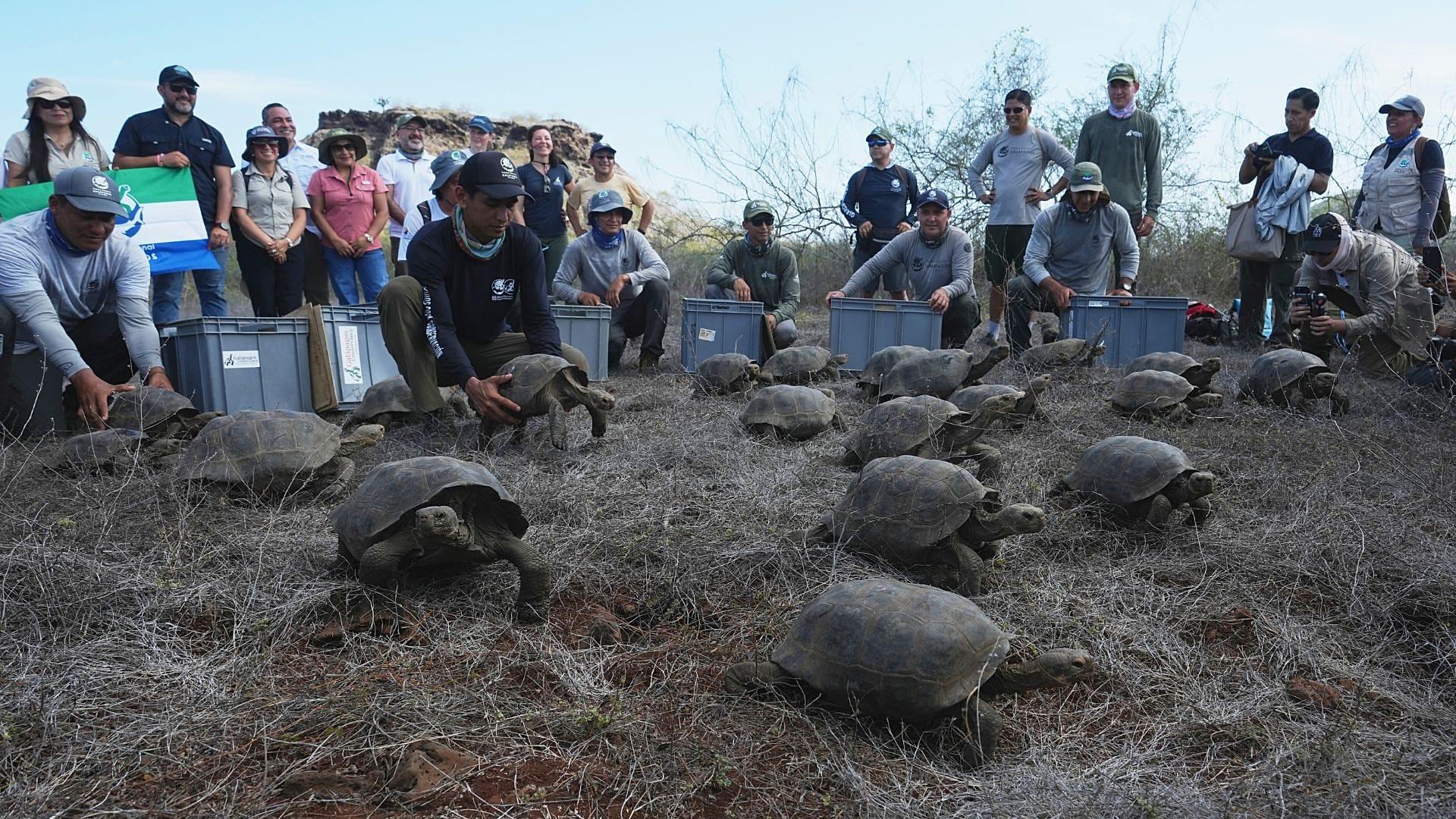
For the first time in nearly 150 years, giant tortoises are once again roaming Floreana Island. Rangers released 158 juvenile hybrids on 20 February, marking a historic moment in the island’s long-running effort to restore an ecosystem that has been without its native tortoises since the 19th century. The newcomers, all between 8 and 13 years old, were released just as the season’s first winter rains arrived. The timing wasn’t accidental. The moisture softens the terrain and helps young tortoises settle into their habitat more easily. “They are large enough to be released and can defend themselves against introduced animals such as rats and cats,” said Fredy Villalba, director of the Galápagos National Park breeding centre on Santa Cruz Island. The program selected juveniles with the strongest genetic ties to the extinct Floreana species, giving them the best chance to eventually rebuild a population that once numbered around 20,000. These juveniles are the first of 700 tortoises planned for reintroduction. According to Christian Sevilla, the park’s director of ecosystems, each hybrid carries between 40% and 80% of the genetic makeup of Chelonoidis niger — the tortoise species that disappeared from Floreana roughly 150 years ago. Their lineage traces back to Wolf Volcano on Isabela Island, where scientists unexpectedly found tortoises carrying Floreana ancestry — a discovery that continues to intrigue researchers. By selectively breeding adults with the strongest genetic links, Sevilla says the long-term goal is to restore the species as closely as possible to its original form. The original population vanished due to whaling, overhunting, habitat destruction and a devastating fire in the 1800s. For biologist Washington Tapia, a researcher and director at Biodiversa-Consultores, bringing tortoises back isn’t just symbolic — it’s essential. “In genetic terms, reintroducing a species to that island with a significant genetic component of the original species is vital,” he said. Floreana spans about 173 square kilometres and is one of the most remote islands in the Galápagos, sitting roughly 1,000 kilometres off Ecuador’s coast. Today, it supports nearly 200 residents and species like flamingos, iguanas, penguins, sea gulls and hawks. It also faces threats from non-native plants such as blackberry and guava, along with animals introduced over generations — rats, cats, pigs and donkeys among them. Local residents have been waiting years for this day. “We are seeing the reality of a project that began several years ago,” said Floreana resident Verónica Mora. The community, she added, feels deep pride in the return of the island’s iconic tortoises. The United Nations, which designated the Galápagos as a Natural World Heritage Site in 1978, recognized the islands for their unmatched concentration of species found nowhere else on Earth. The reintroduction of tortoises to Floreana is another step toward restoring that ecological richness — one slow, determined footstep at a time.

Get even more good news on the free app!
%3Amax_bytes(150000)%3Astrip_icc()%3Afocal(931x412%3A933x414)%2Falex-vesia-wife-kayla-102425-c4adde53c2364311b77d3e8d4a0bfebf.jpg&w=3840&q=75)
Score (93)
Alex Vesia Says He's Finding Comfort On The Field In His First Game Since His Daughter's Passing
The scoreboard didn’t matter. The standings didn’t matter. But when Alex Vesia walked toward the mound at Camelback Ranch on Monday, the cheers felt as heavy as the moment itself. It was his first appearance since he and his wife, Kayla, lost their newborn daughter, Sterling Sol, on Oct. 26, just before the World Series. He had stepped away from the team but never stopped watching, following every pitch from home and celebrating quietly when the Los Angeles Dodgers won the championship against the Toronto Blue Jays. On Monday, the ovation started the moment he emerged from the dugout. He took a deep breath, his heart racing, then delivered a spotless, 1-2-3 inning against the Seattle Mariners. As he walked off, the cheers grew louder. He tapped his chest, looked to the crowd and mouthed his thanks. When he reached the dugout, every teammate was waiting — hugging him, shaking his hand, reminding him he wasn’t alone. “It’s been hard,’’ Vesia told USA Today. “I guess it’s hard in a good way because I want to interact with all of the fans and stuff like that, but I have a job to do. Even on the backfields, first day, I walk out the doors and cheers and lots of love. So, yeah, it means a lot, not only for myself, but for Kayla, too.’’ He and Kayla stayed home during the team’s World Series parade, still mourning. In the months that followed, he poured himself into long hours at the gym — sometimes too many, he admits — and counseling sessions with his wife. Slowly, life started to regain its shape. Being back with teammates is a big part of that healing. “Being around the guys, it’s really been comforting, you know,’’ Vesia said. “We’ve had multiple conversations and guys are asking me questions and just trying to, you know, feel for me. That’s honestly been a blessing. I do like talking about it with the guys and whatnot. I don’t want them to feel like they can’t. These guys are my brothers, man. I truly do love them all.’’ Dodgers pitching coach Mark Prior and assistant Connor McGuiness praised him immediately after the inning. Vesia called the moment “a little overwhelming” and tried to absorb everything — the fans, the support, the sense of stepping forward. Manager Dave Roberts acknowledged how meaningful it was to see him back on a mound. “Obviously, what Alex and Kayla went through, you don’t wish that upon anyone,” Roberts said. “They’re getting to the other side of things. And to see him getting back out here in a baseball game, and to have a clean inning and be received by the fans, I know it meant a lot to him. Obviously, his teammates feel for him and want to support him.” Now the focus slowly shifts back to routine: spring training days, bullpen work, the upcoming season. Roberts said normalcy is the goal — and something Vesia wants. “I think the main thing is getting back to normalcy,” he said. “That’s something I know that he wants and to kind of move forward and focus on 2026. We obviously know what went on, and what they’ve been through, but I think the main thing is getting back to doing what he loves to do, and that’s playing baseball. He’s in a good place.’’ Vesia agrees. Being back on the field feels right. The support around him feels even better. “It’s going to be a fun year,” he said. “I’m really excited. I think we’re going to do some really cool things this year.”
%3Amax_bytes(150000)%3Astrip_icc()%3Afocal(749x0%3A751x2)%3Aformat(webp)%2Fsnow2-nyc-022326-076e157288aa4a75a483cd4cc6ad6ec1.jpg&w=3840&q=75)
Score (98)
As a Blizzard Buried New York, A Small Act of Kindness Cut Through the Snow
New York City found itself under a rare, punishing blizzard on Monday that left sidewalks slick, streets barely passable, and officials warning it could rank among the 10 worst storms in 150 years. Snow piled high along corners and crosswalks, turning even simple errands into risky treks. But in the middle of all that chaos, one quiet moment of generosity ended up stealing the spotlight. A viral video on @newyorklocals showed an elderly woman, leaning on a cane, struggling to navigate a snow-choked sidewalk at W. 75th Street and Broadway. The snowbanks were tall enough to block her path entirely. For a few seconds, it looked like she might have to turn back. Then another passerby stepped in. She knelt down in the snow, pushing it aside with her gloved hands to clear a narrow path, then offered her arm to guide the woman through. What could have been a dangerous crossing became something warm and unexpectedly hopeful. “A kind stranger helps an elderly lady cross the street on Broadway this morning, New Yorkers are kind,” @newyorklocals captioned the clip. The video’s original source, TikTok user @hamsterjam88, added her own perspective from a room at the Beacon Hotel. “Heartwarming to see this from my room at the Beacon Hotel. We are stranded here because our flight was cancelled. Not sure for how long. New Yorkers are so wonderful. And the staff at the hotel are so friendly and helpful, so we are happy to be stuck — for now!” The moment has since taken off online. Comments piled in, many from people grateful for a glimpse of kindness during a harsh storm. “The world needs more of this,” one person wrote. Another added, “Wherever Granny is going in this weather it must be important 👏🏼💯.” And one sentiment kept returning: New Yorkers look out for one another, no matter the weather. As one commenter put it, “We New Yorkers get a bad rap sometimes, but no matter what we will always be there for others… love my city.” Even in a storm big enough to bring a city to a standstill, small acts of care have a way of moving straight through the drifts.

Score (98)
This Toronto Lawyer Just Donated $10 Million to an OCD Treatment Centre After Achieving Remission
Brian Reeve spent decades trying to outmaneuver his obsessive-compulsive disorder. Some days it meant walking in and out of a doorway over and over. Other days it meant taking out his contact lenses, putting them back in, and starting again until something in his mind clicked into place. He kept going like that for years, managing as best he could, until he finally couldn’t anymore. Seven years ago, at 62, he hit the point where the rituals were running his life. They consumed whole stretches of his day and chipped away at time with his children. After years of trying to manage it alone, he entered the OCD program at the Frederick W. Thompson Anxiety Disorders Centre at Sunnybrook Hospital in Toronto. That decision changed everything. Reeve calls the program a “game-changer” and a “life reset.” Now 69 and in remission, the lawyer and private equity investor has donated $10 million to the centre that helped him rebuild his life. Established in 2012, the Thompson Centre is the country’s first and only facility dedicated specifically to OCD and related disorders. It estimates that about 400,000 Canadians live with OCD. Dr. Peggy Richter, the centre’s head and a professor of psychiatry at the University of Toronto, says the disorder can be far more complex than the public tends to understand. It isn’t only about washing hands or straightening objects. It can show up as repetitive counting or intrusive thoughts that have nothing to do with a person’s values or intentions. She says it can range from mild cases, where someone might run late because they’re stuck in rituals, to severe cases that are “profoundly disabling.” As she puts it, “People can basically be prisoners in their own homes, unable to do even the most basic activities of daily living.” Reeve was diagnosed in the 1990s, when treatment options were limited. Even so, he managed well enough to build a career, get married, and raise a family. But by 2019, something shifted. The rituals multiplied, each one needing to be repeated until it felt “just right.” Even simple tasks, like checking an alarm clock, could spiral into dozens of repetitions. “Checking once isn’t that big of a deal, but when it becomes 10 times or 20 times, and you have to keep turning the switch off and on until it feels right, that's what OCD becomes,” Reeve told As It Happens host Nil Köksal. Later that year, at the suggestion of his family doctor, he enrolled in the Thompson Centre’s intensive program. For four months, he attended five days a week for eight hours a day. It was demanding, but it gave him something he hadn’t had in decades: a toolkit that actually worked. He kept using it after the program ended and reached remission three years later. Richter says the centre’s strength comes from its wide range of supports. It offers diagnostic consultation, psychiatric care, cognitive-behavioural therapy, and an intensive program designed for people at the severe end of the spectrum. It also connects patients with trained volunteers who have gone through treatment themselves, offering both group and one-on-one peer support. And once formal treatment ends, an aftercare program keeps that support going. Reeve’s donation will help accelerate the centre’s long-planned move from rented space to a permanent home at Sunnybrook’s Bayview campus next spring. The new facility will bring improved amenities, a dining space, closer ties with the hospital’s brain sciences program, and more treatment capacity. The funding will also support a new chair in OCD at Sunnybrook and the University of Toronto, along with fellowships to train future clinicians and researchers. For Reeve, the gift is about sending a message to anyone struggling the way he once did. Effective treatment exists. Help exists. And no one should have to feel alone. “What we’re trying to do with the Thompson Centre [is] to make you feel that you’re not walking the road alone and that there’s a lot of resources and you don’t have to be ashamed or embarrassed that you’ve got OCD,” he said.

Score (85)
Punch, the Internet's Favorite Lonely Monkey, Is Making Friends, Zoo Says
Punch the monkey, who won hearts online after turning to a soft toy for company, is now reported to be getting on well with his real-life zoo companions. In an update on X, Ichikawa Zoo said Punch was not being “scolded” by others, and was playing with baby monkeys. “He continues to do well,” the zoo said. Footage here shows Punch staying close to a larger monkey and following it around the enclosure. “This big monkey has accepted Punch, and Punch has completely grown attached,” the source, @iT4rai, wrote on X.
Score (96)
ISS Crew Suits Up for Space Workouts as Scientists Study How to Stay Fit in Zero-G
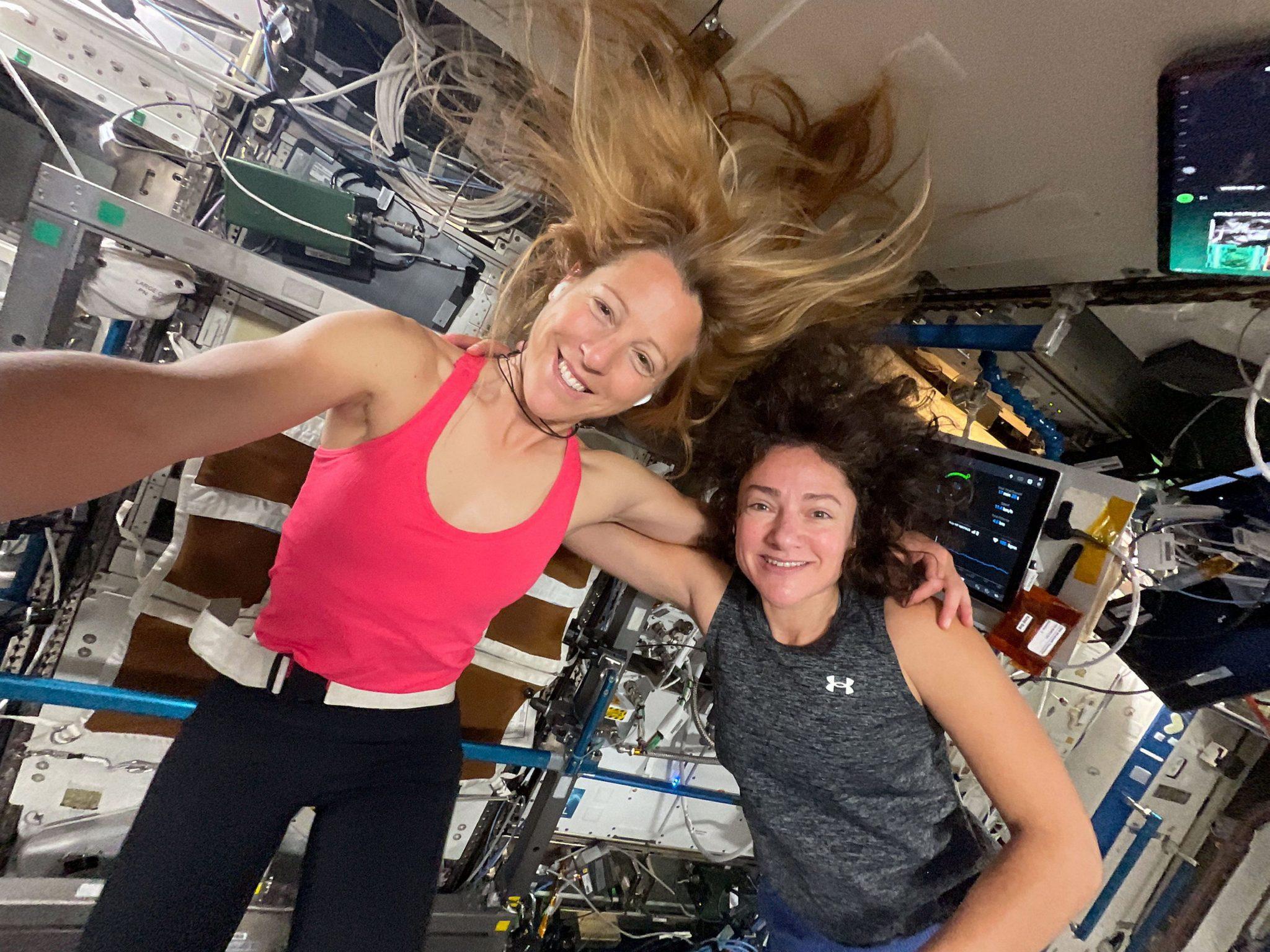
Being 260 miles above Earth doesn’t get you out of going to the gym. The Expedition 74 crew aboard the International Space Station has been striking poses in workout gear — but the quirky photos come with a serious mission: figuring out how to keep astronauts healthy on long-duration spaceflights. ESA flight engineer Sophie Adenot recently exercised on the station’s advanced resistive exercise device, a machine designed to mimic free weights on Earth. While she worked through squats and deadlift-style motions, four specialized cameras captured her muscles and bones in action from inside the Tranquility module. NASA said the research aims to understand “the forces an astronaut’s muscles and bones experience when exercising in weightlessness to maintain fitness and health during a long-term spaceflight.” Microgravity takes a toll fast. Without constant loading from gravity, muscles shrink and bones lose density, which makes daily training essential for anyone living off the planet for months at a time. Astronauts typically spend about two hours a day exercising in orbit just to maintain basic strength and cardiovascular health. 6 Right now, crews rely on a cycling machine that has been aboard the station since 2009, along with treadmills and resistance equipment. But a new tool is on the way. In April 2026, the ISS will receive the European Enhanced Exploration Exercise Device, or E4D — a compact, next-generation fitness system built for future missions. The E4D is designed to be more versatile and space-efficient than current hardware, offering better options for full-body workouts while taking up less room in an already crowded station. With future missions expected to push deeper into space — including long journeys to the Moon and Mars — scientists want to ensure astronauts can stay strong and healthy far from home. For now, Expedition 74’s workout sessions are giving researchers a rare, close-up look at how the human body operates in microgravity. And if the photos are any indication, astronauts are proving that even in orbit, fitness is still very much part of the job.

Score (92)
Scientists Finally Unravel How Horses Neigh — They’re Actually Whistling and Singing at Once
Horses whinny for all kinds of reasons — to find friends, greet familiar faces or get excited about feeding time. But the sound itself, a mix of squeal and grunt, has puzzled scientists for decades. It’s unusually complex, made of both high and low pitches produced at the same time. Now researchers say they’ve finally figured out how horses pull it off. According to a new study published in Current Biology, horses whistle. The low notes were never much of a mystery. Like humans, horses create their deeper sounds by pushing air over vibrating bands of tissue in the voice box. But the high-pitched tones were harder to explain, especially because larger animals — horses included — usually make lower sounds. To solve it, researchers inserted tiny nasal cameras into live horses to watch their vocal tracts in action as they whinnied and made softer calls like nickers. They also studied scans and blew air through the isolated voice boxes of deceased horses. What they found surprised even equine experts. When a horse whinnies, tissue in the voice box vibrates to form the low frequencies, while a structure just above tightens, leaving a small opening. Air rushing through that narrow space produces a whistle — the source of the high notes layered on top of the low ones. Humans whistle with their mouths. Horses, it turns out, whistle from deep in their throats. “I’d never imagined that there was a whistling component. It’s really interesting, and I can hear that now,” said Jenifer Nadeau, a University of Connecticut horse researcher not involved in the study. A few rodents can whistle similarly, but horses are the first known large mammals capable of it — and the only animals known to whistle and sing at the same time. “Knowing that a ‘whinny’ is not just a ‘whinny’ but that it is actually composed of two different fundamental frequencies that are created by two different mechanisms is exciting,” said Alisa Herbst with Rutgers University’s Equine Science Center. Why horses evolved this unusual two-toned call remains an open question. Wild Przewalski’s horses and elks can make similar sounds, but donkeys and zebras cannot. Study author Elodie Mandel-Briefer of the University of Copenhagen believes the dual frequencies may help horses express more nuanced emotions. “They can express emotions in these two dimensions,” she said, suggesting the combined pitches allow horses to convey multiple messages at once when socializing. For an animal so familiar, the discovery underscores how much there still is to learn. A whinny, it seems, isn’t just a whinny — it’s a duet, performed by a horse’s own built-in whistle and its singing vocal cords working together.
Score (95)
Campaigners Push for Permanent Traffic Ban to Save a Historic Bridge
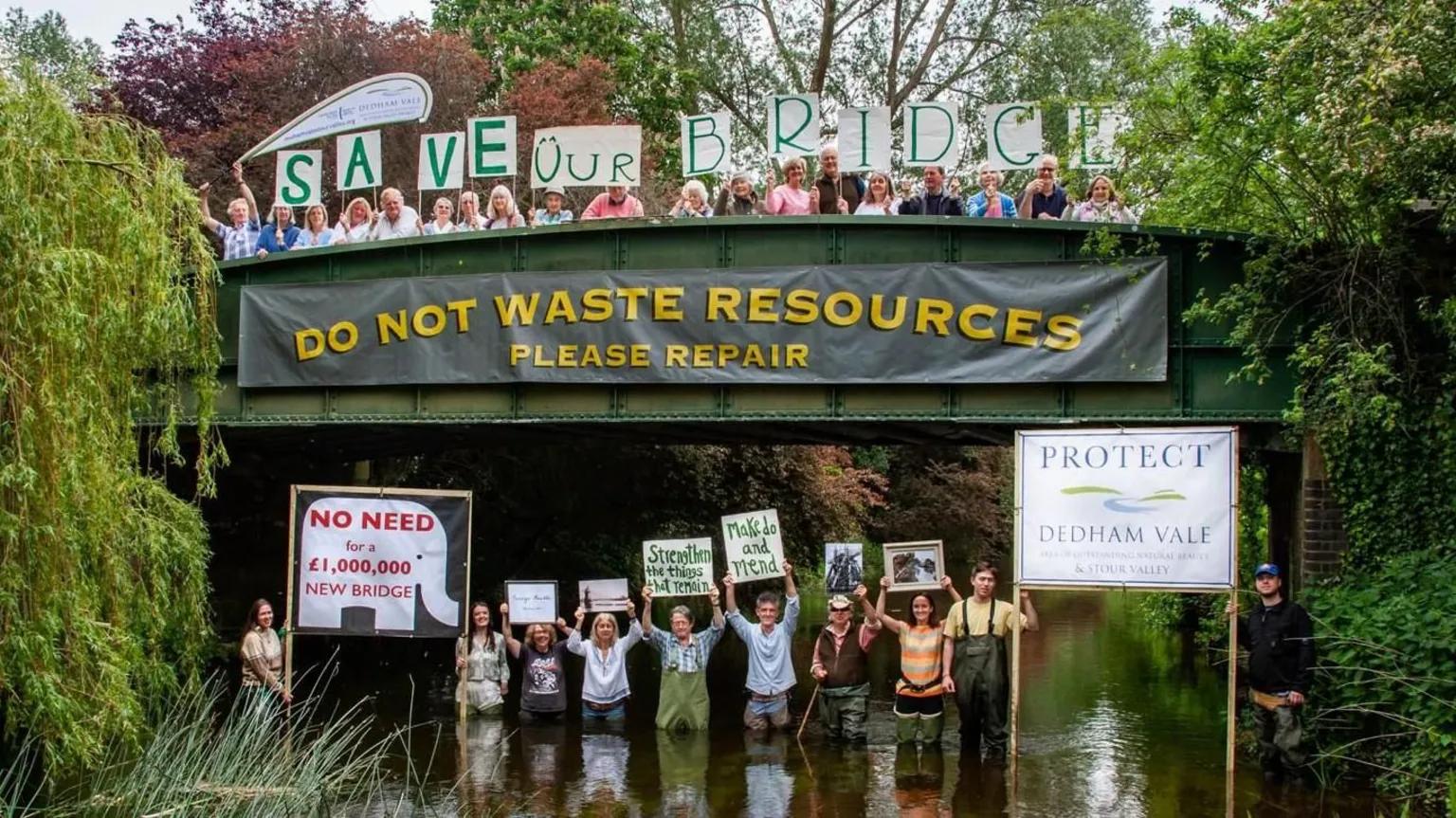
Boxted Bridge, a weakened Victorian structure on the Essex–Suffolk border, may be spared from demolition if Essex County Council (ECC) approves a permanent ban on motor vehicles. The steel bridge, near Colchester, has been restricted to pedestrians and cyclists since January after corrosion forced its closure to traffic for two years. ECC had previously considered demolishing the “dangerously weak” bridge and installing a modern replacement strong enough to carry heavy goods vehicles. But those plans could be withdrawn if a new Traffic Regulation Order (TRO) permanently prohibiting vehicles is approved, according to the Local Democracy Reporting Service. Campaigners hoping to preserve the bridge say this is their most promising opening yet. They’re now trying to raise £12,300 to fund an independent assessment from Mann Williams, a structural engineering firm known for repairing historic buildings and advising the National Trust. Lewis Barber, a Conservative county councillor supporting the effort, said the shift in direction is encouraging. “One battle done, we move on to the next one and now we need to keep putting the pressure on like we've been doing to get the repair option on the table,” he said. “We just want it explored. That’s as little as we’re asking for at this stage.” The future of the bridge sits on Friday’s agenda for ECC’s development and regulation committee. An update prepared for members says responses to the TRO consultation are now being reviewed. If the vehicle ban is approved and legally enacted, the report notes, “the planning application to replace the bridge would be withdrawn.” If the TRO is rejected, however, the council says a long-term solution will still be required — leaving demolition and replacement back in the conversation. For residents and preservation advocates, the decision represents a pivotal moment. A permanent traffic ban may be the only viable way to protect one of the area’s surviving pieces of Victorian infrastructure, while keeping it open to the people who use it most: walkers and cyclists.

Score (97)
Tintoretto’s Long-Separated “Genesis” Paintings Reunite in Venice After 200 Years
For the first time in more than two centuries, four paintings from Tintoretto’s early “Stories from Genesis” cycle are hanging together again in Venice. Their reunion marks the culmination of a year-long restoration project that stripped away darkened varnish and layers of grime, revealing colors and details that had been obscured for generations. The exhibition, Tintoretto Recounts Genesis: Research, Analysis, and Restoration, at the Gallerie dell’Accademia, highlights how much had been hidden beneath the surface. Three canvases — The Creation of the Animals, Original Sin, and Cain Kills Abel — belong to the Venetian museum and had long suffered from yellowed varnish, soot and the effects of repeated moves over the centuries. A fourth painting, Adam and Eve Before the Eternal Father, arrived on exceptional loan from the Uffizi Galleries in Florence. A fifth work from the original series, Creation of Eve, remains in a private German collection. Together, they offer a rare opportunity to see one of Tintoretto’s earliest and most ambitious biblical cycles as a nearly complete set. Giulio Manieri Elia, director of the Gallerie dell’Accademia, said the project shows “how scientific study and restoration can become a powerful narrative tool.” For him, the exhibition demonstrates the museum’s role not only in protecting and conserving artworks but also in expanding the knowledge around them. Tintoretto completed the Genesis cycle in the early 1550s for the Scuola della Santissima Trinità. Even then, the paintings stood out. His trademark speed, theatrical contrasts and charged brushwork helped define Venetian Mannerism. But one of the revelations of the restoration is how much he relied on landscape as an active force — not just a backdrop. In Original Sin, for example, the dense foliage surrounding Adam and Eve has reemerged in multiple shades of green, restoring the emotional tension Tintoretto originally built into the scene. The project also brought new insights into Tintoretto’s evolution. Technical analysis revealed his interest in Titian’s color and Michelangelo’s sculptural figures, showing how he blended those influences while refining his own dynamism. Researchers were able to trace his process from canvas preparation to charcoal underdrawings, paint application and late-stage revisions — a map of an artist still finding his signature speed and drama. The restoration work, carried out between February 2024 and January 2025, prepared the paintings for an earlier exhibition at the Cincinnati Art Museum. It was jointly funded by the museum and the Foundation for Italian Art and Culture in New York. Now back in Venice, the canvases appear almost newly illuminated. The softened colors and murky shadows that once dulled them have given way to fresher tones, sharper edges and a renewed energy that brings Tintoretto’s early ambition into focus. Tintoretto Recounts Genesis: Research, Analysis, and Restoration runs at the Gallerie dell’Accademia through June 7.